
Ever wonder why some vegetable soups taste fresh and vibrant while others are bland and boring? I used to think making restaurant-quality asparagus soup required fancy techniques until I discovered this simple recipe. Now my dinner guests rave about this every spring, and honestly, I’ve stopped mentioning how ridiculously easy this summer asparagus soup actually is (they think I’m some kind of soup wizard when I’m really just blending vegetables).
Here’s the Thing About This Recipe
The secret to amazing asparagus soup isn’t complicated—it’s about using fresh asparagus at the peak of spring season. I learned the hard way that out-of-season asparagus makes for a watery, flavorless soup no matter what you do. This spring-inspired soup works because the potatoes add body and creaminess while the asparagus stays bright green and fresh-tasting. It’s honestly that simple. The heavy cream at the end adds richness without masking the delicate asparagus flavor, and blending creates that silky restaurant texture everyone loves.
What You’ll Need (And My Shopping Tips)
Good fresh asparagus is worth seeking out at farmers markets in spring. Don’t cheap out on those limp, woody stalks from the back of the grocery store produce section—they’ll be stringy and bitter no matter how long you cook them. I learned this after making soup that tasted like I’d blended lawn clippings (happens more than I’d like to admit). Look for asparagus spears that are firm with tight tips and vibrant green color. Medium-thickness spears work best for soup.
The potatoes are crucial here—they add body and help create that creamy texture even before you add cream. I use Yukon Gold because they’re naturally buttery, but russets work too. The vegetable broth should be good quality and low-sodium so you can control the salt. I always grab low-sodium because you can add salt but you can’t take it away.
Heavy cream adds that luxurious richness that makes this feel special. You can use half-and-half for a lighter version, but the heavy cream really makes it restaurant-quality. Fresh chives for garnish aren’t just for looks—they add this oniony brightness that complements the asparagus perfectly. Dried chives just don’t have the same pop.
Here’s How We Do This
Start by heating your olive oil in a large pot over medium heat. Toss in that chopped onion and minced garlic, and let them sauté for about 4-5 minutes until they’re soft and starting to smell amazing. Here’s where I used to mess up: I’d rush this step and not get enough flavor development. Let the onions actually soften and turn translucent.
Add your diced potatoes and asparagus pieces to the pot. Season with salt and pepper right away—seasoning as you go builds better flavor than just adding it at the end. Cook everything for about 5 minutes, stirring occasionally. The asparagus should start to turn bright green and smell fresh and grassy.
Pour in that vegetable broth and bring the whole thing to a boil. Once it’s boiling, drop the heat to medium-low and let it simmer for about 20 minutes. I learned this trick from my grandmother: you want the potatoes completely tender and the asparagus cooked through but not that sad army-green color. Check by poking a potato piece with a fork—it should slide right through.
Here’s where the magic happens: grab your immersion blender and blend until completely smooth. If you don’t have an immersion blender, carefully transfer the soup in batches to a regular blender. Be super careful with hot liquids—they expand when you blend them and can explode out the top if you’re not careful. Blend until it’s velvety smooth with that gorgeous green color.
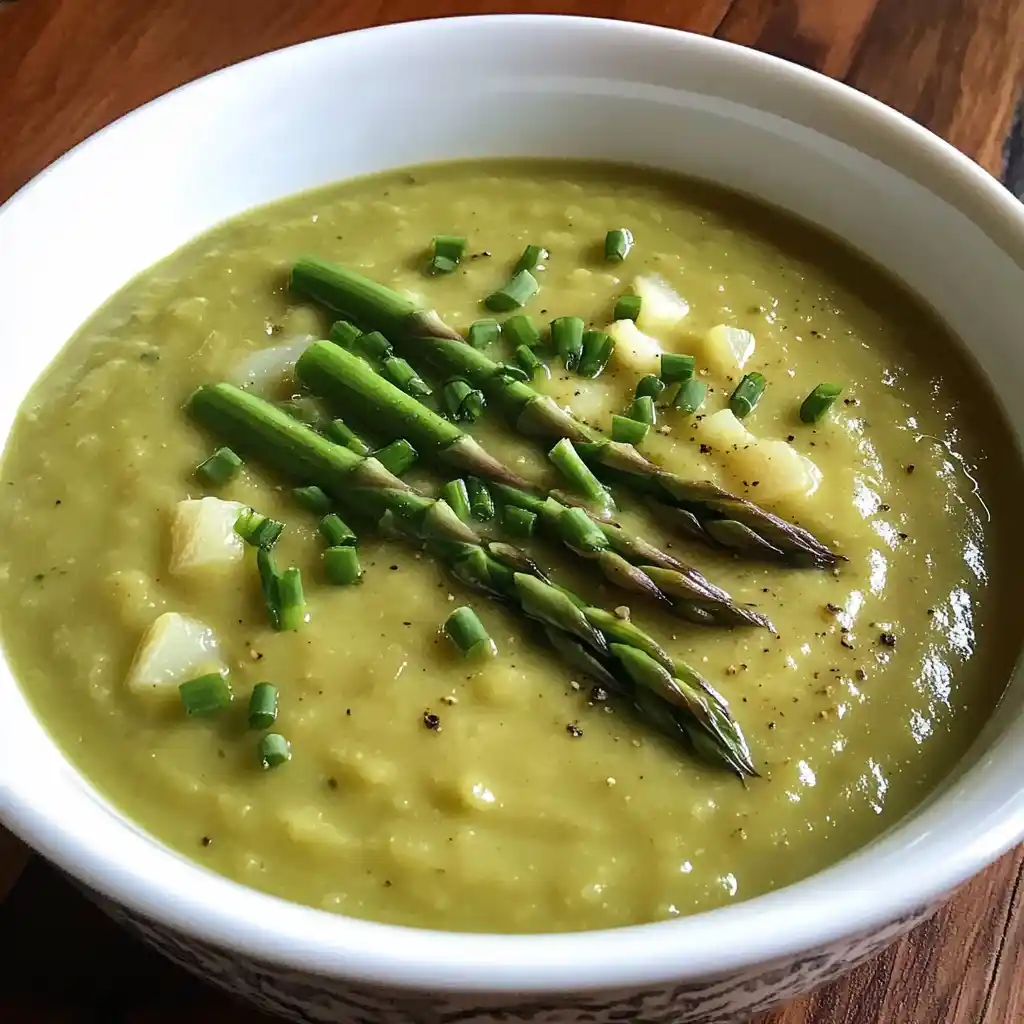
Stir in the heavy cream and let it simmer for another 5 minutes to marry all the flavors. Taste and adjust your seasoning—I always add more salt at this point because asparagus needs it. Ladle into bowls and scatter fresh chives on top, similar to how you’d garnish a creamy vegetable soup.
Trust me on this one—serve this warm but not scalding hot. The flavors are actually more pronounced when it’s not piping hot.
If This Happens, Don’t Panic
Soup turning gray instead of bright green? You cooked the asparagus too long or used old asparagus. Fresh asparagus keeps its color better. This is totally fixable—add a handful of fresh baby spinach and blend it in to brighten the color. If your asparagus soup looks sad and gray, this trick saves it every time.
Too thin and watery? You probably used too much broth or not enough potatoes. Just simmer it uncovered for 10-15 minutes to reduce the liquid, or add a potato and blend it in to thicken things up. In reality, I’ve learned to prefer it slightly thicker than I think I want because it thins when you add cream.
Asparagus tasting bitter? Your asparagus was probably old or you didn’t trim the woody ends enough. Next time, snap the asparagus where it naturally breaks—that’s where tender meets woody. A pinch of sugar can help balance bitterness in a pinch.
Not creamy enough? Add more heavy cream or stir in a dollop of sour cream or cream cheese before serving. Every batch is slightly different, so adjust to your preference. Some people love it light, others want it rich and indulgent.
When I’m Feeling Creative
Lemon Asparagus Soup: Add the zest and juice of one lemon at the end for a bright, spring-forward version. Around Easter, I’ll make this when I want something that feels celebratory.
Herby Asparagus Soup: Stir in fresh tarragon or dill along with the chives for a more complex herb profile. This version is my favorite for dinner parties.
Vegan Asparagus Soup: Skip the heavy cream and use coconut milk or cashew cream instead. Honestly works better than you’d think and keeps that silky texture.
Pea and Asparagus Soup: Add a cup of frozen peas during the last 10 minutes of cooking for extra sweetness and vibrant color. My kids love this version.
What Makes This Recipe Special
Asparagus has been cultivated for thousands of years throughout Europe and the Mediterranean, appearing in countless spring soups and dishes. What sets this summer asparagus soup apart is how the potatoes create natural creaminess while keeping the asparagus flavor front and center—many asparagus soups use so much cream that you can barely taste the vegetable. I discovered through trial and error that the key is using really fresh asparagus and not overcooking it; asparagus should be tender but still bright green before blending. The touch of cream at the end adds richness without making it heavy, creating that perfect balance of light and luxurious that makes spring soups so appealing.
Things People Ask Me About This Recipe
Can I make this asparagus soup ahead of time?
You can make it up to 2 days ahead, but the color will dull slightly. Store in the fridge and reheat gently on the stovetop. For best color, make the soup base without cream, then add cream when reheating. The flavor stays great even if the color fades a bit.
Do I need to peel the asparagus for this soup?
No need to peel it—just trim off the woody ends. The blending process takes care of any fibrous bits. If your asparagus is particularly thick and tough, you can peel the bottom third of each stalk, but it’s usually not necessary.
Can I freeze summer asparagus soup?
You can freeze the soup without the cream for up to 2 months. Thaw overnight in the fridge, reheat gently, then stir in fresh cream. The color and texture won’t be quite as nice as fresh, but it’s still good. I don’t recommend freezing after adding cream.
Is this soup actually filling enough for dinner?
It’s pretty light on its own, but served with crusty bread and a simple salad, it makes a lovely spring meal. I sometimes add white beans before blending for extra protein and substance. It’s perfect as a first course or light lunch.
What can I substitute for heavy cream?
Half-and-half works but won’t be as rich. Coconut milk is great for dairy-free. Greek yogurt stirred in at the end adds tang and creaminess. You can even skip cream entirely for a lighter broth-style soup—still delicious.
How do I know when asparagus is fresh?
Look for firm stalks with tight, compact tips. The cut ends should look moist, not dried out. Squeeze a bunch—it should squeak slightly. If it’s limp or the tips are opening up, it’s past its prime.
One Last Thing
I couldn’t resist sharing this summer asparagus soup because it’s honestly become my go-to spring celebration dish. The best seasonal cooking happens when you take advantage of what’s fresh and at its peak—and this soup delivers that perfect taste of spring every single time.
Print
Summer Asparagus Soup
Description
This silky, vibrant soup showcases fresh spring asparagus with potatoes and cream. Perfect for spring dinners or elegant entertaining, this asparagus soup comes together in under 45 minutes with simple ingredients.
Prep Time: 10 minutes | Cook Time: 30 minutes | Total Time: 40 minutes | Servings: 4-6 servings
Ingredients
- 1 lb fresh asparagus, trimmed and cut into 1-inch pieces (about 1 large bunch)
- 1 medium onion, chopped (yellow or white onion)
- 2 cloves garlic, minced (about 1 tsp, fresh is best)
- 4 cups vegetable broth (low-sodium so you can control salt)
- 1 cup diced potatoes (Yukon Gold are best, about 1 medium potato)
- 1/2 cup heavy cream (or half-and-half for lighter version)
- 2 tbsp olive oil (for sautéing)
- Salt and pepper to taste (start with 1/2 tsp salt, 1/4 tsp pepper)
- Fresh chives, for garnish (a handful, chopped)
Instructions
- Heat olive oil in a large pot over medium heat. Don’t rush—let the pot warm up properly.
- Add your chopped onion and minced garlic. Sauté for 4-5 minutes until they’re soft and starting to smell amazing. Let the onions actually turn translucent.
- Toss in the diced potatoes and asparagus pieces. Season with salt and pepper right away. Cook for about 5 minutes, stirring occasionally. The asparagus should turn bright green.
- Pour in the vegetable broth and bring everything to a boil. Once it’s boiling, reduce heat to medium-low and let it simmer for about 20 minutes until the potatoes are completely tender and the asparagus is cooked through.
- Remove from heat. Grab your immersion blender and blend until completely smooth and velvety. If using a regular blender, transfer in batches and be super careful with hot liquid—leave the lid slightly vented.
- Stir in the heavy cream and let it simmer for another 5 minutes to marry all the flavors. Taste and adjust seasoning—I always add more salt at this point.
- Ladle into bowls and scatter fresh chopped chives on top. Serve warm (not piping hot) for the best flavor.
Nutrition Information (Per Serving):
- Calories: 185
- Carbohydrates: 16g
- Protein: 4g
- Fat: 13g
- Fiber: 3g
- Sodium: 520mg
- Vitamin K: 45% DV
- Vitamin C: 15% DV
- Folate: 20% DV
Asparagus provides vitamin K, folate, and antioxidants while being naturally low in calories.
Notes:
- Use fresh asparagus for best flavor and color—out-of-season asparagus makes bland soup.
- Trim woody ends by snapping where the asparagus naturally breaks, not just cutting an inch off.
- Don’t overcook or the soup will turn gray instead of staying bright green.
- The potatoes add natural creaminess and body—don’t skip them.
- Every blender is different, so blend longer if needed for silky texture.
Storage Tips:
Store leftovers in an airtight container in the fridge for up to 3 days. The color will dull slightly but flavor stays good. Reheat gently on the stovetop—don’t boil or it can separate. Freeze without cream for up to 2 months. Thaw overnight in fridge, reheat, then stir in fresh cream. Don’t freeze after adding cream—texture gets weird.
Serving Suggestions:
- With Crusty Bread: Serve alongside warm sourdough or baguette for dipping
- Elegant First Course: Serve in small bowls as a starter before a spring dinner party
- Light Lunch: Pair with a simple mixed greens salad and lemon vinaigrette
- With Croutons: Top with homemade garlic croutons for extra texture and richness
Mix It Up (Recipe Variations):
Lemon Asparagus Soup: Add zest and juice of one lemon at the end for a bright, citrusy spring version perfect for Easter brunch.
Herby Asparagus Soup: Stir in 2 tbsp fresh tarragon or dill along with the chives for a more complex, aromatic herb profile.
Vegan Asparagus Soup: Replace heavy cream with coconut milk or cashew cream for a dairy-free version that’s still silky and rich.
Pea and Asparagus Soup: Add 1 cup frozen peas during the last 10 minutes of cooking for extra sweetness and even more vibrant green color.
What Makes This Recipe Special:
This summer asparagus soup celebrates spring’s signature vegetable through simple preparation that lets its delicate flavor shine. The potatoes create natural creaminess while keeping the focus on fresh asparagus—unlike heavily cream-laden versions that mask the vegetable’s taste. Using truly fresh asparagus and avoiding overcooking preserves that bright green color and sweet, grassy flavor that makes spring soups so special.
