
Ever wonder why delicately cooked fish at elegant restaurants tastes so much more refined and flavorful than the pan-fried tilapia you make at home? I used to think creating restaurant-quality poached fish required some kind of classical culinary training until I discovered this foolproof summer poached tilapia. Now my family requests this light, elegant dinner every week, and I’m pretty sure my friends think I’ve been secretly attending a French cooking school (if only they knew I literally just simmer aromatics in water and gently poach the fish for 10 minutes—the whole thing takes 20 minutes and produces the most impossibly tender, flavorful tilapia that makes people rethink everything they thought about this humble fish).
Here’s the Thing About This Recipe
What makes this summer poached tilapia work is the aromatic poaching liquid that essentially perfumes the fish from the outside in as it gently cooks—you’re getting lemon, garlic, and onion flavor infused into every fiber of the fish in a way that pan-frying or baking simply cannot achieve. I learned the hard way that dropping fish into cold water and bringing it up to temperature gives you an uneven, oddly textured result. The olive oil adds richness to the poaching liquid that gets absorbed by the fish, creating a subtle silkiness. It’s honestly that simple—a properly built poaching liquid and gentle, patient heat produce fish that’s silky and flavorful rather than dry and bland.
What You’ll Need (And My Shopping Tips)
Good fresh tilapia fillets are your foundation here—look for fillets that are firm, moist, and smell like clean water rather than fishy. Don’t be me—I used to grab whatever tilapia was on sale without checking freshness or thickness, and ended up with thin fillets that overcooked in 3 minutes while thick ones needed twice as long three times before I figured out that even-thickness fillets are essential for consistent poaching. Look for fillets that are roughly similar in size and at least 1/2 inch thick throughout (happens more than I’d like to admit that I forget to check thickness before buying).
Fresh lemon adds the most important aromatic note here. I always use a lemon I can smell through the skin—intensely fragrant lemons release more essential oils into the poaching liquid. For the tilapia, this mild, affordable fish is actually perfect for poaching because its neutral flavor absorbs the aromatics beautifully without competing. Fresh garlic minced very finely releases more flavor into the liquid than large chunks. Red onion adds mild sweetness and beautiful color to the poaching liquid. Fresh parsley for garnish adds brightness and a clean herby note that complements the delicate fish perfectly.
Let’s Make This Together
Start by building your poaching liquid before the fish goes anywhere near the pan—this is the step most home cooks rush and shouldn’t. Here’s where I used to mess up: I’d add everything to the pan and fish at the same time, giving the aromatics no time to release their flavors into the liquid.
In a large skillet, combine the water, lemon slices, thinly sliced red onion, minced garlic, olive oil, salt, and black pepper. Bring this mixture to a simmer over medium heat and let it cook for a full 5 minutes before adding any fish. Here’s my secret: that 5-minute head start allows the lemon to release its oils, the garlic to mellow, and the onion to soften—you’re essentially making a quick court bouillon that flavors the fish properly. Just like my summer poached salmon, that pre-cooking of the poaching liquid is what separates genuinely flavored fish from fish that just happens to be cooked in water.
Gently lower the tilapia fillets into the simmering liquid—I use a wide spatula to slide them in rather than dropping them because dropping creates splashing that can break delicate fish. Make sure they’re submerged or close to it. I learned this submersion technique from a French cooking book I love—fish that’s fully in contact with the poaching liquid cooks more evenly than fish that’s partially above the liquid line.
Cover the skillet and poach for 8-10 minutes over gentle medium heat—you want to see small bubbles occasionally breaking the surface but definitely not a rolling boil. Carefully remove the fish with a wide spatula, spoon some of that gorgeous aromatic poaching liquid over the top, and garnish with fresh parsley.
If This Happens, Don’t Panic
Fish falling apart when you try to remove it? You probably overcooked it or the liquid was boiling too vigorously. In reality, I’ve learned to use two wide spatulas simultaneously to support the entire fillet when lifting—tilapia is delicate and needs full support. If the poaching liquid tastes bland and hasn’t flavored the fish properly (and it will if you skipped the pre-simmering step), don’t panic—just squeeze fresh lemon over the finished fish and drizzle with good olive oil for instant brightness.
Fish tastes watery and flavorless? You probably used too much water and not enough aromatics, or didn’t season the liquid aggressively enough. I always taste the poaching liquid before adding fish now and season until it tastes like something I’d actually want to drink—if the liquid is flavorful, the fish will be too. If the fish is overcooked and dry even from gentle poaching—happens to everyone occasionally—just spoon generous amounts of the flavorful poaching liquid over it and let it sit for 2 minutes to rehydrate slightly.
Ways to Mix It Up
When I’m feeling fancy, I’ll make Mediterranean Poached Tilapia by adding cherry tomatoes, capers, and fresh herbs to the poaching liquid—perfect for a more complex, briny flavor profile. Around summer, I’ll do a Coconut Ginger Poached Tilapia by replacing the water with coconut milk and adding fresh ginger for a Southeast Asian-inspired version.
For Spicy Summer Tilapia, I sometimes add red pepper flakes and a squeeze of orange juice to the poaching liquid for gentle heat with citrus brightness. My favorite lazy variation is the Simple Lemon Garlic Poached Fish—use whatever white fish I have, keep the lemon and garlic, and skip everything else for a pure, minimal poached fish.
What Makes This Recipe Special
This summer poached tilapia showcases the classical French technique of poaching fish in an aromatic court bouillon—a method that treats delicate proteins with the gentle respect they deserve. What sets this apart from pan-fried or baked tilapia is the liquid cooking environment that surrounds every surface of the fish simultaneously with flavor, creating a depth of seasoning impossible to achieve with dry-heat methods. Using lemon as the primary aromatic rather than an afterthought brightens every flavor in the poaching liquid and in the fish itself, proving that sometimes the oldest, simplest cooking techniques produce the most elegant results.
Things People Ask Me About This Recipe
Can I make this summer poached tilapia ahead of time?
The poaching liquid can be made ahead and reheated. The fish itself is best cooked fresh—poached tilapia holds refrigerated for 1 day but loses its delicate texture when reheated.
What if I don’t have a large skillet for poaching?
A wide, shallow saucepan works equally well. The key is that the fish lies flat and can be submerged in the poaching liquid without curling or overlapping.
Is this summer poached tilapia filling enough for dinner?
With rice, quinoa, or crusty bread to soak up the flavorful poaching liquid, absolutely. Add a simple green salad for a complete, light summer dinner.
Can I use other fish instead of tilapia for this recipe?
Absolutely! Cod, flounder, sole, or any other mild white fish poaches beautifully with this same liquid and timing. Adjust time based on thickness.
Is this summer poached tilapia recipe beginner-friendly?
Poaching is actually one of the most beginner-friendly fish cooking methods because there’s no hot oil to manage and very little risk of burning. The main skill is not overcooking.
Why does poached fish taste better at restaurants than at home?
Restaurants pre-season their poaching liquid properly and cook fish to the exact right internal temperature. Season your liquid aggressively and pull the fish the moment it flakes.
Why I Had to Share This
I couldn’t resist sharing this summer poached tilapia because it’s genuinely changed how my family thinks about tilapia—from a bland, boring budget fish into something worth looking forward to. The best weeknight dinners are when something feels light and healthy, comes together in 20 minutes, and tastes elegant and deliberate rather than thrown together—this recipe checks all those boxes beautifully.
Print
Summer Poached Tilapia
Description
Silky, delicately flavored summer poached tilapia with lemon and aromatics—ready in just 20 minutes for an elegant, light dinner that showcases classical French poaching technique at its most accessible.
Prep Time: 5 minutes | Cook Time: 15 minutes | Total Time: 20 minutes | Servings: 4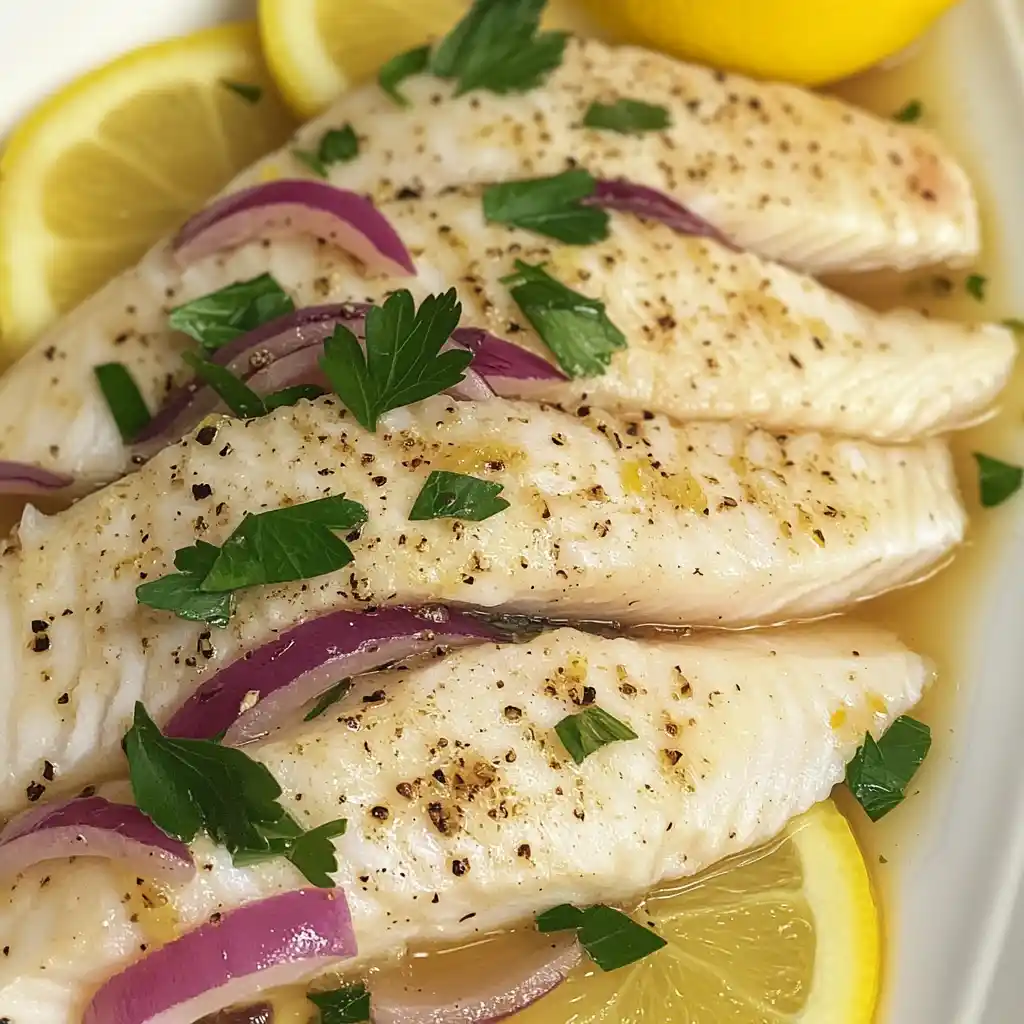
Ingredients
- 4 tilapia fillets, roughly similar thickness (firm and clean-smelling)
- 2 cups water (enough to nearly submerge the fillets)
- 1 lemon, sliced into rounds (use a fragrant, heavy lemon)
- 1 small red onion, thinly sliced
- 2 cloves garlic, finely minced
- 1 tablespoon olive oil (adds silkiness to the poaching liquid)
- 1 teaspoon salt (season the liquid aggressively—it flavors the fish)
- 1/2 teaspoon black pepper
- Fresh parsley, roughly chopped, for garnish
Instructions
- In a large skillet, combine the water, lemon slices, thinly sliced red onion, minced garlic, olive oil, salt, and black pepper. Stir to combine and bring to a simmer over medium heat.
- Let the poaching liquid simmer for a full 5 minutes before adding any fish—this crucial head start allows the aromatics to release their flavors fully into the liquid, creating a proper court bouillon.
- Taste the poaching liquid and adjust seasoning—it should taste flavorful and slightly salty. If it tastes like plain water, add more salt and let it simmer another minute.
- Gently lower the tilapia fillets into the simmering liquid using a wide spatula, placing them in a single layer. They should be mostly submerged—press gently to ensure contact with the liquid.
- Cover the skillet and poach over gentle medium heat for 8-10 minutes, maintaining a gentle simmer with occasional small bubbles. Never let it reach a rolling boil which would make the fish tough.
- Check for doneness at 8 minutes—the fish should flake easily with a fork and be completely opaque throughout with no translucent areas remaining.
- Using two wide spatulas for full support, carefully lift each fillet onto a serving dish. Spoon several tablespoons of the aromatic poaching liquid generously over the fish. Garnish with fresh parsley and serve immediately!
Nutrition Information (Per Serving):
- Calories: 175
- Carbohydrates: 4g
- Protein: 32g
- Fat: 5g
- Fiber: 1g
- Sodium: 680mg
- Vitamin B12: 40% DV
- Selenium: 60% DV
- Niacin: 35% DV
- Phosphorus: 25% DV
This dish delivers exceptional lean protein with impressive selenium and B12 from tilapia—one of the most nutritionally efficient proteins available at an accessible price point.
Notes:
- Seriously, pre-simmer the poaching liquid for 5 minutes before adding fish—this makes all the flavor difference
- Taste and season the liquid aggressively before adding fish—bland liquid makes bland fish
- Use two spatulas to support delicate tilapia when removing—it falls apart with one
- Gentle medium heat with occasional bubbles is perfect—rolling boil makes fish tough and dry
- Spoon poaching liquid generously over finished fish for the most flavorful presentation
Storage Tips:
- Best eaten fresh immediately after cooking
- Leftover poached tilapia keeps refrigerated for 1 day in the poaching liquid
- Eat cold over salad rather than reheating—reheated poached fish loses its delicate texture
- The flavorful poaching liquid keeps refrigerated for 2 days and makes excellent soup base
Serving Suggestions:
- Light Summer Dinner: Serve over steamed rice with poaching liquid spooned over everything
- Mediterranean Style: Serve over Israeli couscous with cherry tomatoes and olive oil
- Low-Carb Option: Serve over steamed vegetables with extra lemon and parsley
- Elegant Presentation: Plate on warmed dishes with the lemon slices as garnish alongside parsley
Mix It Up (Recipe Variations):
- Mediterranean Poached Tilapia: Add cherry tomatoes, capers, and fresh herbs to poaching liquid
- Coconut Ginger Version: Replace water with coconut milk and add fresh ginger
- Spicy Summer Tilapia: Add red pepper flakes and orange juice for heat and citrus
- Simple Lemon Garlic: Strip back to just lemon, garlic, salt, and water for pure minimalism
What Makes This Recipe Special:
This summer poached tilapia demonstrates that the most elegant fish cooking techniques are often the most forgiving—poaching’s controlled, gentle heat environment makes it nearly impossible to burn fish while producing a silky texture that high-heat methods constantly risk destroying. The technique of pre-simmering the aromatic poaching liquid before adding any fish is borrowed directly from classical French court bouillon preparation, where building flavor into the cooking medium before introducing the protein is understood as fundamental rather than optional. The result transforms tilapia—often dismissed as bland and uninspiring—into something genuinely elegant and worth savoring, proving that technique and seasoning matter far more than the price or prestige of the ingredient itself.
