
Ever wonder why homemade Chinese food never tastes quite like your favorite restaurant? I used to think making authentic sweet and sour chicken was impossible without a commercial kitchen until I discovered this foolproof recipe. Now I make this crispy, tangy-sweet dish at least once a week, and honestly, my family has stopped ordering takeout completely (which is saying something because the first time I tried this, I burned the chicken so badly we had to order pizza anyway and I nearly gave up forever).
Here’s the Thing About This Recipe
What makes Chinese-American sweet and sour chicken work so beautifully is that perfect balance between crispy coating, tender chicken, and that glossy sauce that’s sweet but not cloying, tangy but not sour. I learned the hard way that you can’t skip the cornstarch coating or use a different batter—this specific technique creates that restaurant-quality crunch that holds up even after you toss it in sauce. This takeout favorite relies on getting a great sear on the chicken, then building that iconic sauce with the right balance of ketchup, vinegar, and sugar. It’s honestly that simple once you understand the rhythm, and no wok or special equipment needed.
What You’ll Need (And My Shopping Tips)
Good cornstarch is essential here—it creates that super-crispy coating that’s lighter than flour. Don’t cheap out and try using regular all-purpose flour because the texture won’t be the same (happens more than I’d like to admit when I run out of cornstarch and convince myself flour will work—it doesn’t). Fresh pineapple chunks are amazing if you can get them, but canned works perfectly fine and I actually prefer the convenience.
Rice vinegar is key for authentic flavor—it’s milder and slightly sweet compared to white vinegar. I always grab the unseasoned kind so I can control the flavoring myself. Don’t substitute regular distilled vinegar unless you want your sauce to taste way too sharp. Bell peppers should be crisp and fresh—I grab whatever colors look good at the store, though the red and green combo is classic and gorgeous.
Ketchup might seem weird in Chinese food, but trust me, it’s what gives that familiar sweet and sour sauce its base. Brown sugar adds depth that white sugar can’t match. I always have an extra bottle of soy sauce on hand because I use it in everything, and running out mid-recipe is a tragedy. For more details on rice vinegar and its role in Asian cooking, check out this guide to rice vinegar from Food Network.
Let’s Make This Together
Start by cutting your chicken into bite-sized pieces—I go for about 1-inch chunks so they cook evenly and are easy to eat. Here’s where I used to mess up—I’d cut them too small and they’d overcook and dry out, or too big and the outside would burn before the inside cooked through. Aim for uniform pieces.
Set up a coating station with cornstarch in one bowl and beaten eggs in another. Season that cornstarch with a good pinch of salt and pepper before you start. Coat each chicken piece thoroughly in cornstarch, shaking off the excess, then dip into the beaten eggs. This double coating is what creates that incredible crunch.
Heat your vegetable oil in the largest skillet you own over medium-high heat until it’s shimmering hot. Here’s my secret: don’t overcrowd the pan. Cook the chicken in batches if you need to, giving each piece space to get golden and crispy on all sides. This takes about 6-8 minutes total, flipping occasionally. Don’t be me—I used to pile everything in at once and ended up with soggy, steamed chicken instead of crispy perfection.
Remove the cooked chicken to a paper towel-lined plate and don’t wipe out that skillet—those browned bits are flavor gold. Toss in your chopped onion and diced bell peppers, sautéing for about 3-4 minutes until they’re just starting to soften but still have some crunch. Add the pineapple chunks and let them warm through for about a minute. I learned this trick from watching Chinese restaurant cooks—you want the vegetables to have texture, not be mushy.
Now for the fun part—making that glossy sweet and sour sauce. In a small bowl, whisk together ketchup, rice vinegar, brown sugar, soy sauce, and water until smooth. Pour this beautiful sauce into your skillet with the vegetables and pineapple. It’ll bubble up and thicken slightly as it simmers for about 2 minutes.
Add that crispy chicken back into the skillet and toss everything together until every piece is coated in that gorgeous sauce. Let it cook together for 2-3 minutes so the flavors meld and the sauce clings to the chicken. Taste and adjust with salt and pepper if needed. For the perfect base to serve this over, try this Perfect Steamed Rice that complements the tangy-sweet flavors beautifully.
When Things Go Sideways (And They Will)
Chicken coating fell off during frying? Your oil wasn’t hot enough, or you moved the chicken too soon before the coating set. In reality, I’ve learned to let each piece sit undisturbed for at least 2 minutes before flipping. This is totally fixable—just fish out any loose coating bits from the oil and keep going.
Sauce turned out too sweet or too sour? Don’t panic—add more vinegar if it’s too sweet, or more brown sugar if it’s too tangy. You can also add a splash of water to dilute and rebalance. I always taste the sauce before adding the chicken back so I can adjust without messing up the crispy coating.
Chicken dried out and got tough? You cooked it too long or your heat was too high. If this happens (and it will at some point), the sauce helps rehydrate it a bit, but next time watch your cooking time carefully. Pull the chicken when it’s just cooked through because it continues cooking in the hot pan.
Vegetables turned mushy? You overcooked them. Sweet and sour chicken should have crisp-tender vegetables that still have some bite. I always undercook them slightly because they’ll soften more when the sauce goes in.
When I’m Feeling Creative
Extra Veggie Sweet and Sour: When I’m feeling fancy, I add snap peas, carrots, or broccoli to the vegetable mix. More vegetables means more color and nutrition without changing the basic recipe.
Spicy Sweet and Sour: Add 1-2 teaspoons of sriracha or red pepper flakes to the sauce for a kick. My husband requests this version every single time now because he loves heat.
Cashew Sweet and Sour: Around the holidays, I’ll toss in 1/2 cup of roasted cashews with the chicken for extra crunch and richness. It’s like a mashup of two classic Chinese dishes.
Lighter Baked Version: Skip the frying and bake the coated chicken on a rack at 425°F for 20-25 minutes, flipping halfway through. Not quite as crispy, but way less oil and still delicious.
Why This Works So Well
This sweet and sour chicken captures the essence of Chinese-American cuisine that developed when Chinese immigrants adapted their traditional cooking to American ingredients and tastes in the mid-20th century. The combination of ketchup-based sauce with rice vinegar and soy sauce creates that familiar tangy-sweet profile that became a staple of American Chinese restaurants. What sets this homemade version apart from greasy takeout is the fresh vegetables, lighter coating, and control over the sauce’s sweetness level. The technique of double-coating chicken in cornstarch and egg, then frying until crispy, is fundamental to many Chinese cooking styles and creates superior texture compared to heavy batters. The cultural history of Chinese-American cuisine shows how dishes like sweet and sour chicken evolved to become beloved American comfort food while maintaining connections to Chinese culinary traditions.
Things People Ask Me About This Recipe
Can I make this sweet and sour chicken ahead of time?
The chicken is definitely best served immediately while it’s crispy, but you can prep everything ahead. Cut the chicken, make the sauce, chop the vegetables—then it’s just 20 minutes of cooking when you’re ready to eat. Leftovers reheat okay in the oven at 350°F, though the coating won’t be quite as crispy.
What if I can’t find rice vinegar?
In a pinch, use apple cider vinegar diluted with a tiny bit of water and a pinch of sugar. It’s not exactly the same, but it’s closer than white vinegar. Rice vinegar is worth keeping on hand though—it’s great in so many Asian dishes.
Can I use chicken thighs instead of breasts?
Absolutely! Thighs are actually juicier and more forgiving if you slightly overcook them. They take about the same amount of time to cook through. I use thighs about half the time because they’re cheaper and tastier.
Is this recipe beginner-friendly?
Totally. If you can fry chicken and mix a sauce, you’ve got this. The steps are straightforward, and even if your chicken isn’t perfectly crispy or your sauce isn’t perfectly balanced, it’ll still taste way better than most takeout. My college-age son makes this in his apartment with limited equipment.
How do I get the coating extra crispy?
Make sure your oil is properly hot (a piece of chicken should sizzle immediately when you add it), don’t overcrowd the pan, and let the chicken sit undisturbed for the first 2 minutes per side. The cornstarch coating needs time to set and crisp up before you flip it.
What’s the best way to serve sweet and sour chicken?
Classic presentation is over steamed white rice or fried rice. I also love it with lo mein noodles or just eaten straight from the pan with chopsticks when nobody’s watching. Add some steamed broccoli on the side for a complete meal.
Why I Had to Share This
I couldn’t resist sharing this because sweet and sour chicken shouldn’t mean greasy takeout in styrofoam containers—you can make it better at home with ingredients you can pronounce. The best dinner nights are when you serve this gorgeous, glossy dish over rice and everyone thinks you ordered in, then you casually mention you made it yourself. You’ve totally got this.
Print
Sweet and Sour Chicken
Description
Crispy, golden chicken pieces tossed with colorful peppers, sweet pineapple, and that iconic tangy-sweet sauce—this Chinese-American takeout favorite is easier to make at home than you think and tastes fresher than any restaurant version.
Prep Time: 15 minutes | Cook Time: 20 minutes | Total Time: 35 minutes | Servings: 4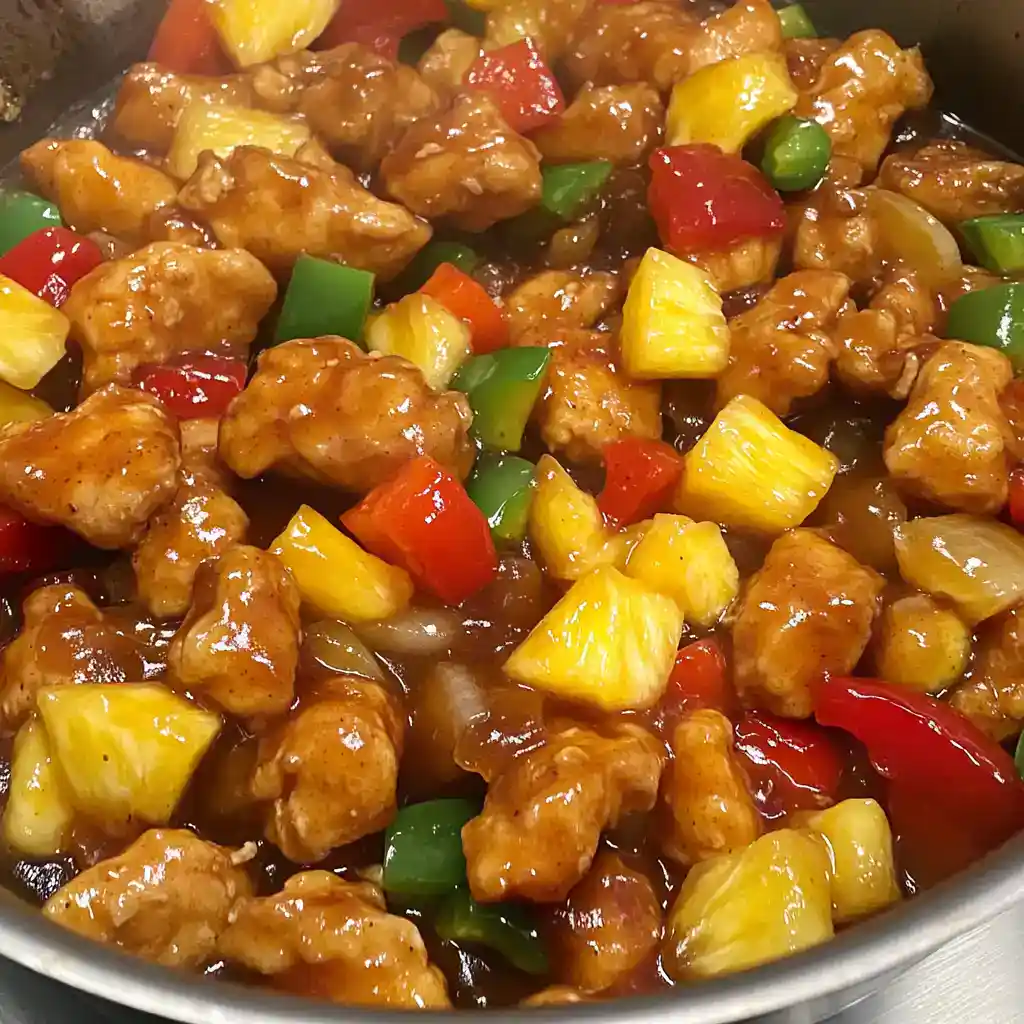
Ingredients
- 1 lb boneless, skinless chicken breasts, cut into bite-sized pieces (about 1-inch chunks)
- 1/2 cup cornstarch (plus a pinch of salt and pepper mixed in)
- 2 large eggs, beaten
- 1 cup pineapple chunks (fresh or canned, drained if using canned)
- 1 red bell pepper, diced into 1-inch pieces
- 1 green bell pepper, diced into 1-inch pieces
- 1 medium onion, chopped
- 1/2 cup ketchup
- 1/4 cup rice vinegar (unseasoned)
- 1/4 cup brown sugar, packed
- 2 tablespoons soy sauce (I use low-sodium)
- 1/2 cup water
- 2 tablespoons vegetable oil (plus more if needed for frying)
- Salt and pepper to taste
Instructions
- Get your mise en place ready—cut the chicken into uniform bite-sized pieces, about 1 inch each so they cook evenly. Pat them dry with paper towels because moisture is the enemy of crispy coating.
- Set up your coating station: Mix cornstarch with a good pinch of salt and pepper in one shallow bowl. Beat the eggs in another shallow bowl. Line a plate with paper towels for draining.
- Coat each chicken piece thoroughly in the seasoned cornstarch, shaking off any excess. Then dip into the beaten eggs, letting the excess drip off. This double coating creates that restaurant-quality crunch.
- Heat vegetable oil in your largest skillet over medium-high heat until it shimmers. Test with one piece—it should sizzle immediately. Working in batches to avoid crowding, fry the chicken pieces for 6-8 minutes total, flipping occasionally, until golden brown and cooked through with no pink inside. Don’t move them too much—let the coating set first.
- Transfer cooked chicken to the paper towel-lined plate and set aside. Don’t wipe out that skillet—those browned bits are pure flavor.
- In the same skillet (drain off all but about 1 tablespoon of oil), sauté the chopped onion and diced bell peppers over medium-high heat for 3-4 minutes until just starting to soften but still crisp. You want texture, not mush.
- Add the pineapple chunks and cook for another minute, just to warm them through and let them pick up the flavors in the pan.
- In a small bowl, whisk together ketchup, rice vinegar, brown sugar, soy sauce, and water until smooth. This is your sweet and sour sauce—taste it and adjust if you want it sweeter or tangier.
- Pour the sauce mixture into the skillet with the vegetables and pineapple. Stir everything together and bring to a simmer. Let it bubble for about 2 minutes until it thickens slightly and becomes glossy.
- Add the fried chicken back into the skillet and toss everything together to coat every piece with that gorgeous sauce. Let it cook together for 2-3 minutes so the flavors meld and the sauce clings to the chicken.
- Taste and season with additional salt and pepper if needed. Remember, soy sauce is salty, so start light.
- Serve hot over steamed rice, garnished with sesame seeds or green onions if you’re feeling fancy. Grab some chopsticks and dig in before it gets cold.
Nutrition Information (Per Serving):
- Calories: 420
- Carbohydrates: 52g
- Protein: 28g
- Fat: 11g
- Fiber: 3g
- Sodium: 780mg
- Vitamin C: 110% DV
- Iron: 12% DV
- Vitamin A: 25% DV
This sweet and sour chicken provides excellent vitamin C from bell peppers and quality protein from chicken. The colorful vegetables add antioxidants and fiber for a balanced meal.
Notes:
- Room temperature chicken fries more evenly than cold chicken straight from the fridge. Let it sit out for 15 minutes before coating.
- Don’t overcrowd the pan when frying—work in batches if needed. Crowding lowers the oil temperature and makes soggy chicken instead of crispy.
- Every stove runs differently, so watch your heat. Too hot and the coating burns before the chicken cooks; too cool and you get greasy, soggy coating.
- The sauce thickens as it sits, so if you’re making this ahead, you might need to add a splash of water when reheating.
- Fresh pineapple tastes amazing, but canned pineapple chunks (drained well) work perfectly and save time.
Storage Tips:
Store leftovers in an airtight container in the refrigerator for up to 3 days. Reheat in a 350°F oven for 10-12 minutes to help restore some crispness—microwaving makes the coating soggy. The sauce might separate slightly when cold, but it comes back together when reheated. Don’t freeze this dish because the coating gets weird and mushy when thawed.
Serving Suggestions:
- Classic Style: Serve over fluffy steamed white rice with the sauce spooned over everything
- Fried Rice Base: Make it a complete meal by serving over vegetable fried rice
- Noodle Bowl: Toss with lo mein noodles instead of rice for a different texture
- Lettuce Wraps: Serve with crisp lettuce cups for a lighter, low-carb option
Mix It Up (Recipe Variations):
- Extra Veggie Version: Add snap peas, carrots, baby corn, or broccoli florets to the vegetable mix
- Spicy Sweet and Sour: Add 1-2 teaspoons sriracha or red pepper flakes to the sauce for heat
- Cashew Addition: Toss in 1/2 cup roasted cashews with the chicken for extra crunch
- Baked Lighter Version: Bake coated chicken on a wire rack at 425°F for 20-25 minutes instead of frying
What Makes This Recipe Special:
This sweet and sour chicken uses authentic Chinese-American cooking techniques that create superior texture and flavor compared to heavy, greasy takeout versions. The method of double-coating chicken in cornstarch and egg produces an incredibly light, crispy exterior that stays crunchy even after saucing. The homemade sweet and sour sauce uses fresh ingredients and balanced proportions, letting you control sweetness and avoiding the corn syrup-heavy versions from many restaurants.
