
Ever wonder why some Thai curries taste flat and watery while others have complex, layered flavors with just the right balance of spicy, sweet, salty, and creamy? I used to think making Thai asparagus stew was as simple as dumping curry paste into coconut milk until I discovered that blooming the paste in oil first and balancing the seasonings is crucial. Now my family requests this aromatic, vegetable-packed stew for weeknight dinners, and I’m pretty sure my neighbors follow the incredible smells to my door (if only they knew how many batches I made that tasted like one-dimensional coconut soup before learning the proper technique).
Here’s the Thing About This Recipe
What makes this Thai asparagus stew work is blooming the red curry paste in oil to release its essential oils and complex flavors, then building layers with coconut milk, broth, and the holy trinity of Thai seasonings—soy sauce for salt, brown sugar for sweet, and the curry paste for heat and aromatics. I learned the hard way that you can’t just add curry paste to liquid and expect magic; it needs to be cooked in fat first to develop its full potential. This Thai-inspired vegetarian stew brings together tender-crisp asparagus with sweet bell peppers in a luscious coconut curry broth that’s both comforting and exotic. It’s honestly that simple: proper curry paste blooming, quality coconut milk, fresh vegetables added at the right time, and balancing the sweet-salty-spicy-creamy elements.
What You’ll Need (And My Shopping Tips)
Good fresh asparagus is worth seeking out—look for firm, bright green spears with tight tips and no slimy or dried-out ends (I learned this after buying limp, sad asparagus three times and ending up with mushy, flavorless vegetables). You’ll need 1 pound, which is typically one bunch. Trim the woody ends by snapping where they naturally break.
For the Thai curry base, grab full-fat coconut milk (don’t use “lite” or the stew will be thin and lacking richness), vegetable broth, quality Thai red curry paste (I prefer Thai Kitchen or Mae Ploy brands—check the ingredients for authentic fish sauce, lemongrass, and galangal), soy sauce, and brown sugar. Don’t cheap out on curry paste from the “international aisle” that’s mostly food coloring and salt (happens more than I’d like to admit when I grab whatever’s cheapest).
For vegetables and aromatics, you’ll need one red bell pepper, one yellow bell pepper (the colors make this visually stunning), a small onion, fresh garlic, and fresh ginger. Fresh ginger is non-negotiable here—the jarred stuff doesn’t deliver the same aromatic punch that makes Thai food special.
Vegetable oil, fresh cilantro for garnish, and cooked rice for serving round out the ingredients. If you’re curious about Thai curry and the regional variations, Wikipedia has fascinating information about how different curry pastes developed across Thailand.
Let’s Make This Together
Start by prepping all your vegetables—this is important for Thai cooking where things move quickly. Trim your asparagus and cut into 2-inch pieces, slice your bell peppers into strips, thinly slice your onion, mince your garlic, and grate your ginger. Having everything ready before you start cooking is crucial. I learned this from making Thai food where I’d be frantically chopping while aromatics burned in the pan.
Heat 1 tablespoon of vegetable oil in a large pot over medium heat. Add the thinly sliced onion, minced garlic, and grated ginger. Sauté for about 2 minutes, stirring frequently, until incredibly fragrant and the onion starts to soften. Your kitchen should smell amazing—that’s the aromatics releasing their essential oils.
Now for the crucial curry paste blooming step: stir in the red curry paste and cook for another minute, stirring constantly. Here’s where I used to mess up: I’d add the paste and immediately dump in the liquids. Instead, let it cook in the oil for a full minute, watching it darken slightly and become incredibly aromatic. This blooming releases the curry paste’s essential oils and develops depth of flavor you simply can’t achieve by adding it to liquid. I learned this game-changing technique from a Thai cooking class that emphasized this step is what separates restaurant curry from home-cooked versions.
Add the coconut milk, vegetable broth, soy sauce, and brown sugar. Stir everything well to combine and dissolve the curry paste into the liquid. The mixture should be smooth and creamy, not clumpy with undissolved paste. Bring to a gentle simmer.
Add the sliced bell peppers and let simmer for about 5 minutes until they’re slightly tender but still have some crunch. The peppers add sweetness and texture contrast to the tender asparagus.
Add the asparagus pieces and cook for an additional 5-7 minutes. Here’s my secret timing: I want asparagus that’s tender but still has a pleasant snap when you bite it—not mushy and army-green. Start checking at 5 minutes by piercing a piece with a fork; it should offer slight resistance but not be raw and fibrous. Trust me on this timing; overcooked asparagus is sad and loses all its vibrant color and fresh flavor.
Taste the broth and adjust seasoning. Does it need more heat? Add a bit more curry paste (bloom it in a spoon first with some of the hot broth). Too spicy? Add a splash more coconut milk or a bit more brown sugar to balance. Not salty enough? Add more soy sauce a teaspoon at a time. The flavors should be balanced—you should taste sweet, salty, spicy, and creamy all working together, with no single element dominating. This tasting and adjusting is what makes the difference between good and great Thai food.
Serve the Thai asparagus stew hot over cooked jasmine rice (traditional for Thai dishes—its fragrant, slightly sticky texture is perfect for soaking up the sauce). Garnish generously with fresh chopped cilantro for that pop of green and herbaceous freshness. If you’re looking for another Thai-inspired vegetable dish, try this Thai Basil Eggplant that uses similar flavor-building techniques.
The combination of creamy coconut curry broth, tender-crisp asparagus, sweet bell peppers, and aromatic Thai flavors is absolutely restaurant-worthy and comes together in under 30 minutes.
When Things Go Sideways (And They Will)
Curry tastes flat and one-dimensional despite using curry paste? You didn’t bloom the paste in oil long enough or at all. In reality, I’ve learned that curry paste needs that crucial minute cooking in oil to release its essential oils and develop complex flavors. If this happened, you can’t fully fix it, but simmering longer helps.
Asparagus turned mushy and olive-green? You cooked it too long or at too high heat. Asparagus should be tender-crisp after 5-7 minutes of gentle simmering, not mushy. Next time, check at 5 minutes and pull it when it still has snap.
Too spicy or not spicy enough? Curry paste brands vary wildly in heat level. If too spicy, add more coconut milk and brown sugar to balance. If not spicy enough, bloom more curry paste in a small amount of oil and stir it in. Adjust to your heat tolerance.
Stew is too thin and watery? You used lite coconut milk or too much broth. Let it simmer uncovered for a few minutes to reduce and concentrate the flavors, or stir in a bit more full-fat coconut milk. Don’t panic—this is fixable with time and heat.
Ways to Mix It Up
Protein-Packed Thai Stew: When I want something heartier, I’ll add cubed extra-firm tofu or chickpeas for plant-based protein, or shrimp for a non-vegetarian version. Around busy weeknights, protein makes this a complete one-pot meal.
Thai Green Curry Version: Use green curry paste instead of red for a different flavor profile that’s typically more herbal and slightly less spicy—equally delicious.
Veggie-Loaded Stew: Add sliced mushrooms, baby corn, snap peas, or bamboo shoots along with the bell peppers for even more vegetables and authentic Thai curry vibes.
Spicy Basil Thai Stew: Add a handful of fresh Thai basil leaves at the very end (right before serving) for that authentic anise-like basil flavor that’s distinctive in Thai cooking.
What Makes This Recipe Special
This Thai asparagus stew represents the beautiful complexity of Thai cuisine—balancing sweet, salty, spicy, and creamy flavors in one harmonious dish. What makes this work is understanding Thai cooking’s fundamental principles: blooming aromatics and curry paste in fat releases essential oils and creates depth, coconut milk provides richness and tames heat, and the combination of soy sauce (salty), brown sugar (sweet), and curry paste (spicy) creates that distinctive Thai flavor balance. Asparagus might seem like an unusual choice for Thai curry (it’s not a traditional Thai vegetable), but its tender-crisp texture and slightly sweet, grassy flavor actually work beautifully in coconut curry, and using seasonal spring vegetables is very much in the spirit of Thai cooking which emphasizes fresh, local ingredients. The technique of adding vegetables in stages based on their cooking times ensures everything reaches perfect doneness simultaneously—bell peppers need a few minutes to soften and sweeten, while asparagus cooks quickly and should retain some snap. Thai red curry paste is a complex ingredient made from red chilies, lemongrass, galangal (Thai ginger), kaffir lime, shallots, garlic, and shrimp paste, all pounded together—blooming this paste in oil before adding liquid is what transforms it from raw spice paste into the foundation of incredible curry. The use of both coconut milk and vegetable broth creates a sauce that’s creamy but not heavy, rich but still light enough to highlight the vegetables. The history of Thai curry shows influences from Indian curry traditions adapted with local Thai ingredients and flavor preferences, creating something distinctly Southeast Asian.
Things People Ask Me About This Recipe
Can I use frozen asparagus instead of fresh?
You can, but the texture won’t be as good—frozen asparagus releases more water and gets softer faster. If using frozen, add it in the last 3-4 minutes of cooking and expect it to be more tender. Fresh is really worth it for this recipe.
What if I can’t find Thai red curry paste?
Look in the Asian section of well-stocked grocery stores, or buy it online. In a pinch, you could substitute Indian curry paste, but the flavor will be different—more cumin-forward and less lemongrass-galangal aromatic.
Is this Thai asparagus stew vegan?
It depends on your curry paste! Many Thai curry pastes contain shrimp paste or fish sauce. Check the label—some brands make vegetarian/vegan versions. If using traditional paste with fish products, it’s not vegan but is vegetarian-friendly.
Can I make this ahead for meal prep?
Yes! This actually tastes better the next day after flavors have melded. Make up to 3 days ahead and store in the fridge. The asparagus will soften slightly but still taste great. Reheat gently and add fresh cilantro right before serving.
How do I adjust the spice level?
Start with less curry paste (1 tablespoon instead of 2) if you’re heat-sensitive, or add more (up to 3 tablespoons) if you love spice. You can always add more but can’t take it away. Balance heat with extra coconut milk and brown sugar.
What type of rice should I serve this with?
Jasmine rice is traditional for Thai dishes—its fragrant, slightly sticky texture is perfect for soaking up curry sauce. Basmati or brown rice work too, but jasmine is most authentic.
One Last Thing
I couldn’t resist sharing this Thai asparagus stew because it’s the recipe that taught me Thai cooking isn’t intimidating when you understand the fundamentals of flavor balance and proper technique. The best curry nights are when your kitchen smells like a Bangkok street market and everyone’s fighting over the last spoonful of sauce-soaked rice. You don’t need a trip to Thailand or complicated skills—just quality curry paste, proper blooming technique, and the confidence to taste and adjust until the flavors sing.
Print
Thai Asparagus Stew
Description
This aromatic Thai asparagus stew combines tender-crisp asparagus with sweet bell peppers in a luscious coconut curry broth, showcasing proper curry paste blooming technique and Thai flavor balance of sweet, salty, spicy, and creamy for restaurant-quality results at home.
Prep Time: 10 minutes | Cook Time: 20 minutes | Total Time: 30 minutes | Servings: 4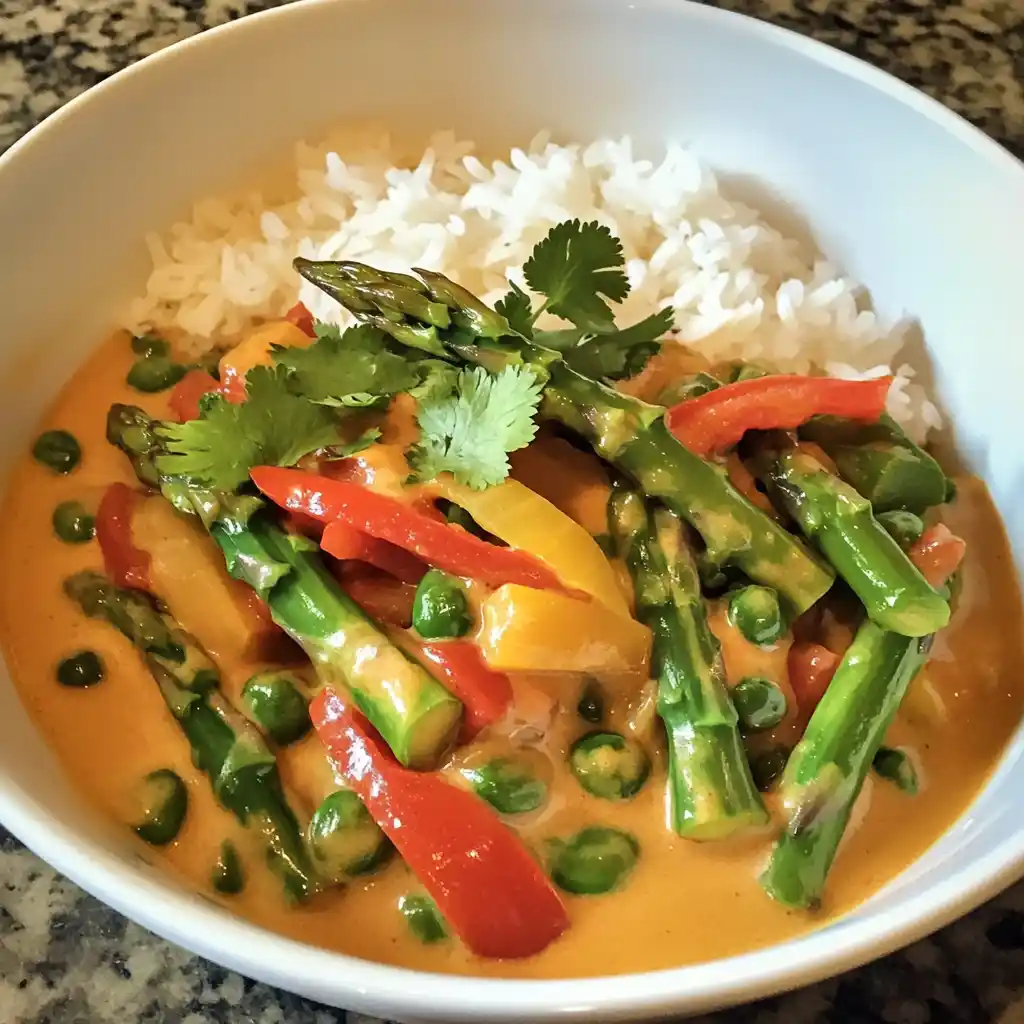
Ingredients
For the Stew:
- 1 lb fresh asparagus, trimmed and cut into 2-inch pieces (look for firm, bright green spears)
- 1 can (14 oz) full-fat coconut milk (don’t use lite—you need the richness)
- 1 cup vegetable broth (low-sodium preferred)
- 2 tbsp Thai red curry paste (Thai Kitchen or Mae Ploy brands are good)
- 1 tbsp soy sauce (for salty umami)
- 1 tbsp brown sugar (for balancing sweetness)
- 1 red bell pepper, sliced into strips
- 1 yellow bell pepper, sliced into strips (the colors are visually stunning)
- 1 small onion, thinly sliced
- 2 cloves garlic, minced (fresh only)
- 1 tbsp fresh ginger, grated (about 1-inch piece—jarred won’t cut it)
- 1 tbsp vegetable oil
For Serving:
- Fresh cilantro, chopped (essential for brightness and authentic finish)
- Cooked jasmine rice (traditional for Thai dishes)
Instructions
- Prep all vegetables before starting: trim asparagus and cut into 2-inch pieces, slice bell peppers, thinly slice onion, mince garlic, grate ginger. Having everything ready is crucial for Thai cooking that moves quickly.
- Heat 1 tablespoon vegetable oil in a large pot over medium heat. Add thinly sliced onion, minced garlic, and grated ginger. Sauté for about 2 minutes, stirring frequently, until incredibly fragrant and onion starts to soften.
- Stir in the red curry paste and cook for another full minute, stirring constantly. Let it cook in the oil, watching it darken slightly and become incredibly aromatic. This blooming releases essential oils and develops depth—don’t skip this crucial step.
- Add the coconut milk, vegetable broth, soy sauce, and brown sugar. Stir everything well to combine and dissolve the curry paste into the liquid—it should be smooth and creamy, not clumpy. Bring to a gentle simmer.
- Add the sliced bell peppers and simmer for about 5 minutes until they’re slightly tender but still have some crunch.
- Add the asparagus pieces and cook for an additional 5-7 minutes. Start checking at 5 minutes—asparagus should be tender but still have a pleasant snap when you bite it, not mushy and army-green.
- Taste the broth and adjust seasoning: Need more heat? Add a bit more curry paste. Too spicy? Add more coconut milk or brown sugar. Not salty enough? Add more soy sauce. The flavors should be balanced—sweet, salty, spicy, and creamy all working together.
- Serve hot over cooked jasmine rice. Garnish generously with fresh chopped cilantro for that pop of green and herbaceous freshness.
Nutrition Information (Per Serving, without rice):
- Calories: 285
- Carbohydrates: 22g
- Protein: 6g
- Fat: 22g
- Fiber: 5g
- Sodium: 580mg
- Vitamin C: 130% DV
- Vitamin A: 45% DV
- Iron: 15% DV
This Thai asparagus stew provides exceptional vitamin C from bell peppers and asparagus, plus healthy fats from coconut milk.
Notes:
- Bloom the curry paste in oil for a full minute before adding liquids—this is crucial for depth of flavor.
- Use full-fat coconut milk for richness; lite versions make thin, watery curry.
- Cook asparagus only 5-7 minutes to maintain tender-crisp texture and bright green color.
- Taste and adjust seasoning—Thai cooking is all about balance of sweet, salty, spicy, creamy.
- Fresh ginger makes a huge difference over jarred—worth the extra effort.
- Prep all vegetables before starting since Thai cooking moves quickly once you begin.
Storage Tips:
Store cooled stew in an airtight container in the fridge for up to 4 days. This actually tastes better the next day after flavors have melded—the asparagus will soften slightly but still taste great. Reheat gently on the stovetop over medium-low heat, stirring occasionally, or microwave in 1-minute intervals. Don’t boil aggressively or the coconut milk can separate. Add fresh cilantro right before serving rather than storing it garnished. This doesn’t freeze well—the asparagus texture suffers and the coconut milk can separate when thawed.
Serving Suggestions:
- Traditional Thai Style: Over jasmine rice with lime wedges on the side for squeezing
- Complete Meal: With spring rolls or Thai cucumber salad as appetizers
- Low-Carb Option: Over cauliflower rice instead of regular rice for lighter version
- Protein Addition: Add cubed tofu, chickpeas, or shrimp for more substantial meal
Mix It Up (Recipe Variations):
Protein-Packed Thai Stew: Add cubed extra-firm tofu, chickpeas, or shrimp for plant-based or seafood protein that makes this a complete one-pot meal.
Thai Green Curry Version: Use green curry paste instead of red for different flavor profile that’s more herbal and slightly less spicy—equally delicious.
Veggie-Loaded Stew: Add sliced mushrooms, baby corn, snap peas, or bamboo shoots with bell peppers for more vegetables and authentic Thai curry vibes.
Spicy Basil Thai Stew: Add handful of fresh Thai basil leaves right before serving for that authentic anise-like basil flavor distinctive in Thai cooking.
What Makes This Recipe Special:
This Thai asparagus stew showcases Thai cooking’s fundamental principles—blooming curry paste in fat releases essential oils, coconut milk provides richness, and balancing soy sauce (salty), brown sugar (sweet), and curry paste (spicy) creates distinctive Thai harmony. Understanding to add vegetables in stages ensures everything reaches perfect doneness simultaneously.
