
Description
Creamy Arborio rice infused with coconut milk and red curry paste creates this unexpected Thai baby carrots risotto that brings bold Thai flavors to classic Italian technique.
Prep Time: 10 minutes | Cook Time: 30 minutes | Total Time: 40 minutes | Servings: 4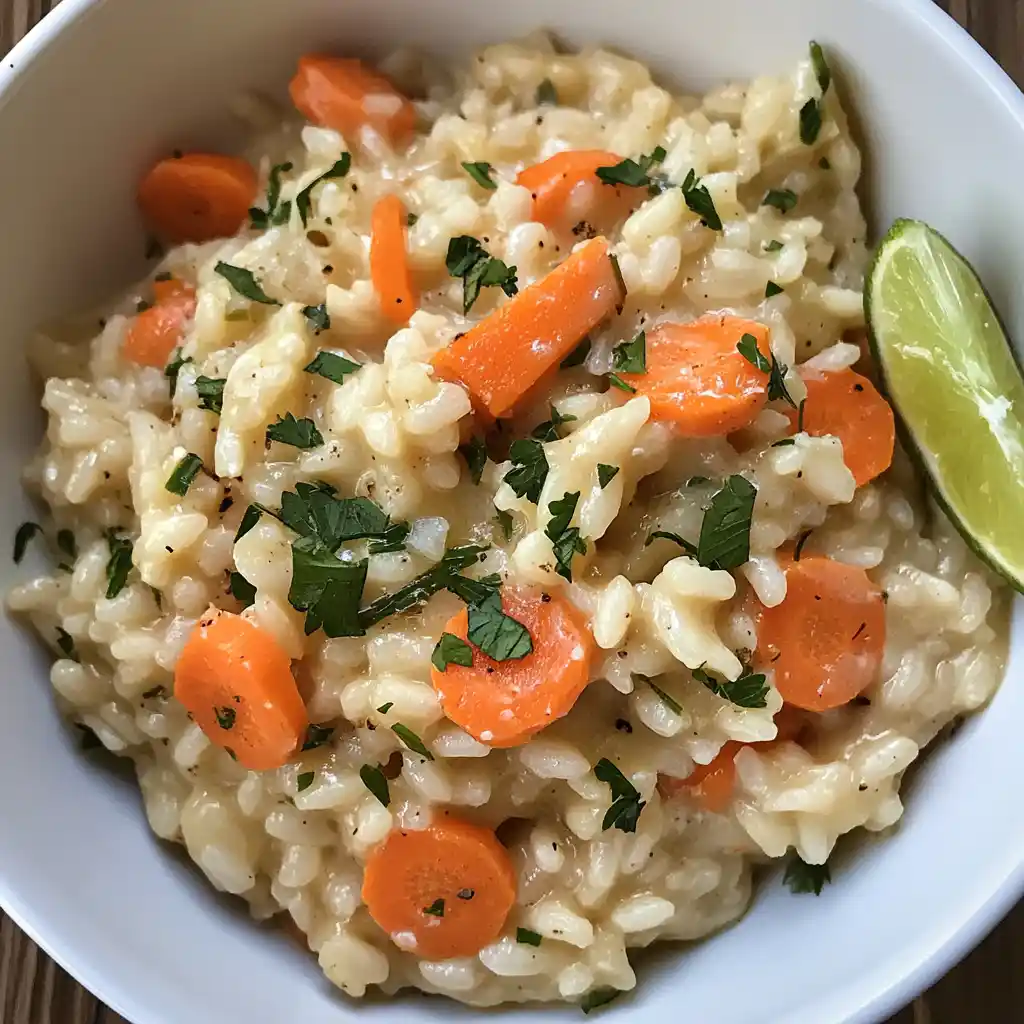
Ingredients
- 1 cup Arborio rice (don’t substitute regular rice—the starch is essential)
- 2 tbsp olive oil
- 1 small onion, finely chopped (yellow or white onion both work)
- 2 cloves garlic, minced (fresh is non-negotiable)
- 1 lb baby carrots, peeled and sliced into rounds (about 1/4-inch thick)
- 4 cups vegetable broth (keep warm in a separate pan)
- 1/2 cup full-fat coconut milk (from a can, not the carton beverage)
- 1 tsp red curry paste (adjust to your heat preference—start conservatively)
- Salt and pepper, to taste (start with 1/2 tsp salt, 1/4 tsp pepper)
- Fresh cilantro, for garnish (about 1/4 cup, chopped)
- Lime wedges, for serving (essential for brightness)
Instructions
- Heat your vegetable broth in a separate saucepan and keep it warm over low heat throughout the cooking process. This is crucial—cold broth stops the cooking.
- In your largest, heavy-bottomed saucepan, heat olive oil over medium heat. Add finely chopped onion and minced garlic, and sauté for 3-4 minutes, stirring occasionally, until softened and fragrant.
- Add Arborio rice to the pan and stir constantly for 1-2 minutes until the grains are lightly toasted, coated with oil, and starting to turn translucent at the edges. You’ll hear them click.
- Add your sliced baby carrots and continue cooking for another 2 minutes, stirring frequently so nothing sticks or burns.
- In a bowl, whisk together about 1 cup of the warm broth with the coconut milk and red curry paste until completely combined with no lumps of curry paste visible.
- Begin adding the curry-coconut mixture to the rice one ladle at a time (about 1/2 cup), stirring constantly. Wait until each addition is almost completely absorbed before adding the next—you should see the pan bottom when you draw your spoon through.
- Continue this process, alternating between the curry-coconut mixture and plain warm broth, always stirring and always waiting for absorption. This takes patience—about 18-20 minutes total.
- After 18 minutes, taste the rice. It should be tender but still have a slight bite (al dente) in the center. The risotto should be creamy and flow slightly when you tilt the pan, described as all’onda or “like a wave.”
- Season with salt and pepper to taste—you’ll probably need more than you think. Remove from heat and let rest for 1 minute so the texture settles.
- Serve immediately in warm bowls, garnished generously with fresh cilantro and lime wedges on the side. Squeeze the lime over the top right before eating—this brightness is essential.
Nutrition Information (Per Serving):
- Calories: 320
- Carbohydrates: 52g
- Protein: 6g
- Fat: 10g
- Fiber: 4g
- Sodium: 680mg
- Vitamin A: 180% DV (thanks to those carrots!)
- Vitamin C: 15% DV
- Iron: 12% DV
This Thai baby carrots risotto provides complex carbohydrates and exceptional vitamin A while incorporating healthy fats from coconut milk.
Notes:
- Seriously, keep that broth warm—adding cold liquid stops the cooking and makes everything take longer
- Constant stirring isn’t optional—it’s what releases starch and creates creaminess
- Every stove cooks differently, so trust the texture test more than exact timing
- Risotto waits for no one—serve immediately for best texture
Storage Tips:
Risotto is best served immediately for optimal creamy texture. If you have leftovers, store in an airtight container in the fridge for up to 2 days. Reheat gently in a pan over medium-low heat, adding extra broth and stirring constantly to restore creaminess. You can also form cold risotto into patties and pan-fry them for crispy risotto cakes—a delicious way to use leftovers. Don’t freeze risotto—the texture becomes grainy and separated when thawed.
Serving Suggestions:
- Main Course: This is substantial enough to serve as a vegetarian main dish with a simple side salad
- Side Dish: Serve alongside grilled fish or chicken for an elegant fusion dinner
- Dinner Party: Present in a large serving bowl family-style for impressive communal dining
- Lunch Bowl: Top with a fried egg and extra cilantro for a satisfying next-day lunch
Mix It Up (Recipe Variations):
Thai Shrimp and Carrot Risotto: Add 1/2 pound peeled, deveined shrimp during the last 5 minutes of cooking for protein-packed elegance and authentic Thai seafood flavors.
Butternut Squash Thai Risotto: Substitute roasted butternut squash for the carrots for sweeter, earthier fall flavors that are absolutely comforting.
Spicy Thai Version: Double the red curry paste and add sliced fresh Thai chilies for serious heat that curry enthusiasts will absolutely love.
Green Curry Style: Use green curry paste instead of red and stir in fresh Thai basil leaves at the end for a completely different, herbaceous Thai flavor profile.
What Makes This Recipe Special:
This Thai baby carrots risotto proves that respecting traditional techniques while fearlessly incorporating flavors from different cuisines can create something truly special. By maintaining the classic Italian method of gradual liquid addition and constant stirring while adding Thai ingredients like coconut milk and curry paste, this recipe achieves fusion that actually works. The sweet baby carrots bridge both cuisines—carrots are used in both Italian and Thai cooking—while the creamy coconut and spicy curry transform familiar risotto into an exciting adventure. This dish honors both culinary traditions while creating something completely new.