
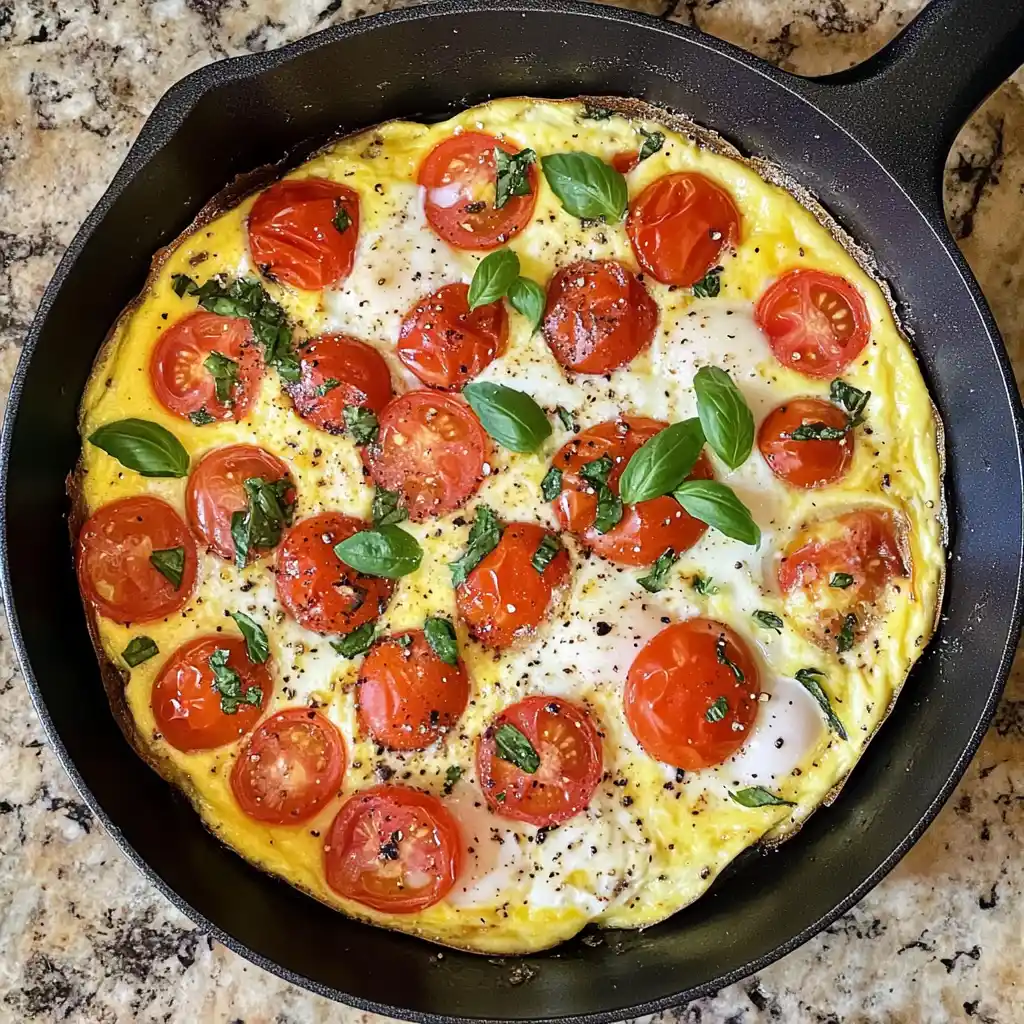
Ever wonder why restaurant frittatas look like perfect golden domes while yours comes out flat and rubbery? I used to think making a gorgeous tomato basil frittata required some kind of chef’s secret until my Italian grandmother showed me her no-fail technique. Now I’m making this stunning Italian egg dish every weekend, and my brunch guests think I suddenly mastered gourmet cooking (if only they knew about the four sad, deflated attempts I composted before finally getting that perfect puffy texture).
Here’s the Thing About This Recipe
What makes this tomato basil frittata work is the stovetop-to-oven method that creates crispy golden edges and a custardy center without constantly babysitting the stove. I learned the hard way that cooking it entirely on the stovetop burns the bottom before the top sets, and baking it only in the oven dries it out completely. This hybrid technique is honestly genius—you get that beautiful crust on the bottom and perfectly cooked eggs throughout. The cherry tomatoes release just enough juice to keep everything moist, and fresh basil makes it taste like you’re eating breakfast in Tuscany. No fancy tricks needed, just good ingredients and the right cooking method.
What You’ll Need (And My Shopping Tips)
Good fresh eggs are worth hunting down—look for ones with bright orange-yellow yolks, not pale yellow. I always buy from the farmers market when I can because fresh eggs make such a difference in texture and flavor (happens more than I’d like to admit when I settle for the cheapest carton and regret it). Don’t cheap out on the cherry tomatoes; pick ones that are firm, deeply colored, and smell sweet—those sad, pale winter tomatoes will make a watery, flavorless frittata.
Fresh basil is essential here—dried basil tastes nothing like the real thing and will make this taste like cheap pizza instead of elegant Italian cooking. Look for bright green leaves without any brown spots. The mozzarella should be the real stuff you shred yourself, not pre-shredded (it’s coated in anti-caking powder that prevents smooth melting). Whole milk works better than skim for richness, and good olive oil adds flavor you can actually taste. Learn more about selecting fresh eggs for the best frittata texture. I always grab extra tomatoes and basil because someone inevitably wants more piled on their slice.
Here’s How We Do This
Start by cranking your oven to 350°F so it’s ready when you need it. Grab your oven-safe skillet—and I mean really check that the handle is oven-safe, because melting a plastic handle at 350°F is not fun (don’t be me, I’ve done this twice). In a bowl, crack those eggs and whisk them together with the milk, salt, and pepper until you see tiny bubbles forming on top. Here’s my secret: whisking air into the eggs makes them fluffy instead of dense.
Heat your olive oil in the skillet over medium heat—not too hot or the eggs will scramble instead of setting smoothly. Toss in those halved cherry tomatoes and let them cook for 2-3 minutes until they start to soften and release some of their juice. You’ll see them get slightly wrinkled and smell amazing. Here’s where I used to mess up: don’t let them cook so long that they turn to mush. You want them softened but still holding their shape.
Pour the egg mixture right over those tomatoes in the skillet, giving the pan a gentle shake to distribute everything evenly. Sprinkle the chopped fresh basil all over the top—it’ll sink in slightly as it cooks. Now this is important: don’t stir or scramble the eggs. Just let them sit there on medium heat for 4-5 minutes. Use a spatula to occasionally lift the edges and let uncooked egg flow underneath, but resist the urge to mess with it too much.
The edges should be set but the center should still look wet and jiggly when you’re ready for the next step. Sprinkle that mozzarella cheese all over the top (I always add extra because cheese makes everything better). Now slide the whole skillet into your preheated oven and bake for 10-12 minutes. I learned this trick from my grandmother: start checking at 10 minutes because frittatas go from perfect to overcooked fast. It’s done when the center barely jiggles when you shake the pan and the cheese is melted and golden.
Let it cool in the skillet for about 5 minutes before slicing—if you cut it immediately, it’ll be a runny mess. Trust me on this one.
If you’re looking for more Italian egg inspiration, try this Easy Italian Baked Eggs that uses similar flavors.
If This Happens, Don’t Panic
Frittata turned out rubbery and tough instead of tender? You probably cooked it too long or at too high a temperature. In reality, I’ve learned to check early and often—this tomato basil frittata should be soft and custardy, never dry. If the center looks shrunken and the edges are pulling away dramatically, you’ve gone too far. Next time, pull it out when it still has a slight jiggle in the very center.
Bottom burned but the top is still raw and liquidy? Your stovetop heat was way too high. Don’t stress about this part—just lower your heat to medium-low next time and be patient during the stovetop portion. If this happens (and it will at least once), you can scrape off the burned bits and the rest is totally edible, just not Instagram-worthy.
Got a flat, dense frittata instead of fluffy and light? You didn’t whisk enough air into the eggs, or you stirred too much on the stovetop and deflated everything. The eggs should look foamy when you whisk them, and once you pour them in the skillet, leave them alone except for gently lifting the edges. I always check at 10 minutes now because catching it at the right moment makes all the difference between restaurant-quality and disappointing.
When I’m Feeling Creative
When I’m feeling fancy, I’ll make a Caprese Frittata by adding fresh mozzarella chunks instead of shredded, plus a drizzle of balsamic glaze when serving—tastes like the classic Italian salad but in egg form. Around the holidays, I’ll throw in sun-dried tomatoes and goat cheese instead of fresh tomatoes and mozzarella for a Mediterranean Frittata that feels special. My family loves the Pesto Tomato Frittata where I swirl in a couple tablespoons of pesto with the eggs before cooking. For a Spicy Italian Frittata, I’ll add red pepper flakes and some diced pepperoncini with the tomatoes—wakes you right up in the morning.
What Makes This Recipe Special
This tomato basil frittata follows traditional Italian technique where you start on the stovetop to create that gorgeous golden crust, then finish in the oven for even cooking throughout. What sets this apart from scrambled eggs or omelets is the structure—a proper frittata is firm enough to slice into wedges but still custardy inside, never rubbery or dry. The frittata originated as a way for Italian cooks to use up leftover vegetables and cheese, which explains why it’s so forgiving and adaptable to whatever’s in your fridge. I’ve learned that the key is gentle heat and patience—unlike French omelets that require fancy flipping technique, frittatas are rustic and approachable. The combination of sweet tomatoes, aromatic basil, and creamy mozzarella is classic Italian flavor that never goes out of style.
Things People Ask Me About This Recipe
Can I make this tomato basil frittata ahead of time?
Absolutely! Frittatas are actually perfect make-ahead food. I’ll bake it the night before, let it cool completely, then store it covered in the fridge. Reheat individual slices in the microwave for 30-45 seconds or eat it cold straight from the fridge—it’s honestly delicious either way. It’ll keep for 3-4 days refrigerated.
What if I don’t have an oven-safe skillet?
You can start it on the stovetop in a regular skillet, then carefully transfer everything to a greased pie dish or baking dish before putting it in the oven. I’ve done this plenty of times when my cast iron is dirty. Just make sure to transfer gently so you don’t scramble the eggs in the process.
Can I use regular tomatoes instead of cherry tomatoes?
Sure, but you’ll need to dice them and remove most of the seeds and juice or your frittata will be watery. Cherry tomatoes are better because they’re sweeter, less watery, and hold their shape perfectly. If you use regular tomatoes, pat them dry with paper towels first.
Is this tomato basil frittata good for meal prep?
Yes! This is one of my favorite meal prep breakfasts. Cut it into wedges and store in individual containers for grab-and-go mornings all week. It reheats perfectly and actually tastes better after the flavors have had time to meld together overnight. Way better than another boring breakfast sandwich.
Can I add other vegetables?
Definitely! Spinach, zucchini, bell peppers, or mushrooms all work great. Just make sure to cook them first to remove excess moisture before adding the eggs. I’ve learned that raw vegetables release too much water and make the frittata soggy.
How do I know when it’s perfectly done?
The center should barely jiggle when you gently shake the pan, and a knife inserted in the middle should come out clean. The top should look set and the cheese should be melted and starting to turn golden. If you’re unsure, it’s better to slightly undercook than overcook—it continues cooking as it sits, and a soft center is way better than a rubbery one.
Before You Head to the Kitchen
I couldn’t resist sharing this tomato basil frittata because it’s become my answer to weekend brunch without the stress of flipping individual omelets. It looks impressive, feeds a crowd, and you can make it with basically whatever vegetables and cheese are in your fridge. The best frittata mornings are when everyone’s fighting over the last slice and asking when I’m making it again. You’ve got this!
Print
Tomato Basil Frittata
Description
This gorgeous Italian tomato basil frittata looks like you spent all morning on it but takes 25 minutes start to finish—golden crispy edges, custardy center, and bursting with fresh summer flavors.
Prep Time: 10 minutes | Cook Time: 15 minutes | Total Time: 25 minutes | Servings: 6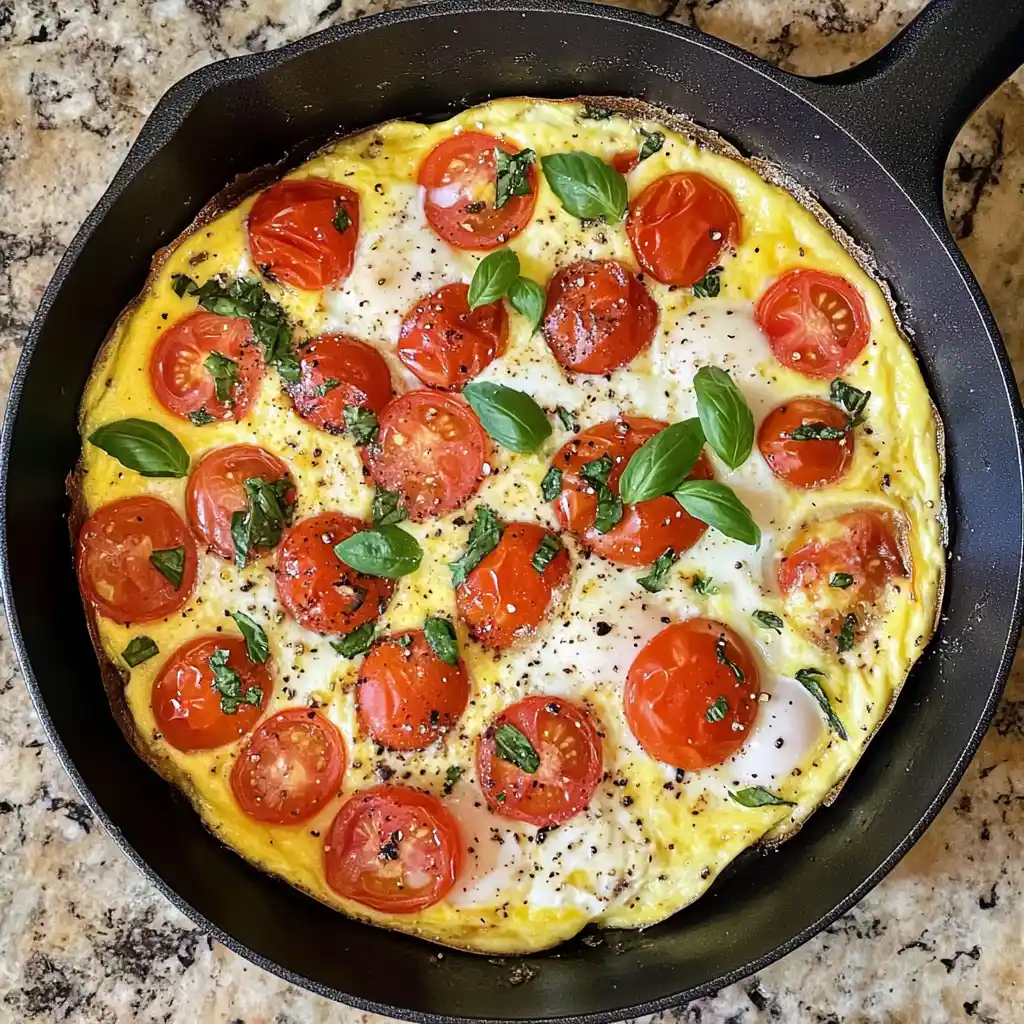
Ingredients
- 8 large eggs (fresh eggs with bright orange yolks make a huge difference)
- 1/4 cup milk (whole milk makes it creamier than skim)
- 1/2 tsp salt
- 1/4 tsp black pepper
- 1 tablespoon olive oil (good quality olive oil adds flavor you can taste)
- 1 cup cherry tomatoes, halved (pick firm, sweet ones—not pale winter tomatoes)
- 1/4 cup fresh basil, chopped (fresh is essential, dried won’t taste the same)
- 1/2 cup shredded mozzarella cheese (shred it yourself for better melting)
Instructions
- Crank your oven to 350°F and make sure your skillet handle is oven-safe (seriously, check this or you’ll melt it—been there).
- In a bowl, crack the eggs and whisk together with milk, salt, and pepper until you see tiny bubbles forming on top. This air makes the frittata fluffy instead of dense.
- Heat the olive oil in an oven-safe skillet over medium heat—not too hot or the eggs will scramble instead of setting smoothly.
- Toss in those halved cherry tomatoes and cook for 2-3 minutes until they start to soften and smell amazing. They should be slightly wrinkled but still holding their shape, not mushy.
- Pour the egg mixture right over the tomatoes in the skillet. Give the pan a gentle shake to distribute everything evenly. Sprinkle the chopped fresh basil all over the top.
- Cook without stirring for 4-5 minutes, occasionally using a spatula to gently lift the edges and let uncooked egg flow underneath. Don’t mess with it too much—resist the urge to scramble. The edges should be set but the center should still look wet and jiggly.
- Sprinkle that mozzarella cheese all over the top (add extra if you’re feeling cheesy—I always do).
- Slide the whole skillet into your preheated oven and bake for 10-12 minutes. Start checking at 10 minutes—it’s done when the center barely jiggles and the cheese is melted and golden.
- Let it cool in the skillet for 5 minutes before slicing into wedges. If you cut it too soon, it’ll be a runny mess (learned that the hard way).
Nutrition Information (Per Serving):
- Calories: 155
- Carbohydrates: 3g
- Protein: 12g
- Fat: 11g
- Fiber: 0g
- Sodium: 310mg
- Vitamin A: 18% DV
- Vitamin C: 12% DV
- Calcium: 15% DV
This frittata packs quality protein from the eggs and calcium from the cheese, plus vitamins from the tomatoes and basil—basically a complete breakfast that doesn’t taste virtuous.
Notes:
- Seriously, make sure your skillet handle is oven-safe. I’ve melted handles twice and it’s not fun.
- Don’t overcook on the stovetop—the edges should be set but the center should still look wet before it goes in the oven.
- Every oven runs differently, so start checking at 10 minutes. Frittatas go from perfect to overcooked in about 2 minutes.
- Fresh basil is essential—dried basil will make this taste like cheap frozen pizza instead of elegant Italian cooking.
- Let it rest for 5 minutes before cutting or it’ll fall apart and look messy.
Storage Tips:
This tomato basil frittata keeps beautifully in the fridge for 3-4 days, making it perfect for meal prep. Let it cool completely, then cover tightly with plastic wrap or store in an airtight container. Reheat individual slices in the microwave for 30-45 seconds, or eat it cold straight from the fridge (honestly just as delicious). Don’t freeze this one—the tomatoes get weird and watery when thawed, and the eggs turn rubbery. If you’ve got leftovers, they make fantastic sandwich filling or can be chopped up and added to salads for extra protein.
Serving Suggestions:
- Classic Brunch: Serve with buttered sourdough toast, fresh fruit, and crispy bacon for a complete Italian-inspired breakfast spread
- Light Lunch: Pair with a simple arugula salad dressed with lemon and olive oil for a satisfying midday meal that won’t make you sleepy
- Picnic Perfect: Pack wedges for outdoor eating—frittatas are delicious at room temperature and travel well
- Dinner Option: Serve alongside roasted potatoes and a green salad for an easy breakfast-for-dinner night the whole family will love
Mix It Up (Recipe Variations):
Caprese Frittata: Use fresh mozzarella chunks instead of shredded, and drizzle with balsamic glaze when serving. Tastes exactly like the classic Italian salad but in egg form.
Mediterranean Frittata: Swap cherry tomatoes for sun-dried tomatoes and use crumbled goat cheese instead of mozzarella. Fancy enough for special occasions but not actually hard.
Pesto Tomato Frittata: Swirl 2 tablespoons of basil pesto into the eggs before cooking for an extra punch of Italian flavor that’s incredibly satisfying.
Spicy Italian Frittata: Add red pepper flakes and diced pepperoncini with the tomatoes. Perfect wake-up call for those mornings you need an extra kick of flavor.
What Makes This Recipe Special:
This tomato basil frittata follows traditional Italian stovetop-to-oven technique that creates a golden crust on the bottom while keeping the center custardy and tender. Unlike scrambled eggs or omelets, a proper frittata is firm enough to slice into wedges but never rubbery or dry. The frittata originated as a way for Italian cooks to use up leftover vegetables and cheese, explaining why it’s so forgiving and adaptable. The combination of sweet tomatoes, aromatic fresh basil, and creamy mozzarella is classic Italian flavor that tastes like summer no matter what time of year you make it.
