
Ever wonder why homemade vegetable soup tastes so much better than the canned stuff? I used to think making authentic tomato vegetable soup required hours of chopping and some kind of soup-making expertise until I discovered this foolproof recipe. Now I make huge batches every week and freeze portions for quick lunches, and honestly, my family has started requesting “the veggie soup” when they’re feeling under the weather (which is pretty amazing considering the first time I made this, I forgot to add salt and everyone politely ate flavorless tomato water while I pretended everything was fine).
Here’s the Thing About This Recipe
What makes this tomato vegetable soup work so beautifully is how it layers flavors, starting with the aromatic base of onions, carrots, and celery—what French cooks call mirepoix but I just call “the good stuff.” I learned the hard way that you can’t just dump everything in at once and expect magic. This comforting soup uses simple vegetables and pantry staples to create something way more delicious than the sum of its parts. The crushed tomatoes give you that rich, satisfying base without any added sugar or weird preservatives. It’s honestly that simple once you understand the building blocks, and no special cooking skills needed.
What You’ll Need (And My Shopping Tips)
Good crushed tomatoes are worth buying—I always grab San Marzano or a quality store brand because cheap tomatoes taste tinny and acidic. Don’t cheap out on the canned tomatoes because they’re literally the star of this show (happens more than I’d like to admit when I try to save a dollar and end up with soup that tastes like metal). Fresh vegetables make a huge difference here, so grab crisp carrots, firm celery, and a zucchini that’s not wrinkly or soft.
Vegetable broth should be low-sodium so you can control the salt yourself—I use Better Than Bouillon or boxed broth, whatever’s on sale. Fresh garlic beats jarred every time for this recipe because you want that aromatic punch. Green beans can be fresh or frozen—both work great and I honestly use frozen half the time because they’re already trimmed and ready to go.
Dried herbs are perfect here—basil and oregano give you that Italian-inspired flavor without needing a bunch of fresh herbs that’ll go bad in your fridge. I always grab an extra can of tomatoes because I inevitably want to make a double batch once I realize how good this is. For more details on choosing quality canned tomatoes, check out this guide to San Marzano tomatoes from Food Network.
Let’s Make This Together
Start by heating that olive oil in your biggest pot over medium heat. Here’s where I used to mess up—I’d use a pot that was too small and everything would be crowded and cook unevenly. Go big or go home with your pot choice.
Toss in the diced onion, chopped carrots, and celery. This is your flavor foundation, so give these vegetables some time to soften and sweeten—about 5 minutes of stirring occasionally. You want them tender and fragrant, not browned or mushy. Add the minced garlic and cook for just another minute until your kitchen smells absolutely incredible. Don’t be me—I used to add garlic too early and it would burn and taste bitter.
Now for the fun part—pour in those crushed tomatoes and vegetable broth. The mixture will bubble up beautifully. Stir in the dried basil, oregano, and a good pinch of salt and pepper. Here’s my secret: I always add a bit less salt at this stage because the soup concentrates as it simmers, and you can always add more later. Bring everything to a gentle simmer.
Add your diced zucchini, green beans, and corn kernels. These quicker-cooking vegetables go in later so they don’t turn to mush. I learned this trick from my grandmother who made soup every single Sunday—different vegetables need different cooking times, so add the tender ones last.
Let the whole beautiful pot simmer for 15-20 minutes, stirring occasionally, until all the vegetables are tender but not falling apart. Taste it and adjust the seasoning—this is crucial because every brand of broth and tomatoes has different salt levels. Trust your taste buds, not just the recipe.
Ladle into bowls, shower with fresh parsley if you have it (totally optional but it makes you look fancy), and serve hot with some crusty bread for dunking. For another comforting soup that pairs well with this one for meal prep, try this Classic Minestrone Soup that uses similar vegetables with pasta added.
If This Happens, Don’t Panic
Soup tastes flat and boring? You need more salt, or your tomatoes were low-quality. In reality, I’ve learned to taste and adjust seasoning multiple times during cooking. This is totally fixable—add salt gradually, maybe a squeeze of lemon juice to brighten everything up, or even a pinch of sugar if it’s too acidic.
Vegetables turned mushy and overcooked? Don’t panic—you simmered it too long or cut them too small. If this happens (and it will), just call it “rustic style” and blend half the soup for a thicker, heartier texture. Nobody will know it was an accident.
Soup too thin and watery? Let it simmer longer uncovered so some liquid evaporates and it concentrates. You can also mash some of the vegetables against the side of the pot to thicken it naturally, or add a drained can of white beans for body.
Too tomato-y and acidic? Add a teaspoon of sugar or honey to balance the acidity, or stir in a splash of cream if you eat dairy. I always keep both on hand because some tomato brands are more acidic than others.
When I’m Feeling Creative
Italian White Bean Version: When I’m feeling fancy, I add a can of drained cannellini beans for protein and creaminess. It makes the soup more filling and substantial for a main course.
Spicy Tomato Vegetable Soup: Add 1/2 teaspoon red pepper flakes or a diced jalapeño with the garlic for a kick. My husband requests this version every time because he lives for spicy food.
Pasta Addition: Around busy weeks, I’ll cook some small pasta like ditalini or orzo separately and add it to bowls when serving. It turns this into a heartier minestrone-style soup.
Creamy Tomato Vegetable: Stir in 1/2 cup of heavy cream or coconut milk at the end for a richer, smoother soup that feels more indulgent.
Why This Works So Well
This tomato vegetable soup captures the essence of classic Italian vegetable soups that have nourished families for generations. The technique of sautéing aromatic vegetables first—a method used across cuisines worldwide—creates a flavor foundation that makes the whole soup taste richer and more complex. What sets this homemade version apart from canned soup is the fresh vegetables, control over sodium, and absence of preservatives or added sugars. The combination of tomatoes with mixed vegetables creates a nutritionally balanced meal that provides vitamins, fiber, and antioxidants. The cultural history of vegetable soup shows how these simple, nourishing dishes have been comfort food across cultures, using whatever vegetables were in season or available.
Things People Ask Me About This Recipe
Can I make this tomato vegetable soup ahead of time?
Absolutely! This soup actually gets better the next day as flavors meld together. Make it up to 3 days ahead, store covered in the fridge, and reheat gently on the stove. I make a huge pot on Sunday and eat it all week for easy lunches.
What if I can’t find crushed tomatoes?
Use diced tomatoes and break them up with your spoon as they cook, or use a whole can of tomato sauce. You could even use fresh tomatoes—about 6-8 large ones, chopped—though you’ll need to cook them longer to break down.
Can I freeze this vegetable soup?
Yes! This freezes beautifully for up to 3 months. Let it cool completely, portion into containers leaving some space for expansion, and freeze. Thaw overnight in the fridge and reheat on the stove. The texture stays great, unlike some cream-based soups.
Is this recipe beginner-friendly?
Totally. If you can chop vegetables and stir a pot, you’ve got this. There’s no tricky techniques, no precise timing, and lots of room for mistakes without disaster. My teenage nephew makes this in his college apartment with a hot plate.
What other vegetables can I add to this soup?
Pretty much anything! Spinach, kale, cabbage, potatoes, bell peppers, mushrooms, or cauliflower all work great. Just adjust cooking times based on how tender the vegetables are—hard vegetables like potatoes go in earlier, leafy greens go in at the very end.
How do I make this soup more filling?
Add protein like white beans, chickpeas, or cooked chicken. You can also add grains like rice, quinoa, or small pasta. I often add a can of beans because it makes it substantial enough for dinner.
Why I Had to Share This
I couldn’t resist sharing this because everyone needs a healthy, comforting soup recipe in their back pocket that actually tastes good. The best soup nights are when you ladle this into bowls, the steam rising up, and everyone feels like they’re doing something good for their body while actually enjoying it. You’ve totally got this.
Print
Tomato Vegetable Soup
Description
A hearty, healthy soup packed with fresh vegetables in a rich tomato-herb broth—this comforting tomato vegetable soup is easy to make, freezer-friendly, and tastes way better than anything from a can.
Prep Time: 15 minutes | Cook Time: 30 minutes | Total Time: 45 minutes | Servings: 6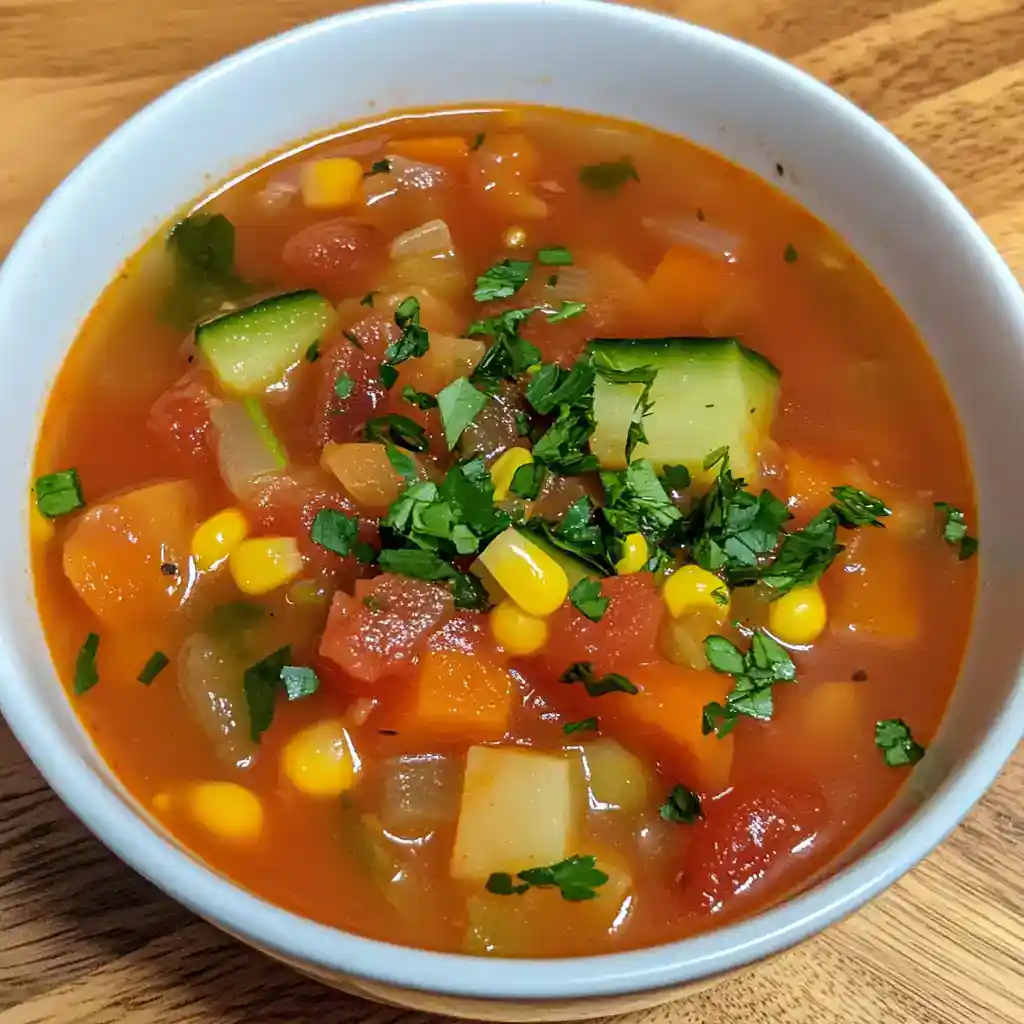
Ingredients
- 1 tablespoon olive oil
- 1 medium onion, diced
- 2 medium carrots, peeled and chopped (about 1/2-inch pieces)
- 2 celery stalks, chopped
- 2 cloves garlic, minced (don’t use the jarred stuff here)
- 1 can (28 oz) crushed tomatoes (San Marzano if you can find them)
- 4 cups vegetable broth (low-sodium gives you more control)
- 1 teaspoon dried basil
- 1 teaspoon dried oregano
- Salt and pepper, to taste (start with 1/2 teaspoon salt)
- 1 medium zucchini, diced
- 1 cup green beans, trimmed and cut into 1-inch pieces (fresh or frozen)
- 1 cup corn kernels (fresh, frozen, or canned and drained)
- Fresh parsley, chopped for garnish (optional but pretty)
Instructions
- Heat olive oil in your largest pot over medium heat. You want that oil shimmering but not smoking.
- Add the diced onion, chopped carrots, and celery. This is your aromatic base, so give it some love—cook for about 5 minutes, stirring occasionally, until the vegetables are softened and the onion is translucent. Don’t rush this step.
- Toss in the minced garlic and cook for just 1 minute more, stirring constantly so it doesn’t burn. Your kitchen should smell amazing right now.
- Pour in the crushed tomatoes and vegetable broth. Stir in the dried basil, oregano, salt, and pepper. Give everything a good stir and bring to a gentle simmer. You want bubbles breaking the surface, not a violent boil.
- Add the diced zucchini, green beans, and corn kernels. These go in later because they cook faster than the carrots and celery. Stir everything together.
- Let the soup simmer uncovered for 15-20 minutes, stirring occasionally, until all the vegetables are tender but not mushy. The zucchini should be soft, the green beans should have a slight bite, and the carrots should pierce easily with a fork.
- Taste the soup and adjust seasoning—this is crucial. Add more salt, pepper, or even a pinch of sugar if the tomatoes are too acidic. Trust your taste buds.
- Ladle into bowls, garnish with fresh parsley if you have it, and serve hot with crusty bread for dunking. Maybe grate some Parmesan on top if you’re feeling fancy.
Nutrition Information (Per Serving):
- Calories: 125
- Carbohydrates: 24g
- Protein: 4g
- Fat: 3g
- Fiber: 5g
- Sodium: 480mg
- Vitamin A: 95% DV
- Vitamin C: 45% DV
- Potassium: 18% DV
- Iron: 12% DV
This tomato vegetable soup provides exceptional vitamin A from carrots and tomatoes, plus significant fiber and vitamin C. It’s naturally low in calories and fat while being nutrient-dense and satisfying.
Notes:
- Quality canned tomatoes make a huge difference—don’t cheap out on this ingredient because it’s the foundation of the soup.
- Chop vegetables roughly the same size so they cook evenly. Nobody wants raw carrots next to mushy zucchini.
- Every vegetable broth has different salt levels, so always taste before adding extra salt.
- This soup thickens as it sits, so you might need to add a splash of water or broth when reheating.
- Fresh herbs are lovely, but dried work perfectly here and are more practical for most people.
Storage Tips:
Store cooled soup in an airtight container in the refrigerator for up to 5 days. The flavors actually improve overnight, so this is perfect for meal prep. Freeze in portions for up to 3 months—leave some space in containers for expansion. Reheat gently on the stovetop, adding a splash of broth or water if it’s too thick. Microwaving works but stovetop is better for texture.
Serving Suggestions:
- Classic Style: Serve with crusty bread or garlic toast for dunking
- Cheese Lover’s: Top with grated Parmesan or a dollop of pesto
- Hearty Meal: Add a side of grilled cheese sandwiches for the ultimate comfort combo
- Light Lunch: Pair with a simple green salad and vinaigrette
Mix It Up (Recipe Variations):
- Italian White Bean Soup: Add a can of drained cannellini beans for protein and creaminess
- Spicy Version: Add 1/2 teaspoon red pepper flakes or a diced jalapeño with the garlic
- Pasta Addition: Stir in cooked small pasta like ditalini or orzo for a minestrone-style soup
- Creamy Tomato Vegetable: Stir in 1/2 cup heavy cream or coconut milk at the end for richness
What Makes This Recipe Special:
This tomato vegetable soup uses the classic technique of building flavor layers, starting with sautéed aromatics and adding vegetables based on cooking time. The method ensures every vegetable is perfectly cooked—not raw or mushy—while the tomato-herb broth ties everything together. Unlike canned soups loaded with sodium and preservatives, this fresh version lets you control ingredients and create a genuinely healthy, delicious meal.
