
Ever wonder why café smoothie bowls cost ten dollars when they’re basically just blended fruit in a bowl? I used to think Instagram-worthy tropical smoothie bowls required some fancy equipment until my health-conscious sister shared her foolproof tropical smoothie bowl recipe with me. Now my family requests this vibrant, refreshing breakfast every weekend, and I’m pretty sure my kids think I’m some kind of smoothie bowl genius (if only they knew the first time I made this, I used too much liquid and ended up with soup instead of a thick, spoonable bowl).
Here’s the Thing About This Recipe
What makes this tropical smoothie bowl work is using frozen fruit and minimal liquid to create that thick, ice-cream-like consistency. The secret to café-quality smoothie bowls isn’t expensive ingredients—it’s the ratio of frozen fruit to liquid and proper blending technique. I learned the hard way that adding too much coconut milk gives you a drinkable smoothie instead of a spoonable bowl. This recipe comes together in about 5 minutes using one blender. It’s honestly that simple—no special bowls or fancy toppings needed.
What You’ll Need (And My Shopping Tips)
Good quality frozen mango and pineapple are the foundation here—I learned this after using fresh fruit twice and ending up with warm, runny smoothie bowls. Frozen fruit creates that thick, frosty texture you’re after. Don’t cheap out on the coconut milk either; full-fat coconut milk adds incredible creaminess, though light coconut milk works if you’re watching calories (happens more than I’d like to admit when I’m trying to lighten things up). For the Greek yogurt, use plain full-fat for the best texture and protein boost. Make sure your banana is ripe with brown spots for natural sweetness. The honey adds just enough sweetness without overpowering the tropical flavors. I keep shredded coconut, granola, and chia seeds on hand because they add amazing texture contrast. Fresh berries for topping aren’t traditional tropical fruit, but they add beautiful color and antioxidants.
Let’s Make This Together
Start by adding your frozen mango chunks, frozen pineapple chunks, banana, coconut milk, Greek yogurt, and honey to your blender. Here’s where I used to mess up: don’t add too much coconut milk at first. Start with 1/2 cup and you can always add a tablespoon more if needed.
Blend on high speed until smooth and creamy, stopping to scrape down the sides if needed. The mixture should be thick—like soft-serve ice cream consistency. Here’s my secret: use the tamper that comes with your blender (if you have one) to push ingredients down toward the blades without adding more liquid—just like when making this Perfect Acai Bowl, thick consistency is everything. If your blender struggles, add coconut milk one tablespoon at a time until it blends smoothly, but resist the urge to add too much.
Every blender has its own personality—my Vitamix handles frozen fruit easily, but when I use my smaller blender, I sometimes let the fruit thaw for 5 minutes first. Pour that beautiful peachy-orange smoothie into your favorite bowl. The thicker it is, the better it holds the toppings without them sinking.
Now for the fun part—sprinkle shredded coconut and granola over the top. Add those fresh berries in a pretty pattern if you’re feeling fancy, or just scatter them randomly like I usually do. Finish with a sprinkle of chia seeds for extra nutrition and that Instagram-worthy look. Serve immediately with a spoon and enjoy every creamy, tropical bite.
If This Happens, Don’t Panic
Smoothie bowl turned out too thin and soupy? You added too much coconut milk or didn’t use enough frozen fruit. In reality, I’ve learned to start with less liquid and add more only if absolutely necessary. If your tropical smoothie bowl won’t blend, the fruit is too frozen or you need a bit more liquid. This is totally fixable—let the fruit sit for 3-5 minutes to soften slightly, or add coconut milk one tablespoon at a time. Toppings are sinking into the smoothie? Your base wasn’t thick enough. I always make sure I can stand a spoon up in it before adding toppings. If it tastes too bland, you probably need more honey or your fruit wasn’t sweet enough. Just stir in another teaspoon of honey or add a squeeze of lime juice to brighten everything up.
When I’m Feeling Creative
Dragon Fruit Smoothie Bowl: Add 1/2 cup frozen dragon fruit (pitaya) for that gorgeous pink color. This version photographs beautifully and tastes amazing.
Green Tropical Bowl: Add a handful of spinach to the blender—you won’t taste it but you’ll get extra nutrients. Around New Year’s when everyone’s doing health kicks, I’ll make this version.
Protein-Packed Tropical Bowl: Add a scoop of vanilla protein powder to the blender for extra staying power. The kids actually prefer this version because it keeps them full longer.
Chocolate Tropical Bowl: Add 1 tablespoon of cocoa powder and top with cacao nibs. This variation is surprisingly delicious and feels more indulgent.
What Makes This Recipe Special
This tropical smoothie bowl recipe celebrates the smoothie bowl trend that originated in health-conscious California surf culture and spread worldwide. The combination of mango, pineapple, and coconut creates authentic tropical flavors that transport you to a beach vacation with every spoonful. What sets this smoothie bowl apart from regular smoothies is the thick, spoonable consistency that lets you savor it slowly and enjoy the textural contrast of crunchy toppings. I’ve discovered that smoothie bowls actually keep me fuller longer than drinkable smoothies because the act of eating with a spoon triggers more satiety signals than drinking.
Things People Ask Me About This Recipe
Can I make this tropical smoothie bowl without a high-powered blender?
You can, but you might need to let the frozen fruit thaw for 5-10 minutes first so your blender can handle it. Add liquid gradually and blend in short bursts, scraping down the sides frequently. A regular blender works, it just takes more patience.
What can I use instead of coconut milk for this smoothie bowl?
Almond milk, oat milk, or regular milk all work, though they won’t give you that tropical coconut flavor. For the creamiest results, use full-fat versions. I’ve even used orange juice for extra tropical vibes.
Can I prep tropical smoothie bowls ahead of time?
Sort of. You can portion frozen fruit into bags ahead of time for easy morning blending. But don’t blend and freeze the whole bowl—it gets icy and loses that creamy texture. Blend fresh each time for best results.
Is this tropical smoothie bowl healthy?
Yes! It’s packed with vitamins from the fruit, protein from Greek yogurt, healthy fats from coconut, and fiber from chia seeds and fruit. It’s way healthier than most breakfast options and keeps you full for hours.
Why is my smoothie bowl not thick enough?
You’re using too much liquid or not enough frozen fruit. The key is minimal liquid and lots of frozen fruit. Start with 1/4 cup liquid and add more only if absolutely necessary for blending.
What are the best toppings for smoothie bowls?
Classic options include granola, coconut flakes, fresh fruit, nuts, seeds, nut butter drizzle, and cacao nibs. Get creative and use whatever you love—there are no rules!
One Last Thing
I couldn’t resist sharing this tropical smoothie bowl recipe because it’s the one that finally convinced me healthy breakfasts can be exciting and delicious. The best smoothie bowl mornings are when you’re sitting outside with your colorful bowl, feeling like you’re at a beachside café—those are the small moments that make mornings special. Don’t stress if your first bowl isn’t Instagram-perfect (mine definitely wasn’t), and remember that even slightly thin smoothie bowls still taste amazing and give you all those nutrients.
Print
Tropical Smoothie Bowl
Description
This foolproof tropical smoothie bowl delivers thick, creamy frozen fruit base topped with crunchy granola and fresh toppings. Refreshing breakfast or snack that’s ready in 5 minutes—tastes like vacation in a bowl.
Prep Time: 5 minutes | Cook Time: 0 minutes | Total Time: 5 minutes | Servings: 1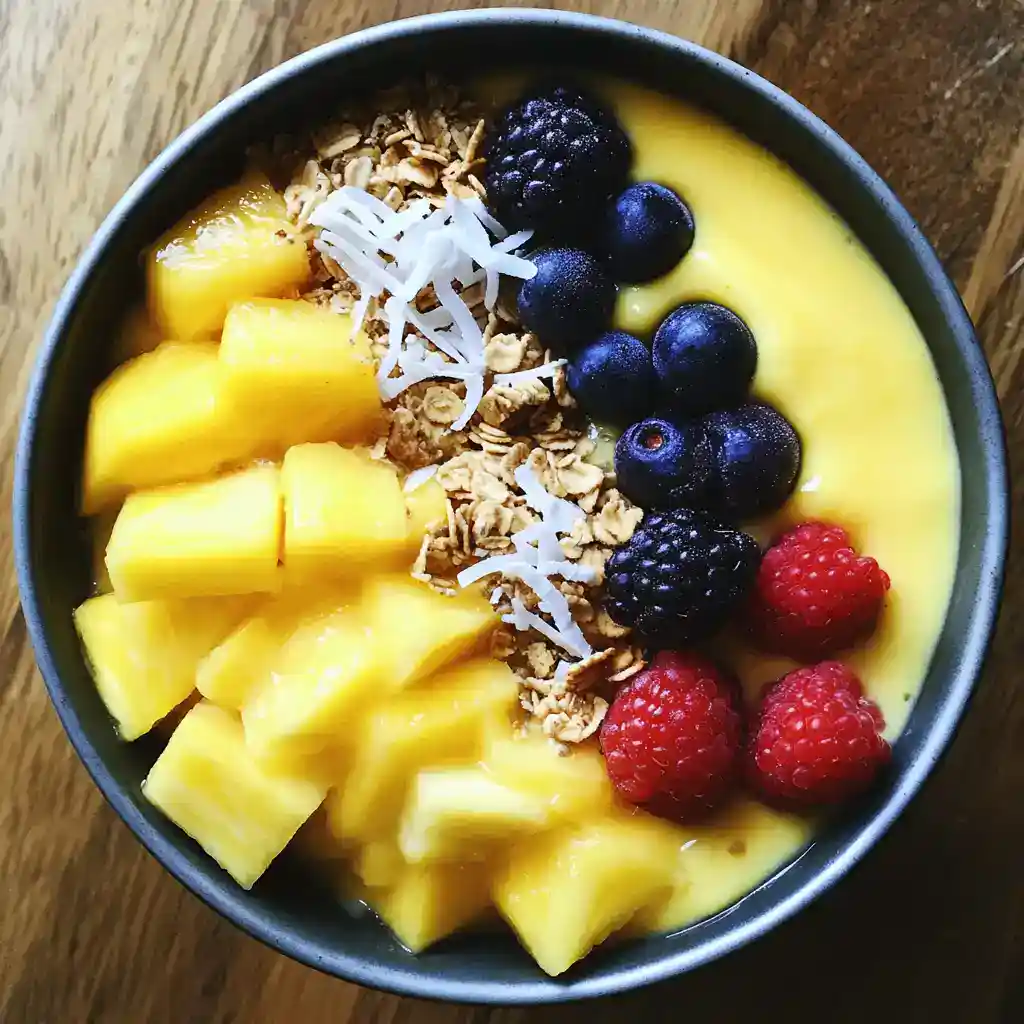
Ingredients
For the Bowl Base:
- 1 cup frozen mango chunks (don’t thaw!)
- 1/2 cup frozen pineapple chunks
- 1/2 banana (fresh or frozen both work)
- 1/2 cup coconut milk (full-fat for creamiest results)
- 1/4 cup plain Greek yogurt (adds protein and creaminess)
- 1 tablespoon honey (or maple syrup for vegan option)
For the Toppings:
- 2 tablespoons shredded coconut (unsweetened or sweetened)
- 1/4 cup granola (your favorite kind)
- Fresh berries (strawberries, blueberries, or raspberries)
- Chia seeds (about 1 teaspoon)
Instructions
- Add the frozen mango chunks, frozen pineapple chunks, banana, coconut milk, Greek yogurt, and honey to your blender. Start with 1/2 cup coconut milk—you can always add more but you can’t take it out.
- Blend on high speed until smooth and creamy, stopping to scrape down the sides as needed. Use your blender’s tamper if you have one to push ingredients toward the blades without adding extra liquid.
- The mixture should be thick like soft-serve ice cream—if you can stand a spoon up in it, it’s perfect. If it’s too thick to blend, add coconut milk one tablespoon at a time until it blends smoothly.
- Pour the thick smoothie into your favorite bowl. Don’t use a shallow bowl or the toppings will slide everywhere—use something with a bit of depth.
- Working quickly before it starts to melt, sprinkle the shredded coconut and granola over the top in whatever pattern makes you happy.
- Arrange fresh berries on top—I like to create sections or patterns, but random scattering works too.
- Finish with a sprinkle of chia seeds for nutrition and that pretty speckled look.
- Grab a spoon and dig in immediately! Smoothie bowls are best enjoyed right away before they melt.
Nutrition Information (Per Serving):
- Calories: 450
- Carbohydrates: 68g
- Protein: 12g
- Fat: 18g
- Fiber: 9g
- Sodium: 85mg
- Vitamin C: 120% DV
- Vitamin A: 35% DV
This smoothie bowl provides excellent vitamins from tropical fruit, protein from yogurt, healthy fats from coconut, and fiber to keep you full.
Notes:
- Seriously, use frozen fruit. Fresh fruit makes a thin, warm smoothie bowl that’s basically just a regular smoothie.
- Don’t add too much liquid at first—it’s easier to add more than to thicken a too-thin bowl.
- The thicker the better for holding toppings. It should be spoonable, not drinkable.
- If your blender struggles, let the frozen fruit sit for 5 minutes to soften slightly.
- Greek yogurt adds protein and thickness, but you can skip it for a lighter, vegan version.
Storage Tips:
Smoothie bowls are best enjoyed immediately and don’t store well. If you must save it, cover tightly and freeze for up to 1 day—the texture will be icier when you eat it later. Prep ingredients ahead by portioning frozen fruit into bags so you can blend quickly in the morning. Store toppings separately in airtight containers. Don’t blend and refrigerate—it separates and gets watery. Always blend fresh for best texture and flavor.
Serving Suggestions:
- Breakfast Power Bowl: Eat this for breakfast with a side of whole grain toast
- Post-Workout Fuel: Enjoy after exercise for natural sugars and protein recovery
- Healthy Dessert: Serve as a guilt-free sweet treat on hot days
- Brunch Special: Make individual bowls for guests and let them add their own toppings
Mix It Up (Recipe Variations):
Vegan Tropical Smoothie Bowl: Use non-dairy yogurt (coconut or almond milk based) and maple syrup instead of honey. Still creamy and delicious without any animal products.
Low-Sugar Tropical Bowl: Skip the honey and use less sweet fruit. The natural fruit sugars are usually enough. Add a squeeze of lime juice for brightness without sweetness.
Berry Tropical Fusion: Add 1/2 cup frozen mixed berries to the blender for a pink-purple color and extra antioxidants. This variation is gorgeous and tastes amazing.
Superfood Tropical Bowl: Add 1 tablespoon each of ground flaxseed, hemp hearts, and spirulina powder. Turns it green but packs in incredible nutrition.
What Makes This Recipe Special:
Smoothie bowls transform the simple smoothie from a drink into an experience by making it thick enough to eat with a spoon and topping it with texturally interesting ingredients. The tropical combination of mango, pineapple, and coconut provides vitamins A and C, digestive enzymes from pineapple, and healthy fats from coconut. The thick consistency comes from using minimal liquid and maximum frozen fruit, creating a texture similar to sorbet or soft-serve ice cream that’s infinitely more satisfying than a drinkable smoothie.
