
Description
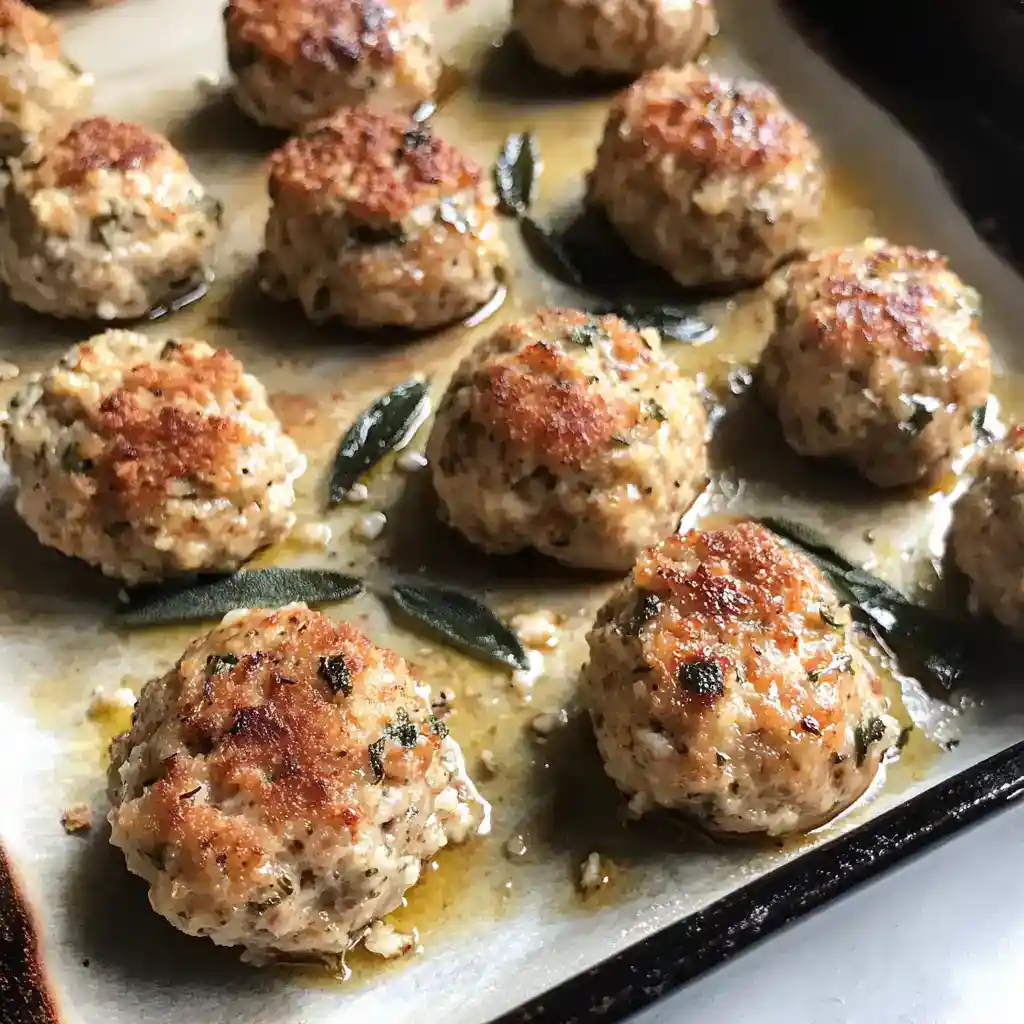
Tender, herby turkey and sage meatballs with fresh sage, Parmesan, and a two-step browning-and-baking method that creates a golden crust and juicy interior — ready in under 40 minutes.
Prep Time: 15 minutes | Cook Time: 20 minutes | Total Time: 35 minutes | Yield: About 24 meatballs (6 servings)
Ingredients
- 1 lb ground turkey (93% lean)
- 1/2 cup plain fine breadcrumbs
- 1/4 cup grated Parmesan cheese (freshly grated preferred)
- 1/4 cup fresh sage, finely chopped
- 1/4 cup onion, finely minced
- 1 garlic clove, minced
- 1 egg
- Salt and pepper, to taste
- 2 tbsp olive oil
Instructions
- Preheat oven to 375°F (190°C). Line a baking sheet with parchment paper.
- In a large bowl, combine ground turkey, breadcrumbs, Parmesan, fresh sage, minced onion, garlic, egg, salt, and pepper. Mix until just combined — do not overmix.
- Shape into 1-inch meatballs (about 24 total). Keep hands slightly damp to prevent sticking.
- Heat olive oil in a skillet over medium heat. Brown meatballs in batches without crowding, 1 to 2 minutes per side, turning to golden as many sides as possible.
- Transfer browned meatballs to the parchment-lined baking sheet.
- Bake for 15 to 20 minutes until internal temperature reaches 165°F.
- Serve immediately as an appetizer or with pasta and your favorite sauce.
Nutrition Information (Per Serving — 4 meatballs)
- Calories: 210
- Carbohydrates: 8g
- Protein: 22g
- Fat: 10g
- Fiber: 0.5g
- Sodium: 310mg
- Calcium: 90mg (7% DV)
- Iron: 1.6mg (9% DV)
Note: Nutrition estimates are based on 6 servings of approximately 4 meatballs each. Values will vary based on the turkey fat percentage and Parmesan brand.
Notes
- Mix until just combined — overmixing compresses the protein and produces dense, rubbery meatballs.
- Fresh sage is essential — dried sage doesn’t produce the same bright, aromatic quality.
- Brown in batches without crowding — the meatballs need contact with the hot pan, not steam from neighboring meatballs.
- Use a thermometer to confirm 165°F internal temperature rather than guessing.
Storage Tips
- Refrigerator: Store cooked meatballs in an airtight container for up to 3 days.
- Reheating: Warm in a 350°F oven covered loosely with foil for 10 minutes, or simmer directly in sauce.
- Freezer: Freeze baked meatballs on a sheet first, then bag and freeze for up to 3 months.
- Reheat from frozen in a 350°F oven for 15 to 20 minutes, or directly in simmering sauce.
Serving Suggestions
- Tossed with marinara and served over spaghetti or pappardelle
- In brown butter with extra sage and a squeeze of lemon over polenta
- As an appetizer with toothpicks and a dipping sauce of marinara or aioli
- In a meatball sub with marinara and melted provolone
Mix It Up (Recipe Variations)
Lemon and Sage: Add lemon zest and juice to the mixture for a brighter, more citrus-forward profile.
Sun-Dried Tomato: Add finely chopped oil-packed sun-dried tomatoes for sweetness and complexity.
Spicy: Add red pepper flakes and fennel seeds for an Italian sausage-adjacent flavor.
Meatball Soup: Simmer baked meatballs in chicken broth with small pasta and spinach.
What Makes This Recipe Special
The two-step method — skillet browning followed by oven baking — is what gives these turkey and sage meatballs their distinctive texture. Skillet browning creates the Maillard reaction crust that develops complex, slightly caramelized flavors and provides structural integrity that pure baking can’t achieve. The oven finish then provides gentle, even heat that cooks the turkey interior to a juicy 165°F without overcooking the exterior crust. It’s a restaurant technique applied to a home recipe, and it produces results that pure pan-frying (where the exterior can char before the interior is done) or pure baking (which misses the crust entirely) simply cannot match.