
Ever wonder why lamb dishes at Middle Eastern restaurants taste so much more aromatic and tender than what you make at home? I used to think creating authentic Turkish flavors required a grandmother’s secret spice blend and hours of slow cooking until I discovered this foolproof Turkish lamb with fresh fava beans. Now my family devours this fragrant, warming dish every time I make it, and I’m pretty sure my neighbor thinks I’ve been secretly traveling to Turkey for cooking lessons (if only she knew this entire pot comes together in under an hour with spices I already had in my pantry).
Here’s the Thing About This Dish
What makes this Turkish lamb with fresh fava beans work is the layering of warm spices—you’re browning the lamb first to develop deep flavor, then coating it with cumin, paprika, and cinnamon before the fava beans even hit the pan. I learned the hard way that skipping the browning step gives you bland, gray meat that nobody gets excited about. The fava beans add a buttery texture and subtle earthiness that’s completely different from regular green beans, and the chicken broth ties everything together while keeping the lamb moist. It’s honestly that simple—no fancy techniques or hard-to-find ingredients, just smart layering and patience.
What You’ll Need (And My Shopping Tips)
Good lamb shoulder is worth hunting down at a real butcher or Middle Eastern market. Don’t be me—I used to grab pre-cut “stew meat” thinking it’d work fine, and ended up with tough, chewy lamb three times before I figured out that lamb shoulder has the perfect fat content for braising. Look for meat with some marbling that’s bright red, not brown (happens more than I’d like to admit that I forget to check the color).
The fava beans matter here too. I always grab fresh fava beans in their pods during spring season because the flavor is incomparable to frozen. For the spices, make sure your cumin and paprika are fresh—old spices taste like sawdust and will ruin this dish. The cinnamon adds a subtle warmth that’s classic in Turkish cooking without making it taste like dessert. Chicken broth needs to be good quality (I keep the low-sodium kind on hand so I can control the salt myself). Good olive oil is essential for browning the lamb properly.
Let’s Make This Together
Start by heating your olive oil in a large skillet over medium heat—make sure it’s big enough to hold everything comfortably. Here’s where I used to mess up: I’d crank the heat too high and burn the outside of the lamb while leaving the inside raw. Add your cubed lamb shoulder in a single layer and let it brown on all sides without moving it around too much—this takes about 8-10 minutes total. You want that deep golden-brown color that means flavor.
Now for the fun part—add your chopped onion and minced garlic to the skillet with the lamb. Cook until the onions turn soft and translucent, about 5 minutes, scraping up all those delicious browned bits from the bottom of the pan. Here’s my secret: I stir in the cumin, paprika, cinnamon, salt, and pepper now and let them toast for about a minute until they smell incredible. This blooming technique is what makes Turkish cooking taste so complex and aromatic.
Add your shelled fava beans to the skillet and stir everything together so the beans get coated in all those spices. Pour in the chicken broth and bring it to a simmer, then drop the heat to low and cover. Let it cook for about 30 minutes until the lamb is fork-tender and the fava beans are cooked through but not mushy. Just like my lamb tagine, low and slow is the key to tender meat.
Taste and adjust the seasoning with more salt and pepper if needed—I always do this at the end because the broth reduces and concentrates. Serve hot, garnished generously with fresh parsley. I learned this trick from a Turkish cookbook I love—the fresh herbs at the end brighten up all those warm spices beautifully.
If This Happens, Don’t Panic
Lamb turned out tough? You probably didn’t cook it long enough. In reality, I’ve learned to just keep simmering with a splash more broth until it’s tender—lamb shoulder can handle the extra time. If the sauce is too thin (and it will be if you used too much broth), don’t panic—just simmer it uncovered for the last 10 minutes to reduce and thicken.
Dish tastes bland? This is totally fixable with more salt and an extra pinch of your spices. I always check early now because different chicken broths have wildly different flavor levels. If the fava beans are undercooked and all the liquid’s gone, just add 1/2 cup more broth and keep cooking. If your lamb is browning too fast, you probably had the heat too high—happens to everyone. Just lower it to medium-low and keep going.
Ways to Mix It Up
When I’m feeling fancy, I’ll make Spicy Turkish Lamb by adding a teaspoon of Aleppo pepper with the other spices—perfect when you want some gentle heat. Around the holidays, I’ll do a Pomegranate Molasses Version with a tablespoon of pomegranate molasses stirred in at the end for that sweet-tart Turkish complexity.
For a Creamy Lamb and Fava Beans, I sometimes stir in a few tablespoons of Greek yogurt right before serving, which makes it rich and luxurious. My favorite lazy variation is the Frozen Fava Bean Version—skip the fresh beans entirely and use frozen ones (already shelled!) when fresh aren’t available, though the texture isn’t quite as buttery.
What Makes This Recipe Special
This Turkish lamb with fresh fava beans draws from centuries of Anatolian cooking traditions that balance meat, vegetables, and warm spices in one pot. What sets this apart from other braised lamb dishes is the combination of cinnamon with savory spices—a hallmark of Turkish cuisine that creates complexity without overwhelming the delicate fava beans. Fresh fava beans have been cultivated in the Mediterranean for thousands of years and bring a buttery, almost nutty quality that frozen or canned beans simply can’t match, making this a true celebration of spring ingredients.
Things People Ask Me About This Recipe
Can I make this Turkish lamb dish ahead of time?
Absolutely! It actually tastes better the next day after the flavors have had time to meld. Just store it in the fridge for up to 3 days and reheat gently on the stove.
What if I can’t find fresh fava beans for this recipe?
You can substitute frozen fava beans (already shelled, which saves time) or even lima beans in a pinch. Fresh definitely has the best texture, but frozen works when fresh aren’t available.
Is this Turkish lamb with fresh fava beans spicy?
Not at all! The spices are warm and aromatic rather than hot. If you want heat, add some Aleppo pepper or red pepper flakes to taste.
Can I freeze this homemade Turkish lamb?
The lamb freezes great for up to 3 months, but fava beans can get a bit mushy when thawed. If you want to freeze it, slightly undercook the beans so they don’t turn to mush when reheated.
Is this Turkish lamb with fava beans beginner-friendly?
Totally! If you can brown meat and simmer a pot, you can make this. It’s honestly one of the most forgiving braises because lamb shoulder is super forgiving and hard to overcook.
What’s the best way to shell fresh fava beans?
Pod them first, then blanch the beans in boiling water for 2 minutes, shock in ice water, and slip off the outer skins. It’s a bit of work but worth it for that buttery texture.
Why I Had to Share This
I couldn’t resist sharing this Turkish lamb with fresh fava beans because it’s proven to my family that cooking with seasonal vegetables and quality meat creates something truly special. The best spring dinners are when the kitchen smells incredible, everyone’s asking for seconds, and I know I’m serving something both nourishing and authentic—this recipe checks all those boxes.
Print
Turkish Lamb with Fresh Fava Beans
Description
A fragrant, tender Turkish lamb with fresh fava beans braised in warm spices—ready in under an hour for an authentic Mediterranean meal that tastes like it simmered all day.
Prep Time: 15 minutes | Cook Time: 40 minutes | Total Time: 55 minutes | Servings: 4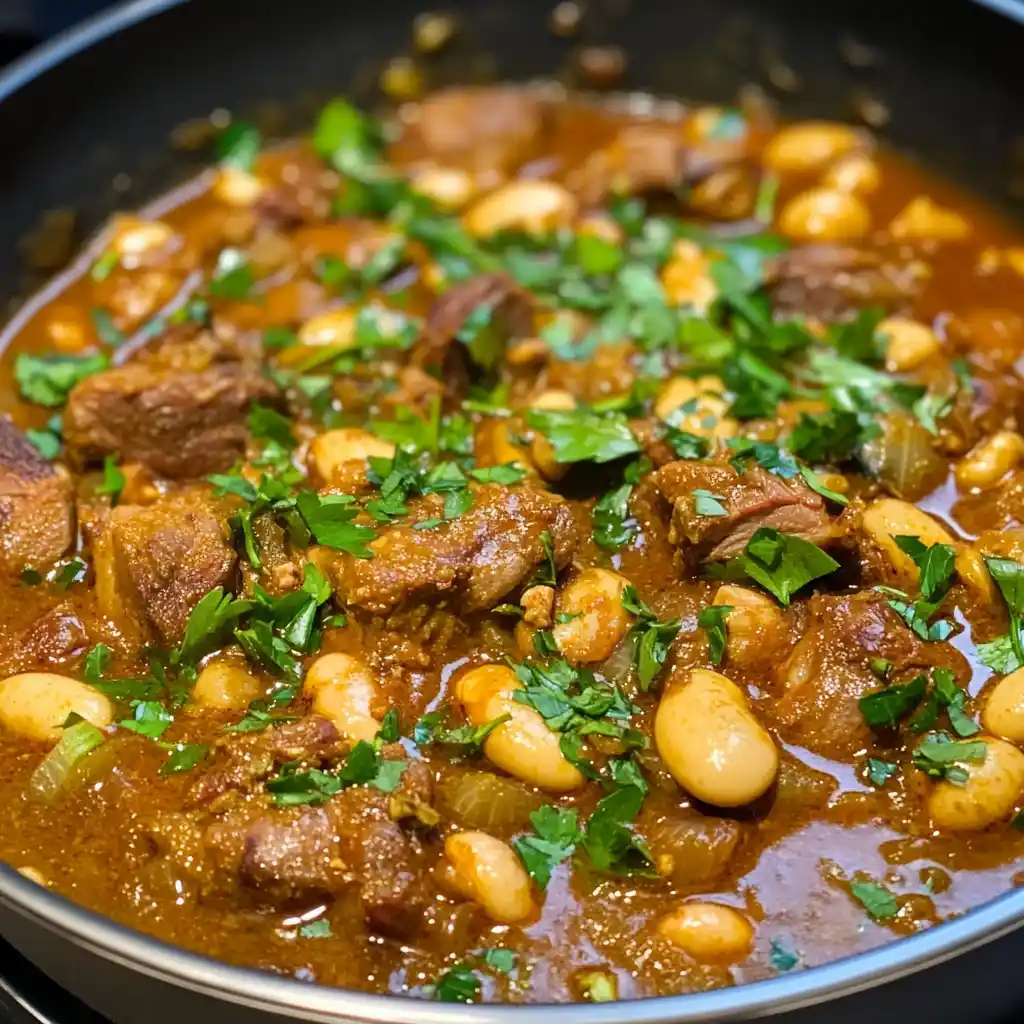
Ingredients
- 1 lb lamb shoulder, cubed into 1-inch pieces (look for well-marbled meat)
- 1 onion, chopped
- 2 cloves garlic, minced
- 1 teaspoon cumin (fresh spices make all the difference)
- 1 teaspoon paprika (I love sweet Hungarian paprika here)
- 1/2 teaspoon cinnamon (the secret to that Turkish warmth)
- Salt and pepper, to taste (start with 1 teaspoon salt)
- 1 lb fresh fava beans, shelled (about 3 lbs in the pod before shelling)
- 1 cup chicken broth (low-sodium lets you control the salt)
- 2 tablespoons olive oil
- Fresh parsley, for garnish (don’t skip this—it brightens everything)
Instructions
- Heat the olive oil in a large skillet over medium heat. Add your cubed lamb shoulder and cook without moving it too much for 8-10 minutes, turning occasionally, until it’s browned on all sides. You want that deep golden color that means flavor.
- Add the chopped onion and minced garlic to the skillet with the lamb. Cook for about 5 minutes, stirring occasionally, until the onions are soft and translucent. Scrape up any browned bits from the bottom—that’s pure flavor.
- Here’s where the magic happens—stir in the cumin, paprika, cinnamon, salt, and pepper. Let the spices cook for about 1 minute, stirring constantly, until they smell toasty and incredible. This blooming step is essential for Turkish cooking.
- Add the shelled fresh fava beans to the skillet and stir everything together so the beans get coated in all those aromatic spices.
- Pour in the chicken broth and bring everything to a simmer. You should see gentle bubbles breaking the surface. Reduce the heat to low, cover, and let it cook for about 30 minutes or until the lamb is fork-tender and the fava beans are cooked through but still holding their shape.
- Once everything’s cooked, taste and adjust the seasoning with more salt and pepper if needed. Different broths need different amounts of seasoning, so always taste first.
- Serve the Turkish lamb with fresh fava beans hot, garnished generously with fresh parsley. The herbs really make the dish pop and add that final layer of freshness.
Nutrition Information (Per Serving):
- Calories: 385
- Carbohydrates: 22g
- Protein: 32g
- Fat: 19g
- Fiber: 8g
- Sodium: 420mg
- Iron: 30% DV
- Vitamin C: 35% DV
- Folate: 40% DV
- Zinc: 35% DV
This dish delivers substantial protein from lamb, plus fava beans are loaded with folate, fiber, and plant-based protein for a nutritionally complete meal.
Notes:
- Seriously, brown that lamb well—don’t rush this step or you’ll lose so much flavor
- Every stove has its own personality, so if your liquid is evaporating too fast, lower the heat
- This goes from perfectly tender to dry fast if you forget to check it, so set a timer
- Lamb shoulder is more forgiving than leg because of the fat content—don’t substitute lean cuts
- Fresh fava beans take work to shell, but the buttery texture is worth every minute
Storage Tips:
- Keep refrigerated in an airtight container for up to 3 days
- Freeze the lamb and sauce (slightly undercook the beans) for up to 3 months
- Reheat gently on the stove with a splash of broth to loosen the sauce
- The flavors actually improve overnight, so this is perfect for meal prep or entertaining
Serving Suggestions:
- Traditional Turkish: Serve over buttery rice pilaf with a side of yogurt and fresh bread
- Grain Bowl: Spoon over bulgur wheat or couscous with a simple cucumber-tomato salad
- Rustic Platter: Serve family-style with warm pita, olives, and pickled vegetables
- Spring Feast: Pair with roasted asparagus and a bright lemon-herb salad
Mix It Up (Recipe Variations):
- Spicy Turkish Lamb: Add 1 teaspoon Aleppo pepper with the other spices for gentle heat
- Pomegranate Molasses Version: Stir in 1 tablespoon pomegranate molasses at the end for sweet-tart complexity
- Creamy Lamb and Fava Beans: Swirl in 3 tablespoons Greek yogurt just before serving for richness
- Frozen Fava Bean Version: Use 1 lb frozen fava beans (already shelled) when fresh aren’t available
What Makes This Recipe Special:
This Turkish lamb with fresh fava beans uses a traditional Anatolian braising technique that layers warm spices with spring vegetables for maximum flavor development. The combination of cinnamon with savory spices is a hallmark of Turkish cooking, creating a complexity that’s aromatic without being sweet. Fresh fava beans, prized in Mediterranean cooking for their buttery texture and subtle earthiness, elevate this beyond a simple braise into a celebration of seasonal ingredients—proving that Turkish home cooking has perfected the art of making simple ingredients shine.
