
Ever wonder why restaurant fried rice always tastes so much better than anything you can make at home? I used to think perfect vegetable fried rice required a professional wok and secret ingredients until my Chinese neighbor shared her foolproof vegetable fried rice recipe with me. Now my family requests this colorful, flavorful dish every week, and I’m pretty sure my kids think I’m some kind of stir-fry genius (if only they knew the first time I made this, I used fresh rice and ended up with a mushy, sticky mess).
Here’s the Thing About This Recipe
What makes this vegetable fried rice work is using day-old rice that’s been refrigerated overnight. The secret to authentic Chinese-style fried rice isn’t fancy sauces—it’s cold, dried-out rice that separates into individual grains instead of clumping together. I learned the hard way that fresh, warm rice gives you gummy fried rice no matter how high your heat is. This recipe comes together in about 20 minutes using one pan. It’s honestly that simple—no wok or special equipment needed.
What You’ll Need (And My Shopping Tips)
Good quality soy sauce makes all the difference here—I learned this after using the cheapest bottle twice and wondering why my fried rice tasted flat. Use low-sodium soy sauce so you can control the salt level. Don’t cheap out on the sesame oil either; toasted sesame oil adds that nutty, aromatic flavor you can’t replicate. For the rice, day-old cooked white rice works best—if you don’t have leftovers, cook rice and spread it on a baking sheet to cool, then refrigerate for at least 2 hours (happens more than I’d like to admit when I’m planning ahead). Make sure your vegetables are cut into uniform, small pieces so they cook evenly. The mixed frozen vegetables are super convenient, but fresh vegetables taste even better if you have time to chop. I keep green onions on hand because they add that fresh, sharp finish that makes everything pop.
Let’s Make This Together
Start by heating a large skillet or wok over medium-high heat and add about 2 tablespoons of vegetable oil. Here’s where I used to mess up: don’t use olive oil because it has too low a smoke point for high-heat cooking. Use vegetable, canola, or peanut oil.
Toss in the chopped onions, bell peppers, and minced garlic. Stir-fry for 2-3 minutes until they start to soften and smell amazing. Keep everything moving constantly—that’s the key to stir-frying. Now for the fun part—push all the vegetables to one side of the skillet and pour those beaten eggs into the empty side. Let them sit for about 10 seconds, then scramble them until they’re just cooked through.
Mix the scrambled eggs with the vegetables, breaking them up into smaller pieces as you stir. Here’s my secret: add the mixed vegetables (peas, carrots, corn) and stir-fry for another 2-3 minutes until they’re heated through—just like when making this Perfect Chicken Fried Rice, high heat and constant movement are everything.
Add that cold, day-old rice to the skillet, breaking up any clumps with your spatula. Every stove has its own personality—mine runs hot, so I sometimes reduce to medium heat at this point to prevent burning. Drizzle in the soy sauce and sesame oil, then stir everything together really well, making sure every grain of rice gets coated. Season with salt and pepper to taste, remembering that soy sauce is already salty.
Continue cooking and stirring frequently for 5-7 minutes until everything’s heated through and the rice starts to get slightly crispy on the edges. Taste and adjust seasoning if needed—I usually add another splash of soy sauce. Remove from heat, garnish with chopped green onions, and serve immediately while it’s hot.
If This Happens, Don’t Panic
Fried rice turned out mushy and clumpy? You probably used fresh rice instead of day-old, or your heat wasn’t high enough. In reality, I’ve learned to always use cold, refrigerated rice and keep the heat cranked up. If your vegetable fried rice came out too dry, you didn’t use enough oil or soy sauce. This is totally fixable—just drizzle in a bit more sesame oil and soy sauce and stir it through. Vegetables are still crunchy and raw? You didn’t cook them long enough before adding the rice. I always make sure my fresh vegetables are tender before moving to the next step. If the rice is sticking and burning, your pan wasn’t hot enough when you started or you’re not stirring enough. Keep everything moving constantly and use a non-stick pan or well-seasoned wok.
When I’m Feeling Creative
Spicy Vegetable Fried Rice: Add 1-2 teaspoons of sriracha or chili garlic sauce along with the soy sauce. This version has the perfect kick that my husband absolutely loves.
Pineapple Fried Rice: Add 1 cup of diced pineapple and 1/2 cup of cashews for a sweet-savory Thai-inspired version. Around summer gatherings, I’ll make this and everyone goes wild for it.
Kimchi Fried Rice: Stir in 1 cup of chopped kimchi and use kimchi juice instead of some of the soy sauce. The kids surprisingly love this tangy, spicy variation.
Protein-Packed Fried Rice: Add diced tofu, edamame, or cooked chicken for extra protein. This makes it a complete meal instead of just a side dish.
What Makes This Recipe Special
This vegetable fried rice recipe honors the Chinese tradition of transforming leftover rice into something delicious and satisfying. The technique of using day-old rice isn’t just tradition—it’s science. Refrigerated rice loses moisture and the starch crystals realign, making individual grains that stay separate when stir-fried. What sets this fried rice apart from takeout versions is the fresh vegetables and the ability to control the sodium and oil levels. I’ve discovered that homemade fried rice actually tastes fresher and lighter than restaurant versions, plus you know exactly what goes into it.
Things People Ask Me About This Recipe
Can I make vegetable fried rice with fresh rice?
You can, but it won’t be as good. If you must use fresh rice, spread it on a baking sheet and refrigerate uncovered for at least 2 hours to dry it out. Day-old rice that’s been refrigerated overnight works best because the grains separate perfectly.
What vegetables work best in fried rice?
Classic choices are peas, carrots, corn, bell peppers, and onions. But you can add broccoli, snap peas, mushrooms, bean sprouts, or whatever you have on hand. Just cut everything small and uniform so it cooks evenly.
Can I use brown rice instead of white rice?
Absolutely! Brown rice works great and adds more fiber and nutrients. It takes longer to cook initially, but once it’s cooked and refrigerated overnight, the fried rice technique is exactly the same.
Is vegetable fried rice healthy?
It can be! This version uses less oil than restaurants, tons of vegetables, and you control the sodium by using low-sodium soy sauce. It’s a balanced meal with carbs, vegetables, and protein from the eggs.
Can I make this fried rice ahead of time?
You can cook it ahead and refrigerate for up to 3 days, but it’s honestly best fresh. The texture changes when reheated. If you do make it ahead, reheat in a hot skillet with a splash of water to refresh it.
What’s the best way to reheat leftover fried rice?
Heat a skillet over medium-high heat, add a tiny bit of oil, and stir-fry the cold fried rice for 3-4 minutes until heated through. Don’t microwave or it gets dried out and weird. A hot pan brings back that fresh stir-fried texture.
One Last Thing
I couldn’t resist sharing this vegetable fried rice recipe because it’s the one that finally taught me how to use up leftover rice in the most delicious way possible. The best fried rice nights are when you’re standing at the stove, tossing everything together in that hot pan—those are the simple cooking moments that make weeknight dinners feel special. Don’t stress if your first batch isn’t perfect (mine definitely wasn’t), and remember that even slightly mushy homemade fried rice still tastes better than most takeout.
Print
Vegetable Fried Rice
Description
This foolproof vegetable fried rice delivers perfectly separated grains with colorful vegetables and savory flavors. Quick 20-minute meal that tastes better than takeout—perfect for using leftover rice.
Prep Time: 10 minutes | Cook Time: 12 minutes | Total Time: 22 minutes | Servings: 4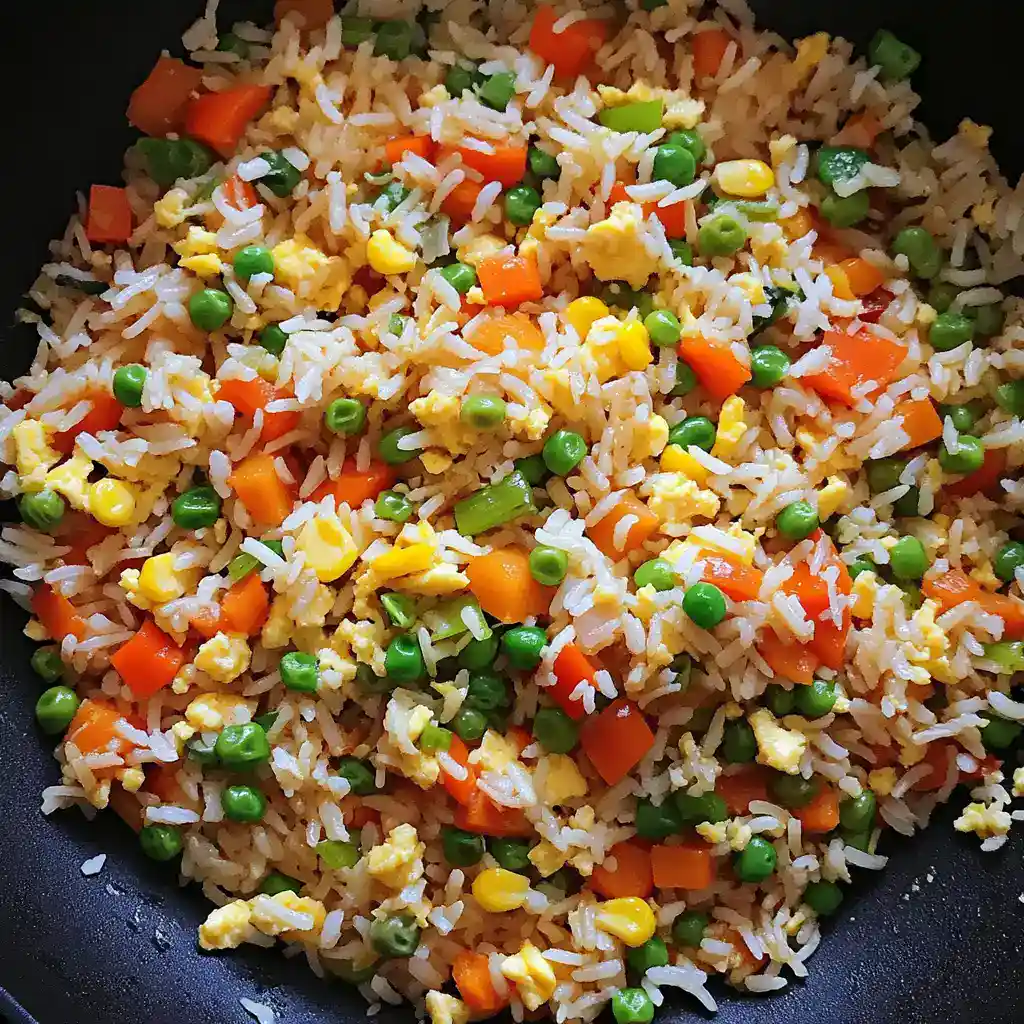
Ingredients
- 2 cups cooked white rice, cold and day-old (this is crucial!)
- 1 cup mixed vegetables (peas, carrots, and corn—frozen or fresh)
- 1/2 cup chopped bell peppers (any color works)
- 1/2 cup chopped onion
- 2 cloves garlic, minced (fresh is way better than jarred)
- 2 tablespoons soy sauce (use low-sodium to control salt)
- 1 tablespoon sesame oil (toasted sesame oil has the best flavor)
- 2 eggs, beaten
- 2 tablespoons vegetable oil (for cooking)
- Salt and pepper to taste
- Green onions, chopped for garnish (don’t skip this!)
Instructions
- Heat a large skillet or wok over medium-high heat and add 2 tablespoons of vegetable oil. Let it get really hot—you want to hear that sizzle when you add ingredients.
- Toss in the chopped onions, bell peppers, and minced garlic. Stir-fry for 2-3 minutes, keeping everything moving constantly, until they start to soften and smell amazing.
- Push all the vegetables to one side of the skillet and pour the beaten eggs into the empty side. Let them sit for about 10 seconds, then scramble until just cooked through but still soft.
- Mix the scrambled eggs with the vegetables in the skillet, breaking up the eggs into smaller pieces as you stir everything together.
- Add the mixed vegetables (peas, carrots, corn) to the skillet and stir-fry for another 2-3 minutes until heated through and slightly tender.
- Here’s the crucial part—add the cold, day-old rice to the skillet, breaking up any clumps with your spatula. Make sure every grain gets separated and mixed with the vegetables.
- Drizzle in the soy sauce and sesame oil, then stir everything together really well, making sure every grain of rice gets coated with that delicious sauce.
- Continue cooking and stirring frequently for 5-7 minutes until everything’s heated through and the rice starts to get slightly crispy on the edges. You want to hear that sizzle!
- Taste and adjust seasoning with salt and pepper. Remember that soy sauce is already salty, so go easy on the salt.
- Remove from heat and garnish generously with chopped green onions. Serve hot and watch it disappear!
Nutrition Information (Per Serving):
- Calories: 260
- Carbohydrates: 38g
- Protein: 8g
- Fat: 9g
- Fiber: 3g
- Sodium: 520mg
- Vitamin A: 45% DV
- Vitamin C: 35% DV
This fried rice provides good amounts of vegetables, protein from eggs, and energy from rice—a balanced meal in one dish.
Notes:
- Seriously, use day-old refrigerated rice. Fresh rice makes mushy fried rice every single time.
- Keep the heat high and everything moving constantly—this is stir-frying, not slow cooking.
- Don’t overcrowd the pan or everything will steam instead of fry. Work in batches if needed.
- Taste as you go and adjust soy sauce to your preference—different brands vary in saltiness.
- If you don’t have day-old rice, cook rice, spread on a baking sheet, and refrigerate uncovered for at least 2 hours.
Storage Tips:
Store leftover fried rice in an airtight container in the fridge for up to 3 days. Reheat in a hot skillet with a tiny bit of oil, stirring constantly until heated through—don’t microwave or it gets dried out. Add a splash of water if it seems dry. Don’t freeze fried rice—the texture gets weird when thawed. This is best enjoyed fresh or within a couple days of making it.
Serving Suggestions:
- Complete Meal: Serve as a main dish with a side of spring rolls or dumplings
- Side Dish: Pair with grilled teriyaki chicken or beef and broccoli
- Lunch Bowls: Pack in containers with extra soy sauce and sriracha on the side
- Asian Feast: Serve alongside other favorites like orange chicken or sweet and sour tofu
Mix It Up (Recipe Variations):
Vegan Vegetable Fried Rice: Skip the eggs or replace with scrambled tofu. Use tamari instead of soy sauce if avoiding gluten. Still delicious and completely plant-based.
Cauliflower Fried Rice: Replace white rice with riced cauliflower for a low-carb version. Reduce cooking time since cauliflower doesn’t need as long. Perfect for keto diets.
Thai Basil Fried Rice: Add 1/4 cup fresh Thai basil leaves at the end and use fish sauce instead of half the soy sauce. This variation has incredible aromatic flavor.
Gluten-Free Vegetable Fried Rice: Use tamari or coconut aminos instead of regular soy sauce. Everything else is naturally gluten-free. Just as tasty without the gluten.
What Makes This Recipe Special:
Vegetable fried rice showcases the Chinese cooking principle of using high heat and constant movement to create maximum flavor with minimal oil. The technique of using day-old rice is essential—freshly cooked rice contains too much moisture and creates gummy results, while refrigerated rice has the perfect texture for separating into individual grains. This dish transforms humble leftovers into something exciting and delicious, embodying the practical creativity that defines great home cooking across cultures.
