
Remember the first time you smelled a real slow-cooked stew filling an entire house — that deep, savory smell that made you wander into the kitchen just to lift the lid and peek? I grew up chasing that smell. My grandmother made a beef and collard greens stew every time the weather turned cold, and I spent years trying to recreate it without her standing next to me telling me what to do. It took a few batches of tough beef and sad, overcooked greens to get here, but this recipe is finally it. The one that smells exactly right the moment it starts to simmer.
Why I Keep Coming Back to This
The secret to authentic beef and collard greens stew is patience — and collard greens that actually have time to become something special. I used to think collards were just a background vegetable, something you threw in for color. I learned the hard way that they need the full simmer time to go from tough and slightly bitter to silky and deeply savory. By the time this stew is done, the collards have absorbed all that beefy, tomato-rich broth, and you honestly can’t imagine the pot without them. This isn’t a weeknight shortcut recipe. It’s a Sunday pot, the kind you leave on the stove and check every so often while you do other things. It’s honestly that simple — and that worth it.
Gathering Your Ingredients (Don’t Stress!)
For this beef and collard greens stew recipe, a few ingredient choices make a real difference.
Good beef stew meat is worth hunting down at your butcher counter if you can. Chuck is what I always go for — it has enough fat marbled through it that it breaks down beautifully over a long braise without drying out. I learned this after buying the leanest stew meat I could find and ending up with chewy, stringy chunks. Fat is your friend in a long-simmered stew.
Fresh collard greens are what this dish is all about. This Bon Appétit guide on collard greens has a great breakdown on selecting and prepping them if you’ve never worked with collards before. Strip the leaves from the tough center stems and chop them fairly roughly — they’ll shrink down a lot during the long simmer. Don’t cheap out on this step by buying pre-chopped collards in a bag; fresh bunches have far better texture.
Beef broth is the liquid backbone of the whole stew. I always grab low-sodium so I can control the seasoning myself — store-bought broth can be aggressively salty, and with a long simmer, that salt concentrates.
Yukon Gold potatoes hold their shape through the long cook time better than russets, which tend to fall apart and make the stew gluey. I always grab an extra potato because someone at my table inevitably wants a heartier bowl (happens more than I’d like to admit).
Here’s How We Do This
Start by heating your olive oil in a large pot over medium heat. Add your cubed beef and let it sit — don’t touch it for a full minute before turning. Here’s where I used to mess up every single time: I’d crowd the pot and stir constantly, ending up with grey, steamed meat instead of beautifully browned crust. Brown in batches if you need to. That crust on the outside of the beef is where so much of the stew’s deep flavor comes from.
Once your beef is browned on all sides, add the chopped onion and minced garlic directly to the same pot. Cook for about 3-4 minutes until the onion is translucent and fragrant, scraping up any browned bits from the bottom of the pot as you go — those bits are pure flavor, don’t leave them behind.
Pour in the beef broth and diced tomatoes with all their juice. Give everything a good stir and bring it up to a simmer. Now add your collard greens, sliced carrots, diced potatoes, dried thyme, salt, and pepper. Stir well, bring to a boil, then immediately reduce the heat to low, cover, and let it do its thing for 1.5 to 2 hours. Check occasionally and give it a stir, but mostly just let it simmer undisturbed. The beef needs that low, slow heat to become truly tender.
If you love a deeply flavored slow-cooked beef dish, our beef ragu uses similar braising techniques and is absolutely worth adding to your cold-weather rotation.
When Things Go Sideways (And They Will)
The beef is still tough at the 1.5-hour mark. Don’t panic, just keep going. Tougher cuts of chuck can sometimes need the full 2 hours or even a bit beyond. Keep the heat low and check every 20 minutes — beef and collard greens stew can’t be rushed on this front.
The broth tastes thin and watery. Remove the lid for the last 20-30 minutes of simmering and let some of that liquid cook off. You can also mash a few of the potatoes against the side of the pot to thicken things up naturally.
The collard greens are still tough and chewy. They just need more time. Collards are a hearty green and can take the full simmer without falling apart — if they’re still tough, keep the lid on and give them another 20 minutes. I always check at the 1-hour mark now just to see where they are.
The stew tastes flat. A long-simmered beef and collard greens stew needs a solid final salt check before serving. Taste it, add salt a little at a time, and stir well between additions. A tiny splash of apple cider vinegar can also brighten the whole pot if the flavors feel muted.
When I’m Feeling Creative
When I want to make it feel more Southern, I’ll add a smoked turkey leg to the pot along with the broth for a Southern Smoked Beef and Collard Stew — it gives the whole thing a deep, smoky backbone.
For a Spicy Beef Collard Greens Stew, I add ½ tsp of red pepper flakes and a diced jalapeño along with the onions. The heat builds slowly over the long simmer and comes through beautifully in every bite.
On nights when I want something even heartier, I’ll stir in a cup of cooked white beans in the last 20 minutes for a Beef, Bean, and Collard Stew that’s thick enough to eat with cornbread and a fork.
And for a Low-Carb Beef Collard Greens Stew, I swap the potatoes for turnips or cauliflower florets added in the last 30 minutes — they soak up the broth beautifully without the starch.
The Secret Behind This Recipe
Collard greens have a deeply rooted history in Southern American cooking, particularly in African American culinary traditions, where they’ve been a cornerstone ingredient for generations. According to food historians on Wikipedia, collards have been cultivated in the American South since at least the early 1800s and remain one of the defining vegetables of soul food cooking. Traditionally they were cooked low and slow with smoked meats, which is precisely why they pair so well with braised beef — they need long, moist heat to transform from their naturally tough, slightly bitter raw state into something tender, savory, and rich. What makes this beef and collard greens stew recipe special is that it honors that tradition while building the same deep flavor through the beef braise itself. It’s humble cooking at its most satisfying.
Questions I Always Get
Can I make this beef and collard greens stew ahead of time?
Yes — and it’s genuinely better the next day. The flavors deepen and the beef gets even more tender as it sits overnight. Refrigerate for up to 4 days and reheat gently on the stovetop over low heat, adding a splash of broth if it’s thickened too much.
Can I use a slow cooker for this beef and collard greens stew recipe?
Absolutely. Brown the beef and sauté the onions and garlic on the stovetop first, then transfer everything to a slow cooker. Cook on low for 7-8 hours or high for 4-5 hours. Add the collard greens in the last 2 hours so they don’t go completely mushy.
What cut of beef works best for this stew?
Chuck is the best choice by far — it has the right fat content to break down into tender, pull-apart pieces over the long simmer. Avoid round or sirloin, which tend to stay tough no matter how long you cook them.
Can I freeze this beef and collard greens stew?
Yes, it freezes well for up to 3 months. Let it cool completely before portioning into freezer-safe containers. The potatoes may be slightly softer after freezing, but the overall stew holds up beautifully. Thaw overnight in the fridge and reheat on the stovetop.
How do I know when the stew is done?
The beef should be fork-tender — meaning you can pull a piece apart easily with just a fork. The collard greens should be completely silky and soft with no toughness when you bite into them. If either isn’t there yet, keep going.
Is this beginner-friendly?
Very much so. The most technical step is browning the beef properly, and even that is forgiving. The rest is just adding ingredients and waiting — which is honestly the best kind of cooking.
Before You Head to the Kitchen
I couldn’t resist sharing this beef and collard greens stew because it’s the recipe that taught me what slow cooking is really about — not complicated techniques, just good ingredients and enough time to become something greater than the sum of their parts. The best stew nights are when someone lifts the lid, takes a deep breath, and says it smells exactly like they remember. You’ve got this. Go make a pot worth remembering.
Print
Beef and Collard Greens Stew
Description
A deeply savory, slow-simmered beef and collard greens stew with tender vegetables and a rich broth — the kind of comfort food recipe that fills the whole house with the right kind of smell.
Prep Time: 15 minutes | Cook Time: 2 hours | Total Time: 2 hours 15 minutes | Servings: 4–6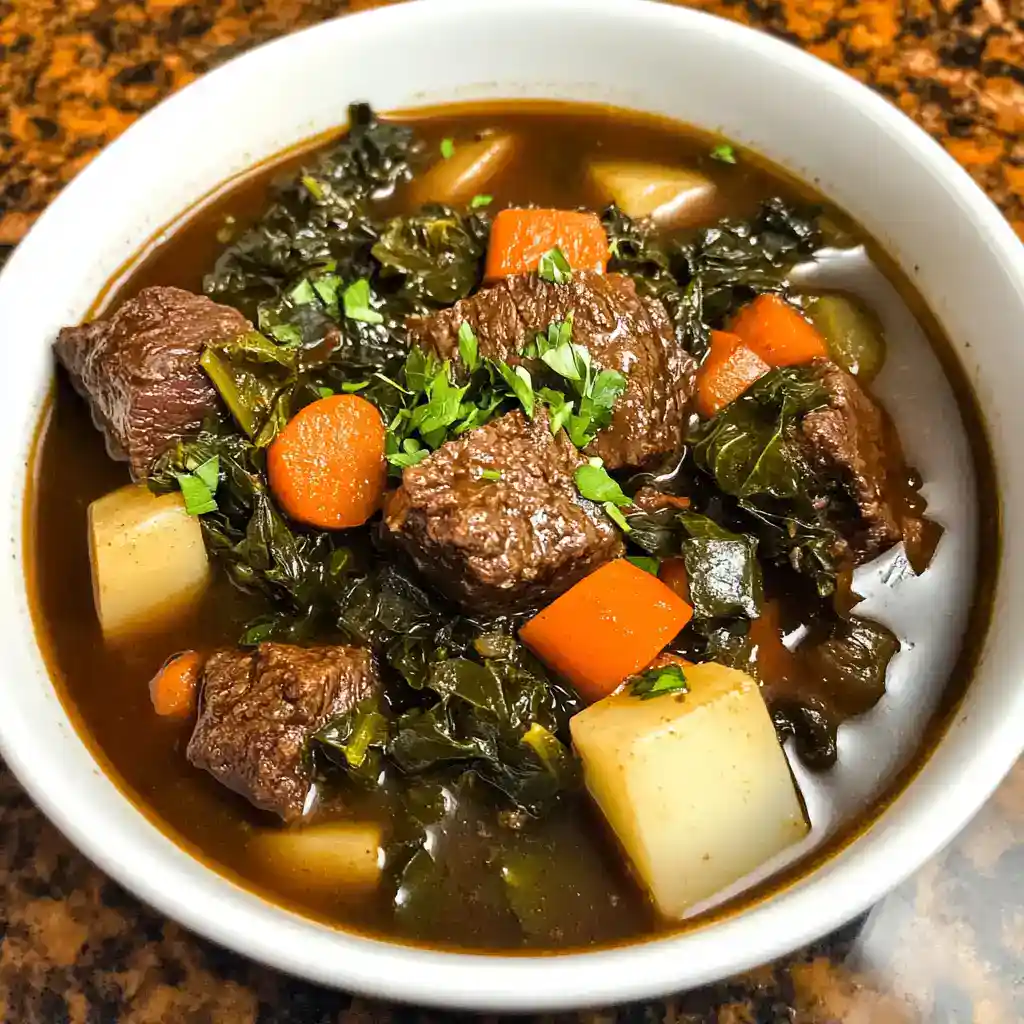
Ingredients
- 1 lb beef stew meat, cubed (chuck recommended)
- 2 tbsp olive oil
- 1 onion, chopped
- 2 cloves garlic, minced
- 4 cups beef broth (low-sodium recommended)
- 1 can (14.5 oz) diced tomatoes (with juices)
- 2 cups chopped collard greens, stems removed
- 2 carrots, sliced
- 2 Yukon Gold potatoes, peeled and diced
- 1 tsp dried thyme
- Salt and pepper to taste
- Fresh parsley, chopped, for garnish (optional)
Instructions
- Heat olive oil in a large pot over medium heat. Add beef cubes in a single layer — don’t crowd the pot. Let them sit for a full minute before turning to build a proper brown crust on all sides. Work in batches if needed.
- Add chopped onion and minced garlic to the pot. Cook for 3-4 minutes until the onion is translucent, scraping up any browned bits from the bottom as you go.
- Pour in the beef broth and diced tomatoes with all their juice. Stir to combine.
- Add the collard greens, sliced carrots, diced potatoes, dried thyme, salt, and pepper. Stir well.
- Bring to a boil, then immediately reduce heat to low. Cover and simmer for 1.5 to 2 hours, stirring occasionally, until the beef is fork-tender and the collard greens are completely silky.
- Taste and adjust seasoning with more salt and pepper as needed.
- Serve hot, garnished with fresh parsley if desired.
Nutrition Information (Per Serving, based on 5 servings)
- Calories: 310
- Carbohydrates: 22g
- Protein: 27g
- Fat: 12g
- Fiber: 4g
- Sodium: 610mg
- Vitamin A: ~70% DV (from carrots and collard greens)
- Vitamin C: ~40% DV (from collard greens and tomatoes)
- Iron: ~20% DV (from beef and collard greens)
Notes
- Brown the beef in batches if your pot feels crowded — grey steamed meat has far less flavor than a properly browned crust.
- Scrape up those browned bits from the pot bottom after the onions go in — that’s concentrated flavor you don’t want to leave behind.
- Collard greens need the full simmer time to go from tough to silky — don’t add them late.
- Do a final salt check right before serving. Long-simmered stews always need one last adjustment.
- Every stovetop runs differently — start checking beef tenderness at the 1.5-hour mark.
Storage Tips
- Refrigerate in an airtight container for up to 4 days — the stew improves overnight as flavors deepen.
- Freeze for up to 3 months. Cool completely before portioning into freezer-safe containers. Potatoes may soften slightly after freezing.
- Thaw overnight in the fridge and reheat gently on the stovetop over low heat with a splash of broth if needed.
- Do not microwave on high — the beef toughens. Reheat low and slow for best results.
Serving Suggestions
- Serve over steamed white rice or with a thick slice of warm cornbread for a fully satisfying Southern-style meal.
- A simple side of roasted vegetables or a light green salad balances the richness of the stew.
- Crusty bread on the side for soaking up every bit of that broth is never a bad idea.
- Works beautifully as a next-day lunch straight from the fridge — just reheat gently on the stovetop.
Mix It Up
Spicy Beef Collard Stew: Add ½ tsp red pepper flakes and a diced jalapeño with the onions for a slow-building, satisfying heat. Beef, Bean, and Collard Stew: Stir in 1 cup of cooked white beans in the last 20 minutes for an even heartier, protein-packed bowl. Southern Smoked Beef and Collard Stew: Add a smoked turkey leg to the pot with the broth for a deep, smoky backbone that takes this stew to another level. Low-Carb Version: Swap the potatoes for turnips or cauliflower florets added in the last 30 minutes of simmering.
What Makes This Recipe Special
This beef and collard greens stew draws on a deeply rooted tradition of Southern soul food cooking, where long, slow braises with hearty greens have been a cornerstone of American comfort food for generations. The key technique — browning the beef properly before any liquid goes in — builds a flavor foundation that no amount of seasoning can replicate after the fact. Combined with collard greens that are given the full time they need to become silky and rich, the result is a stew that tastes like it has far more ingredients and far more effort behind it than it actually does.
