Description
A deeply savory, slow-simmered beef and collard greens stew with tender vegetables and a rich broth — the kind of comfort food recipe that fills the whole house with the right kind of smell.
Prep Time: 15 minutes | Cook Time: 2 hours | Total Time: 2 hours 15 minutes | Servings: 4–6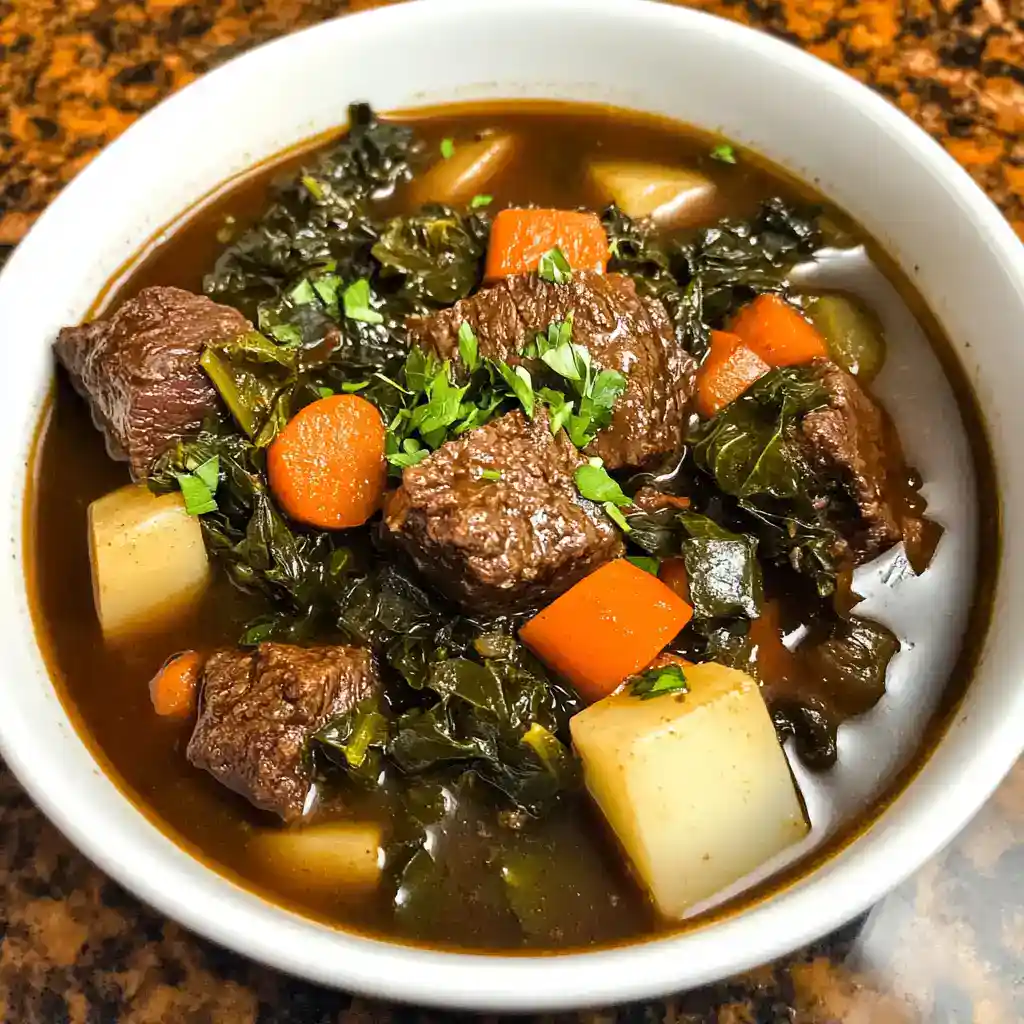
Ingredients
- 1 lb beef stew meat, cubed (chuck recommended)
- 2 tbsp olive oil
- 1 onion, chopped
- 2 cloves garlic, minced
- 4 cups beef broth (low-sodium recommended)
- 1 can (14.5 oz) diced tomatoes (with juices)
- 2 cups chopped collard greens, stems removed
- 2 carrots, sliced
- 2 Yukon Gold potatoes, peeled and diced
- 1 tsp dried thyme
- Salt and pepper to taste
- Fresh parsley, chopped, for garnish (optional)
Instructions
- Heat olive oil in a large pot over medium heat. Add beef cubes in a single layer — don’t crowd the pot. Let them sit for a full minute before turning to build a proper brown crust on all sides. Work in batches if needed.
- Add chopped onion and minced garlic to the pot. Cook for 3-4 minutes until the onion is translucent, scraping up any browned bits from the bottom as you go.
- Pour in the beef broth and diced tomatoes with all their juice. Stir to combine.
- Add the collard greens, sliced carrots, diced potatoes, dried thyme, salt, and pepper. Stir well.
- Bring to a boil, then immediately reduce heat to low. Cover and simmer for 1.5 to 2 hours, stirring occasionally, until the beef is fork-tender and the collard greens are completely silky.
- Taste and adjust seasoning with more salt and pepper as needed.
- Serve hot, garnished with fresh parsley if desired.
Nutrition Information (Per Serving, based on 5 servings)
- Calories: 310
- Carbohydrates: 22g
- Protein: 27g
- Fat: 12g
- Fiber: 4g
- Sodium: 610mg
- Vitamin A: ~70% DV (from carrots and collard greens)
- Vitamin C: ~40% DV (from collard greens and tomatoes)
- Iron: ~20% DV (from beef and collard greens)
Notes
- Brown the beef in batches if your pot feels crowded — grey steamed meat has far less flavor than a properly browned crust.
- Scrape up those browned bits from the pot bottom after the onions go in — that’s concentrated flavor you don’t want to leave behind.
- Collard greens need the full simmer time to go from tough to silky — don’t add them late.
- Do a final salt check right before serving. Long-simmered stews always need one last adjustment.
- Every stovetop runs differently — start checking beef tenderness at the 1.5-hour mark.
Storage Tips
- Refrigerate in an airtight container for up to 4 days — the stew improves overnight as flavors deepen.
- Freeze for up to 3 months. Cool completely before portioning into freezer-safe containers. Potatoes may soften slightly after freezing.
- Thaw overnight in the fridge and reheat gently on the stovetop over low heat with a splash of broth if needed.
- Do not microwave on high — the beef toughens. Reheat low and slow for best results.
Serving Suggestions
- Serve over steamed white rice or with a thick slice of warm cornbread for a fully satisfying Southern-style meal.
- A simple side of roasted vegetables or a light green salad balances the richness of the stew.
- Crusty bread on the side for soaking up every bit of that broth is never a bad idea.
- Works beautifully as a next-day lunch straight from the fridge — just reheat gently on the stovetop.
Mix It Up
Spicy Beef Collard Stew: Add ½ tsp red pepper flakes and a diced jalapeño with the onions for a slow-building, satisfying heat. Beef, Bean, and Collard Stew: Stir in 1 cup of cooked white beans in the last 20 minutes for an even heartier, protein-packed bowl. Southern Smoked Beef and Collard Stew: Add a smoked turkey leg to the pot with the broth for a deep, smoky backbone that takes this stew to another level. Low-Carb Version: Swap the potatoes for turnips or cauliflower florets added in the last 30 minutes of simmering.
What Makes This Recipe Special
This beef and collard greens stew draws on a deeply rooted tradition of Southern soul food cooking, where long, slow braises with hearty greens have been a cornerstone of American comfort food for generations. The key technique — browning the beef properly before any liquid goes in — builds a flavor foundation that no amount of seasoning can replicate after the fact. Combined with collard greens that are given the full time they need to become silky and rich, the result is a stew that tastes like it has far more ingredients and far more effort behind it than it actually does.