
Have you ever needed dinner on the table in 40 minutes with only one pan to clean afterward and still wanted it to taste like something special? That’s the exact situation that led me to this chicken and rice pilaf the first time — I had nothing planned, a busy weeknight ahead, and a family expecting something better than cereal. What came out of that skillet made everyone ask what the occasion was. There was no occasion. Just rice, chicken, and the right spices cooked together in one pan. Now it’s my go-to move when I need to look more competent than I feel.
Here’s the Thing About This Recipe
What makes this chicken and rice pilaf work where other one-pan rice dishes turn out mushy or flavorless is toasting the rice in the aromatics before the liquid goes in. That two-minute step coats every grain in oil and spices, which helps the rice cook up fluffy and separate rather than gummy and clumped. Around here, we’ve figured out that cumin and turmeric are the spice combination that makes this taste warm and aromatic without being heavy — cumin adds earthiness, turmeric adds color and a subtle warmth, and together they create something that tastes intentional and well-seasoned. The chicken cooks directly in the skillet with everything else, which means its flavor goes into the rice as it simmers. It’s honestly that simple.
What You’ll Need (And My Shopping Tips)
For the chicken, boneless skinless chicken breast works perfectly here, but boneless thighs are actually better if you have them — they stay moister through the cooking time and add more flavor to the rice. Cut the chicken into 1-inch cubes so they cook evenly and quickly. Rice pilaf traditionally uses long-grain rice like basmati or jasmine, which cooks up light and fluffy rather than sticky. Regular long-grain white rice works fine, but basmati adds a subtle floral aroma that elevates the whole dish.
For the chicken broth, use a good quality broth or stock — the rice absorbs every bit of liquid it cooks in, so the broth flavor becomes the rice flavor. I’ve used low-sodium broth thinking I could control the salt better and ended up with bland rice that no amount of seasoning at the end could fix. Regular broth, tasted and adjusted, works better.
Cumin and turmeric are doing the flavor work here. Make sure both are fresh and aromatic — old spices smell dusty rather than warm and fragrant. I replace mine every 6 to 8 months because the difference in a dish like this, where spices are the primary seasoning, is dramatic (happens more than I’d like to admit that I cook with stale spices and wonder why dinner tastes flat).
Let’s Make This Together
Heat olive oil in a large skillet with a lid over medium heat. Add the chopped onion and cook until soft and translucent, about 4 to 5 minutes. Add the minced garlic and cook for another minute until fragrant.
Add the cubed chicken and cook, stirring occasionally, until no longer pink on the outside — about 5 to 6 minutes. The chicken doesn’t need to be fully cooked through at this point because it will finish cooking with the rice.
Stir in the rice, cumin, turmeric, salt, and pepper. Cook for 2 to 3 minutes, stirring frequently, until the rice is lightly toasted and coated in oil and spices. Here’s where I used to rush — I’d add the liquid immediately and the rice would turn out gummy instead of fluffy. Toast it properly and you’ll taste the difference.
Pour in the chicken broth and bring to a boil. Once boiling, immediately reduce heat to low, cover tightly, and simmer for 15 minutes without lifting the lid. Add the diced carrot and frozen peas on top without stirring them in, cover again, and cook for another 10 minutes until the rice is tender and all the liquid is absorbed.
Remove from heat and let it sit covered for 5 minutes. Fluff with a fork, scatter fresh parsley over the top, and serve.
For another satisfying one-pan chicken and rice dish, check out this Chicken Tikka Curry from Station Recipes — a coconut milk-based version with bold Indian spices that’s equally comforting.
If This Happens, Don’t Panic
Rice is still crunchy after 25 minutes? There wasn’t enough liquid, or the heat was too low. Add 1/4 cup more broth or water, cover, and cook for another 5 minutes. Check again and repeat if needed. Every stove and pan combination is slightly different, so adjusting is normal.
Rice turned out mushy or gummy? Too much liquid, or the rice was stirred during cooking. Pilaf rice should be left undisturbed once the liquid is added — stirring releases starch and makes it sticky. Next time, measure the broth carefully and resist the urge to peek or stir.
Chicken is dry? It was overcooked before the broth went in, or the heat was too high during the simmer. Cook the chicken just until it loses its pink color at the browning step, and keep the simmer gentle — low heat, not medium.
Bottom is burning but top isn’t done? The heat is too high. Pilaf needs a gentle, even simmer. If your burner runs hot, use a heat diffuser or switch to the lowest setting and add a few extra minutes to the cook time.
Ways to Mix It Up
Mediterranean Chicken Pilaf: Replace cumin and turmeric with 1 tsp dried oregano and 1/2 tsp lemon zest. Add 1/4 cup chopped kalamata olives and 2 tbsp chopped sun-dried tomatoes with the peas and carrots. Finish with crumbled feta on top.
Coconut Chicken Pilaf: Replace 1 cup of the chicken broth with coconut milk. The rice becomes richer and slightly sweet, and the turmeric works beautifully with the coconut. Add a handful of cashews in the last 5 minutes for crunch.
Spicy Chicken Pilaf: Add 1/4 to 1/2 tsp cayenne pepper with the cumin and turmeric, and stir in a small can of diced green chilies with the peas and carrots. The heat builds slowly and integrates well with the other spices.
Mushroom Chicken Pilaf: Add 8 oz sliced mushrooms when you add the chicken. They release moisture as they cook and add an earthy depth that pairs beautifully with the cumin. Use a mix of cremini and shiitake if you can.
What Makes This Recipe Special
Pilaf — also spelled pilau, plov, or pulao — is one of the oldest rice cooking techniques in the world, with origins stretching back over a thousand years across the Middle East, Central Asia, and the Indian subcontinent. The defining characteristic is cooking rice in a seasoned broth or stock rather than plain water, and toasting the rice in fat before the liquid is added. Learn more about the global history and variations of pilaf and how this technique spread through trade routes to become a staple across dozens of cuisines. This chicken and rice pilaf honors that tradition — toasted rice, aromatic spices, and everything cooked together in one pot — while adapting it for a fast weeknight dinner.
Questions I Always Get
Can I use brown rice instead of white rice for this chicken pilaf?
Brown rice works but requires more liquid and a longer cooking time — use 2.5 cups broth instead of 2 cups and cook for 40 to 45 minutes total instead of 25. The texture and flavor are good but noticeably different from the traditional white rice version.
Do I really need to toast the rice before adding the broth?
Yes — toasting the rice in the oil and spices before the liquid goes in is what creates the fluffy, separate grains that define pilaf. Skipping this step produces rice that’s closer to plain steamed rice with mix-ins rather than true pilaf.
Can I make this chicken and rice pilaf ahead of time?
You can make it up to 2 days ahead and refrigerate in an airtight container. Reheat gently in a covered skillet with a splash of broth to loosen it — about 5 minutes over medium-low heat. The rice texture is best fresh but reheats reasonably well.
Is this chicken and rice pilaf recipe beginner-friendly?
The technique is very approachable — sauté, toast, add liquid, simmer. The only rule that matters is not lifting the lid or stirring during the rice cooking time. If you can resist the urge to check on it, you can make excellent pilaf.
What can I serve with chicken and rice pilaf?
The pilaf is a complete meal on its own — protein, starch, and vegetables all in one pan. A simple side salad or steamed green beans alongside is plenty. Warm pita bread or naan is a nice addition if you want something for scooping.
Can I freeze chicken and rice pilaf?
Rice dishes freeze reasonably well for up to 2 months, though the texture softens slightly. Freeze in portions and reheat from frozen in the microwave or on the stovetop with a splash of broth. The flavor holds very well even if the texture is slightly less fluffy than fresh.
One Last Thing
This chicken and rice pilaf is one of those recipes that makes weeknight cooking feel manageable rather than overwhelming. One pan, straightforward technique, and a result that tastes like you put real thought and effort into dinner. Make it once and it will become part of your regular rotation. You’ve got this.
Print
Chicken and Rice Pilaf
Description
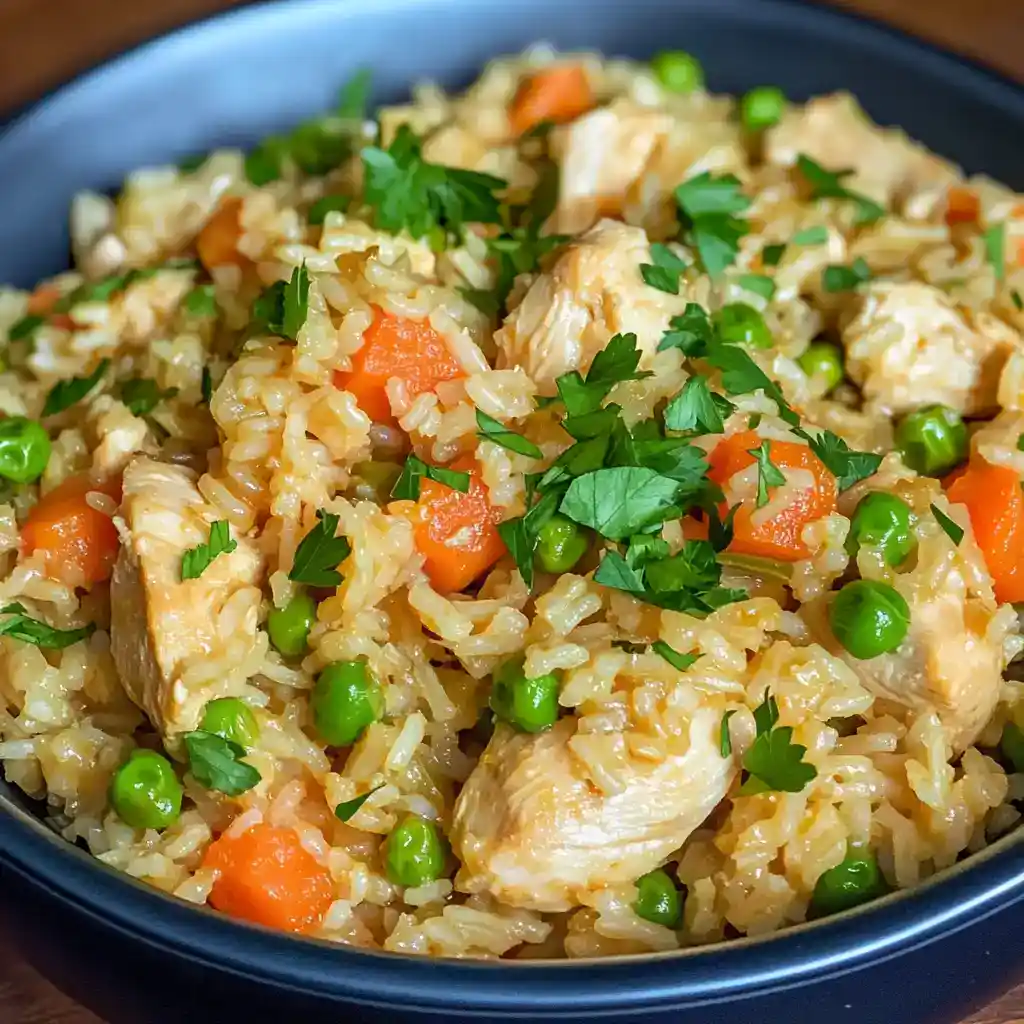
Tender chicken and fluffy rice pilaf with carrots, peas, and warm spices all cooked together in one pan — a complete, aromatic dinner ready in 40 minutes.
Prep Time: 10 minutes | Cook Time: 30 minutes | Total Time: 40 minutes | Servings: 4
Ingredients
- 1 lb boneless, skinless chicken breast (or thighs), cubed
- 1 cup long-grain white rice (basmati or jasmine preferred)
- 2 cups chicken broth
- 1 onion, finely chopped
- 2 cloves garlic, minced
- 1 carrot, diced
- 1/2 cup frozen peas
- 1 tsp ground cumin
- 1/2 tsp turmeric
- Salt and pepper, to taste
- 2 tbsp olive oil
- Fresh parsley, chopped, for garnish
Instructions
- Heat olive oil in a large skillet with a lid over medium heat. Add onion and cook until soft, 4 to 5 minutes. Add garlic and cook 1 minute.
- Add cubed chicken and cook until no longer pink on the outside, about 5 to 6 minutes.
- Stir in rice, cumin, turmeric, salt, and pepper. Cook 2 to 3 minutes, stirring frequently, until rice is lightly toasted and coated.
- Pour in chicken broth and bring to a boil. Reduce heat to low, cover tightly, and simmer for 15 minutes without lifting the lid.
- Add diced carrot and frozen peas on top without stirring. Cover and cook another 10 minutes until rice is tender and liquid is absorbed.
- Remove from heat and let sit covered for 5 minutes. Fluff with a fork, garnish with parsley, and serve hot.
Nutrition Information (Per Serving)
- Calories: 395
- Carbohydrates: 48g
- Protein: 32g
- Fat: 8g
- Fiber: 3g
- Sodium: 520mg
- Iron: 2.4mg (13% DV)
- Vitamin A: 3,200 IU (64% DV)
Note: Nutrition estimates are based on 4 servings. Values will vary based on the chicken cut and broth brand used.
Notes
- Toast the rice for the full 2 to 3 minutes before adding liquid — this is what creates fluffy, separate grains.
- Don’t lift the lid or stir the rice during cooking — doing so releases steam and produces gummy rice.
- Use good quality chicken broth — the rice absorbs it completely and the flavor becomes the rice flavor.
- Let the pilaf sit covered for 5 minutes after cooking before fluffing — this final rest sets the texture.
Storage Tips
- Refrigerator: Store in an airtight container for up to 3 days. Reheat in a covered skillet with a splash of broth over medium-low heat.
- Freezer: Freeze in portions for up to 2 months. Reheat from frozen with a splash of broth added.
- Reheating: Microwave works but stovetop with a lid produces better texture. Add liquid to prevent drying out.
- Rice dishes improve slightly in flavor overnight but lose some fluffiness.
Serving Suggestions
- As a complete one-pan meal with a simple side salad
- With warm pita bread or naan for scooping
- Topped with a dollop of plain yogurt and a sprinkle of sumac for a Middle Eastern touch
- With steamed green beans or roasted broccoli alongside
Mix It Up (Recipe Variations)
Mediterranean: Replace spices with oregano and lemon zest; add olives, sun-dried tomatoes, and feta.
Coconut: Replace 1 cup broth with coconut milk; add cashews in the last 5 minutes.
Spicy: Add cayenne and diced green chilies with the peas and carrots.
Mushroom: Add sliced mushrooms when you add the chicken for earthy depth.
What Makes This Recipe Special
The technique of toasting rice in fat before adding liquid is what separates pilaf from plain steamed rice. When rice grains are coated in oil and heated, the surface starches gelatinize differently than they do in plain water, which helps each grain cook up separate and fluffy rather than sticky. The aromatics and spices introduced during that toasting step infuse into the oil, which then coats every grain of rice as it cooks. The chicken cooking directly in the pilaf means its juices and flavor go into the rice rather than being lost to a separate pan. It’s a technique that produces a complete, cohesive dish where every element enhances the others.
