
Ever wonder why some fusion dishes taste confused and mismatched while others are so genius you can’t stop eating? I used to think combining Asian flavors with Western baking techniques was too risky until I discovered this foolproof Chinese new potatoes pasta bake recipe. Now my family requests this for cozy weeknight dinners, and my friends always ask how I came up with such a “creative” idea (if only they knew I just threw my favorite Chinese takeout flavors into a casserole and it somehow worked perfectly).
Here’s the Thing About This Recipe
What makes this Chinese new potatoes pasta bake work is the genius fusion of savory Chinese sauces—soy and oyster sauce—with the comfort of baked pasta and melted cheese that creates something completely new and unexpectedly delicious. The secret to authentic fusion success isn’t random combinations or gimmicks—it’s all about building proper flavor foundations with aromatics, using starchy potatoes to bind everything together, and finishing with cheese that adds richness without overwhelming the Asian flavors. I learned the hard way that dumping everything in a pan without proper layering creates a mushy, separated mess with no cohesive flavor. Here’s what I’ve learned: respecting both culinary traditions while creating something new is what makes fusion food actually work. It’s honestly that simple, and no fancy tricks needed to make this taste like you’re a culinary genius.
What You’ll Need (And My Shopping Tips)
Good Chinese noodles are worth seeking out—look for fresh lo mein or chow mein noodles in the refrigerated Asian section, not the dried ramen packets with flavor packets. Don’t cheap out on instant noodles; proper Chinese wheat noodles have better texture and don’t turn to mush when baked. I always keep an extra package in the freezer because this Chinese new potatoes pasta bake has become a regular rotation meal (happens more than I’d like to admit that I crave this specific combination of flavors).
Fresh new potatoes should be small, firm, and waxy—look for red or gold varieties that hold their shape when cooked. These are different from starchy russets which would fall apart. For the vegetables, you want firm broccoli with tight florets, a crisp red bell pepper, and mushrooms that are fresh, not slimy. The oyster sauce is essential for authentic umami depth—find it in the Asian foods aisle, and Lee Kum Kee is a reliable brand. I learned this after skipping it three times and wondering why my dish tasted flat.
Fresh ginger and garlic are non-negotiable—jarred versions just don’t have the same aromatic punch that makes Chinese cooking so appealing. Good quality soy sauce matters; use regular or low-sodium, not the super cheap stuff that tastes only of salt. The mozzarella cheese might seem weird in a Chinese dish, but it melts beautifully and adds creamy richness without being too strong—it’s milder than cheddar which would overpower everything.
Let’s Make This Together
Start by preheating your oven to 375°F and generously greasing a 9×13 inch baking dish with butter or oil. Cook your Chinese noodles according to package directions until they’re al dente—slightly underdone is better since they’ll cook more in the oven. Drain them well and set aside. Here’s where I used to mess up: overcooking the noodles at this stage meant they turned to mush in the final bake.
Heat a good glug of oil—about 2 tablespoons—in your largest skillet over medium heat. Add that minced garlic and grated ginger, and sauté for about 1 minute until your kitchen smells absolutely incredible. Don’t be me—I used to let them burn by having the heat too high, which makes everything taste bitter instead of aromatic.
Add your thinly sliced new potatoes (about 1/4-inch thick) and cook, stirring occasionally, for about 5 minutes until they start to soften and get slightly golden. Now add the broccoli florets, diced red bell pepper, and sliced mushrooms. Cook everything together for another 3-4 minutes, stirring frequently, until the vegetables are crisp-tender but not fully cooked—they’ll finish in the oven.
Pour in the soy sauce, oyster sauce, and vegetable broth. Here’s my secret: let this mixture simmer for 2-3 minutes so the sauces reduce slightly and coat all the vegetables in that savory glaze. Around here, we’ve figured out that this step is what makes everything taste cohesive instead of like random ingredients thrown together. Add your cooked, drained noodles to the skillet and toss everything together until the noodles are evenly coated with that gorgeous sauce and vegetables are distributed throughout.
Transfer this entire mixture to your prepared baking dish, spreading it out evenly. Sprinkle that shredded mozzarella cheese evenly over the top—don’t skip this, it’s what creates that irresistible bubbly, golden crust. I learned this trick from Italian-American baked pasta dishes—cheese on top unifies everything underneath.
Bake in your preheated oven for 20-25 minutes until the cheese is melted, bubbly, and starting to turn golden brown in spots. Let it rest for 5 minutes after removing from the oven so everything sets up properly and you don’t burn your mouth on molten cheese. Garnish with chopped green onions and serve hot. If you’re making this as part of an Asian-inspired meal, check out this Asian Cucumber Salad that provides perfect cooling contrast.
If This Happens, Don’t Panic
Noodles turned out mushy and overcooked? You probably cooked them too long before baking or baked too long. In reality, I’ve learned to undercook noodles by 2 minutes at the initial boiling stage. If this happens (and it might while you’re learning your oven), just note the timing for next time—overcooked noodles can’t be fixed.
Everything’s too salty? This is totally fixable for next time—you either used too much soy sauce or didn’t use low-sodium options. I always use low-sodium soy sauce and broth now so I can control salt levels. If your Chinese new potatoes pasta bake is salty, serve it with plain rice or bread to balance things out.
Cheese didn’t brown nicely? Don’t panic, just run it under the broiler for 2-3 minutes, watching closely so it doesn’t burn. Every oven’s top heat varies, so adjust accordingly. Some ovens just don’t brown as well, and that’s okay—it’ll still taste amazing.
Ways to Mix It Up
When I’m feeling fancy, I’ll make Protein-Packed Version by adding 1 cup of cooked, shredded chicken or extra-firm tofu cubes with the vegetables for a more substantial meal. Around busy weeks, I’ll switch it up with Quick Frozen Veggie Style using a frozen Asian vegetable medley instead of fresh—saves so much prep time.
For a Spicy Chinese Bake, add 1-2 teaspoons of chili garlic sauce with the soy sauce and sprinkle with red pepper flakes before baking—my spice-loving teenagers request this constantly. If you want a Lighter Option, skip the cheese and drizzle with sesame oil before baking for a more traditionally Asian flavor profile.
What Makes This Recipe Special
This Chinese new potatoes pasta bake works because it respects the fundamental flavors of Chinese cooking—ginger, garlic, soy, oyster sauce—while embracing the Western technique of baking everything together with cheese for comfort food appeal. The technique of cooking aromatics first, then building layers of vegetables and sauce before baking is borrowed from both stir-fry traditions and Italian baked pasta dishes. What sets this apart from other fusion attempts is how the starchy new potatoes bind everything together while the cheese adds richness without dominating the distinctly Asian flavor profile. According to fusion cuisine traditions, successful fusion cooking requires understanding and respecting both culinary traditions being combined rather than just randomly mixing ingredients.
Things People Ask Me About This Recipe
Can I make this Chinese new potatoes pasta bake ahead of time?
Absolutely! Assemble everything completely up to 24 hours ahead without the cheese, cover tightly, and refrigerate. When ready to bake, let it sit at room temperature for 20 minutes, add the cheese, then bake as directed, adding 5-10 minutes since it’s cold.
What if I can’t find Chinese noodles?
Regular spaghetti or linguine work surprisingly well—they’re wheat-based like Chinese noodles. You could also use rice noodles for a gluten-free option, though they have different texture. The dish will still be delicious with any noodle that holds up to baking.
Can I make this vegetarian without oyster sauce?
Yes! Use vegetarian oyster sauce (made from mushrooms—Lee Kum Kee makes one), or substitute with hoisin sauce mixed with a splash of soy sauce. The flavor will be slightly different but still delicious.
Is this Chinese new potatoes pasta bake beginner-friendly?
Definitely! If you can stir-fry vegetables and assemble a casserole, you’ve got this. The techniques aren’t complicated—just proper layering and not overcooking the noodles initially.
Can I freeze this dish?
Yes! Assemble without baking, wrap tightly, and freeze for up to 3 months. Bake from frozen at 350°F covered for 45 minutes, then uncovered with cheese for 15-20 minutes until hot and bubbly throughout.
What should I serve with this?
This is substantial enough to be a complete meal, but a simple cucumber salad, steamed bok choy, or egg rolls make great accompaniments. Keep sides light since this is already pretty rich and filling.
Before You Head to the Kitchen
I couldn’t resist sharing this Chinese new potatoes pasta bake because it’s become our family’s favorite example of how fusion food can create something better than the sum of its parts. The best comfort food nights are when everyone’s gathered around this bubbling, cheesy casserole that somehow tastes like Chinese takeout met Italian baked pasta and they became best friends. Trust me on this one—master this satisfying, unexpected Chinese new potatoes pasta bake, and you’ll have a fusion dish that proves creative cooking doesn’t have to be complicated or pretentious.
Print
Chinese New Potatoes Pasta Bake
Description
Chinese noodles with savory soy-oyster sauce, tender new potatoes, and melted mozzarella create this unexpected Chinese new potatoes pasta bake that proves fusion food can be absolutely delicious.
Prep Time: 20 minutes | Cook Time: 35 minutes | Total Time: 55 minutes | Servings: 6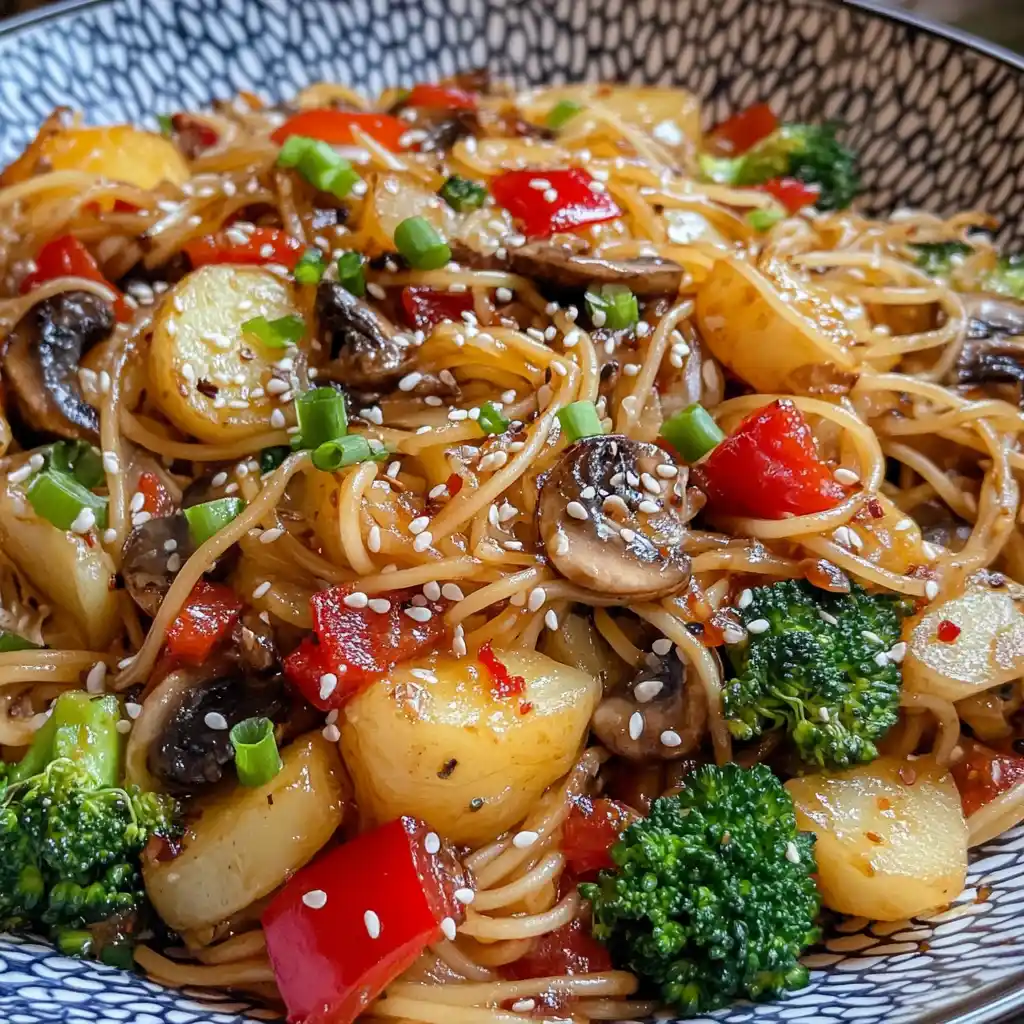
Ingredients
- 10 oz Chinese noodles (fresh lo mein or chow mein from the refrigerated section work best)
- 8 oz new potatoes, thinly sliced (red or gold varieties—about 1/4-inch thick)
- 1 cup broccoli florets (cut into bite-sized pieces)
- 1 red bell pepper, diced (about 1/2-inch pieces)
- 1 cup sliced mushrooms (cremini or button mushrooms work great)
- 2 cloves garlic, minced (fresh is essential here)
- 1 tsp fresh ginger, grated (don’t use ground ginger—fresh is crucial)
- 1/4 cup soy sauce (low-sodium gives you better control over salt)
- 2 tbsp oyster sauce (Lee Kum Kee brand is reliable—find in Asian foods aisle)
- 1/2 cup vegetable broth
- 1/2 cup shredded mozzarella cheese (mild and melty without overpowering)
- 1/4 cup chopped green onions (both white and green parts)
- 2 tbsp cooking oil (vegetable or peanut oil for high-heat cooking)
Instructions
- Preheat your oven to 375°F and generously grease a 9×13 inch baking dish with butter or oil. Set this aside while you prep everything else.
- Cook Chinese noodles according to package instructions until al dente—slightly underdone is perfect since they’ll cook more in the oven. Drain well and set aside.
- Heat 2 tablespoons of oil in your largest skillet over medium heat. Add minced garlic and grated ginger, and sauté for about 1 minute, stirring constantly, until fragrant but not browned.
- Add your thinly sliced new potatoes to the skillet and cook, stirring occasionally, for about 5 minutes until they start softening and getting slightly golden on the edges.
- Stir in the broccoli florets, diced red bell pepper, and sliced mushrooms. Cook everything together for another 3-4 minutes, stirring frequently, until vegetables are crisp-tender but not fully cooked.
- Pour in the soy sauce, oyster sauce, and vegetable broth. Let this mixture simmer for 2-3 minutes so the sauces reduce slightly and create a glaze that coats all the vegetables beautifully.
- Add your cooked, drained noodles to the skillet and toss everything together using tongs or two wooden spoons until the noodles are evenly coated and vegetables are distributed throughout.
- Transfer this entire gorgeous mixture to your prepared baking dish, spreading it out evenly so everything bakes uniformly. Sprinkle that shredded mozzarella cheese evenly over the top.
- Bake in your preheated oven for 20-25 minutes until the cheese is melted, bubbly, and starting to turn golden brown in spots. Your kitchen will smell incredible.
- Remove from the oven and let rest for 5 minutes so everything sets up properly. Garnish generously with chopped green onions and serve hot right from the baking dish.
Nutrition Information (Per Serving):
- Calories: 285
- Carbohydrates: 42g
- Protein: 11g
- Fat: 8g
- Fiber: 4g
- Sodium: 720mg
- Vitamin C: 70% DV (thanks to that bell pepper and broccoli!)
- Vitamin A: 25% DV
- Iron: 12% DV
This Chinese new potatoes pasta bake provides complex carbohydrates, protein, and loads of vegetables while being surprisingly balanced for a comfort food casserole.
Notes:
- Seriously, undercook those noodles initially—al dente is crucial or they’ll turn mushy in the oven
- Every oven runs differently, so check at 20 minutes and adjust baking time based on how bubbly the cheese is
- Don’t skip the resting time after baking—it lets everything set up and prevents burning your mouth on molten cheese
- Fresh ginger and garlic make all the difference—jarred versions won’t give you that authentic aromatic punch
Storage Tips:
Store leftovers in an airtight container in the refrigerator for up to 4 days. The noodles will continue softening as they sit, but the flavors actually improve overnight. Reheat individual portions in the microwave at 50% power to prevent drying out, or reheat the whole dish covered with foil in a 350°F oven for 20 minutes. You can freeze assembled, unbaked casserole for up to 3 months—bake from frozen, covered, adding 20-25 extra minutes to the cooking time.
Serving Suggestions:
- Complete Meal: This is substantial enough to be a one-dish dinner, but pair with a light cucumber salad for freshness
- Asian Feast: Serve alongside egg rolls, pot stickers, or spring rolls for a fusion dinner party spread
- Potluck Star: This travels well and stays warm, making it perfect for bringing to gatherings
- Weeknight Winner: Make on Sunday for easy reheating throughout the busy week
Mix It Up (Recipe Variations):
Protein-Packed Version: Add 1 cup cooked, shredded chicken or cubed extra-firm tofu with the vegetables for a more substantial, complete meal.
Quick Frozen Veggie Style: Use a 16 oz bag of frozen Asian vegetable medley instead of fresh vegetables to save prep time—just thaw and drain well first.
Spicy Chinese Bake: Add 1-2 teaspoons chili garlic sauce with the soy sauce and sprinkle with red pepper flakes before baking for heat that wakes up your taste buds.
Lighter Option: Skip the cheese and drizzle with sesame oil before baking, then garnish with sesame seeds for a more traditionally Asian, less heavy flavor profile.
What Makes This Recipe Special:
This Chinese new potatoes pasta bake proves that fusion cooking isn’t about randomly throwing together different cuisines—it’s about thoughtfully combining techniques and flavors that complement each other. By maintaining the core Chinese flavors of ginger, garlic, soy, and oyster sauce while using Western baking techniques and cheese, this recipe creates comfort food that feels both familiar and excitingly different. The starchy new potatoes act as a bridge ingredient, absorbing Asian flavors while providing substance that makes this casserole satisfying. This dish respects both culinary traditions while creating something genuinely new that stands on its own merits.
