
Ever wonder why eggs at Italian cafes and trattorias taste so much more sophisticated and satisfying than the scrambled ones you make at home? I used to think creating elegant egg dishes required some kind of European culinary training until I discovered this foolproof Italian eggs with fresh watercress. Now my family actually gets excited for weekday breakfast, and I’m pretty sure my neighbor thinks I’ve been secretly importing Italian cooking techniques (if only she knew I literally just fry eggs in good olive oil, add Parmesan, and wilt some watercress on top—the whole thing takes 10 minutes and tastes like a Roman trattoria).
Here’s the Thing About This Recipe
What makes these Italian eggs with fresh watercress work is cooking eggs in olive oil instead of butter—you’re getting a completely different flavor profile that’s fruity, savory, and distinctly Mediterranean. I learned the hard way that using regular vegetable oil gives you bland, flavorless eggs that feel nothing like Italian cooking. The Parmesan adds salty umami depth, while the fresh watercress wilts just enough to become silky and slightly bitter in the best possible way. It’s honestly that simple—no complicated technique, just quality ingredients and the right fat.
What You’ll Need (And My Shopping Tips)
Good fresh eggs are absolutely essential here—look for the freshest eggs you can find since they’re the star of the show. Don’t be me—I used to grab whatever was cheapest without checking dates, and ended up with flat, spread-out eggs three times before I figured out that fresh eggs have firm, round yolks that look beautiful in the pan. Look for eggs with clean shells and the most recent packing date (happens more than I’d like to admit that I forget to check the date).
The watercress matters here too. I always look for bright, perky bunches with no yellowing or wilting—watercress is delicate and goes bad fast. For the Parmesan cheese, please use freshly grated from a block rather than that powdery stuff in a green can—the difference is enormous and this is too simple a dish to hide bad cheese. Good extra-virgin olive oil is non-negotiable here since it’s a primary flavor component. Salt and pepper should be used generously because eggs need more seasoning than you think.
Let’s Make This Together
Start by heating your olive oil in a non-stick skillet over medium heat—use a good amount, about 2 tablespoons, so the eggs get that gorgeous lacy, crispy edge. Here’s where I used to mess up: I’d use too little oil and the eggs would stick and tear instead of sliding out beautifully.
Now for the fun part—carefully crack your eggs into the skillet. Here’s my secret: I crack each egg into a small bowl first, then slide it gently into the oil so I can control placement and avoid getting any shell in the pan. Season immediately with salt and pepper while the whites are still raw so the seasoning sinks in.
Cook the eggs to your preferred doneness—I love them with crispy, golden edges and still-runny yolks for that classic Italian uova fritte style. Sprinkle the grated Parmesan over the eggs while they’re still in the pan. Add the fresh watercress directly on top of the eggs. Just like my eggs in purgatory, that final topping step transforms a simple egg into something restaurant-worthy.
Cover the skillet and let the watercress wilt for just 1-2 minutes—you want it slightly wilted but still vibrant green, not completely cooked down. I learned this from an Italian food magazine I love—brief wilting preserves the peppery bite of watercress that makes this dish special. Remove from heat and serve immediately while everything is hot and the yolks are perfect.
If This Happens, Don’t Panic
Eggs sticking to the pan? You probably didn’t use enough olive oil or your pan wasn’t hot enough before adding the eggs. In reality, I’ve learned to let the oil heat until it shimmers before adding anything—about 1 minute over medium heat. If your yolks broke (and they will eventually when you’re distracted), don’t panic—just embrace the scrambled version, which tastes equally delicious with the Parmesan and watercress.
Watercress turned completely mushy? You probably covered it too long or had too much heat. I always check at 1 minute now because watercress wilts incredibly fast. If the eggs taste bland, you probably didn’t season generously enough—happens to everyone. Eggs need more salt than you think, especially when they’re the main ingredient.
Ways to Mix It Up
When I’m feeling fancy, I’ll make Italian Poached Eggs with Watercress by poaching the eggs in salted water instead of frying for a lighter, more elegant version. Around the weekend, I’ll do a Baked Italian Eggs version in individual ramekins with a little cream and extra Parmesan for a brunch-worthy dish.
For Spicy Italian Eggs, I sometimes add red pepper flakes to the olive oil before adding the eggs for gentle heat. My favorite lazy variation is the Simple Parmesan Eggs—skip the watercress entirely when I’m out and just cook eggs in olive oil with generous Parmesan for pure Italian simplicity.
What Makes This Recipe Special
These Italian eggs with fresh watercress draw from the Roman tradition of uova fritte—fried eggs cooked in generous olive oil until the edges are crispy and golden. What sets this apart from typical fried eggs is using extra-virgin olive oil as the cooking fat, which gives the eggs a fruity, distinctly Mediterranean flavor impossible to achieve with butter or vegetable oil. The addition of Parmesan and peppery watercress transforms humble fried eggs into something that feels like a proper Italian meal, proving that sometimes the simplest ingredient swaps make the biggest flavor impact.
Things People Ask Me About This Recipe
Can I make these Italian eggs with fresh watercress ahead of time?
These are best served immediately while the eggs are hot and yolks are perfect. Eggs don’t reheat well, so make them fresh when you’re ready to eat.
What if I can’t find fresh watercress for this recipe?
Baby arugula works beautifully as a substitute and has a similar peppery bite. Baby spinach is milder but also works well with the eggs and Parmesan.
Is this Italian eggs with watercress recipe filling enough for breakfast?
Surprisingly yes! Two eggs with Parmesan and watercress over toast makes a complete, protein-rich breakfast. Add a side of fruit for a full meal.
Can I make this with scrambled eggs instead of fried?
Absolutely! Scrambled eggs work beautifully—just stir in the Parmesan at the end and top with wilted watercress the same way.
Is this Italian eggs recipe beginner-friendly?
Totally! If you can fry an egg, you can make this. The only skill involved is not overcooking the eggs, which just takes practice and attention.
Why do my eggs have rubbery whites but runny yolks?
Your heat was probably too high. Medium heat gives you set whites and runny yolks without rubbery edges. Lower the heat and be patient.
Why I Had to Share This
I couldn’t resist sharing these Italian eggs with fresh watercress because they’ve transformed my weekday breakfast from boring to something I genuinely look forward to. The best mornings are when something simple tastes so good you feel like you’re eating in a European café, and knowing it took 10 minutes makes me feel like I’ve cracked some kind of cooking code—this recipe checks all those boxes.
Print
Italian Eggs with Fresh Watercress
Description
Elegant, flavorful Italian eggs with fresh watercress and Parmesan—ready in just 10 minutes for a sophisticated breakfast or light meal that tastes like a Roman trattoria.
Prep Time: 2 minutes | Cook Time: 8 minutes | Total Time: 10 minutes | Servings: 2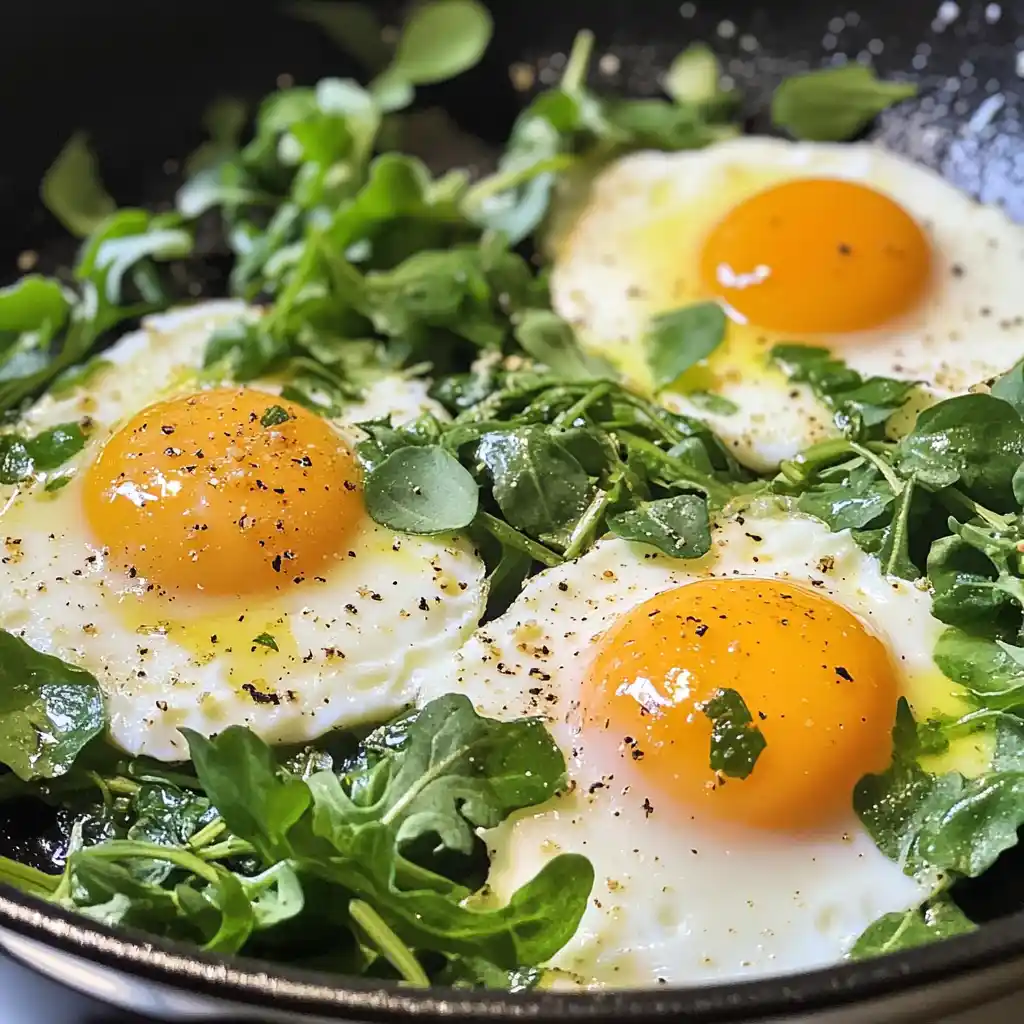
Ingredients
- 4 large eggs (the freshest you can find—check the packing date)
- 1 cup fresh watercress, washed and chopped (look for perky, vibrant green bunches)
- 1/4 cup grated Parmesan cheese (freshly grated from a block—not the green can)
- 2 tablespoons olive oil (extra-virgin is essential here)
- Salt and pepper to taste (be generous—eggs need good seasoning)
Instructions
- Heat the olive oil in a non-stick skillet over medium heat until it shimmers, about 1 minute. You need enough oil to coat the bottom of the pan generously.
- Carefully crack the eggs into the skillet—I crack each one into a small bowl first, then slide it in to avoid shells and control placement. Season immediately with salt and pepper while the whites are still raw.
- Cook the eggs to your desired doneness. For classic Italian-style, cook until the whites are set with crispy golden edges but the yolks are still beautifully runny, about 3-4 minutes. Don’t rush this.
- Sprinkle the freshly grated Parmesan cheese evenly over the eggs while they’re still in the pan. The heat will start melting it immediately.
- Add the fresh watercress directly on top of the Parmesan-covered eggs, spreading it evenly.
- Cover the skillet with a lid and let the watercress wilt for just 1-2 minutes. Check at 1 minute—you want it slightly wilted and silky but still bright green, not completely cooked down.
- Remove from heat immediately and slide onto plates. Serve hot with crusty bread for soaking up that gorgeous olive oil. Enjoy every bite!
Nutrition Information (Per Serving – 2 eggs):
- Calories: 285
- Carbohydrates: 2g
- Protein: 18g
- Fat: 23g
- Fiber: 0g
- Sodium: 380mg
- Vitamin A: 25% DV
- Vitamin C: 20% DV
- Calcium: 20% DV
- Vitamin K: 45% DV
This dish provides complete protein from eggs, vitamin K from watercress, and calcium from Parmesan—a nutritionally impressive simple meal.
Notes:
- Seriously, use good extra-virgin olive oil—it’s a primary flavor in this dish
- Freshly grated Parmesan makes an enormous difference over pre-grated powder
- Don’t over-wilt the watercress—1-2 minutes max to preserve its peppery bite
- Medium heat gives you set whites and runny yolks without rubbery edges
- Fresh eggs with firm yolks look and taste dramatically better than old eggs
Storage Tips:
- Best served immediately—eggs don’t reheat well at all
- Don’t make this ahead—the quality drops significantly once cooked
- Leftover watercress keeps refrigerated for 1-2 days in a damp paper towel
- Store Parmesan wrapped in parchment in the fridge for up to 2 weeks
Serving Suggestions:
- Classic Italian Breakfast: Serve with crusty sourdough for soaking up olive oil
- Light Lunch: Pair with a simple green salad and glass of sparkling water
- Brunch Spread: Serve alongside fresh fruit and good coffee
- Low-Carb Meal: Skip the bread and serve with sliced tomatoes
Mix It Up (Recipe Variations):
- Italian Poached Eggs: Poach eggs instead of frying for a lighter, more delicate version
- Baked Italian Eggs: Cook in individual ramekins with cream and extra Parmesan
- Spicy Italian Eggs: Add red pepper flakes to the olive oil before adding eggs
- Simple Parmesan Eggs: Skip the watercress for pure Italian egg simplicity
What Makes This Recipe Special:
These Italian eggs with fresh watercress showcase the Roman tradition of cooking eggs in generous olive oil until edges are gloriously crispy and golden—a technique that transforms a humble ingredient into something worth savoring. The use of extra-virgin olive oil as the cooking fat rather than butter creates a distinctly Mediterranean flavor profile impossible to achieve any other way, while the Parmesan and peppery watercress complete the Italian flavor picture. This proves that sometimes the most impressive cooking comes from using the right ingredients rather than complicated techniques—respecting simplicity is the true secret of Italian cooking.
