Description
Elegant, flavorful Italian eggs with fresh watercress and Parmesan—ready in just 10 minutes for a sophisticated breakfast or light meal that tastes like a Roman trattoria.
Prep Time: 2 minutes | Cook Time: 8 minutes | Total Time: 10 minutes | Servings: 2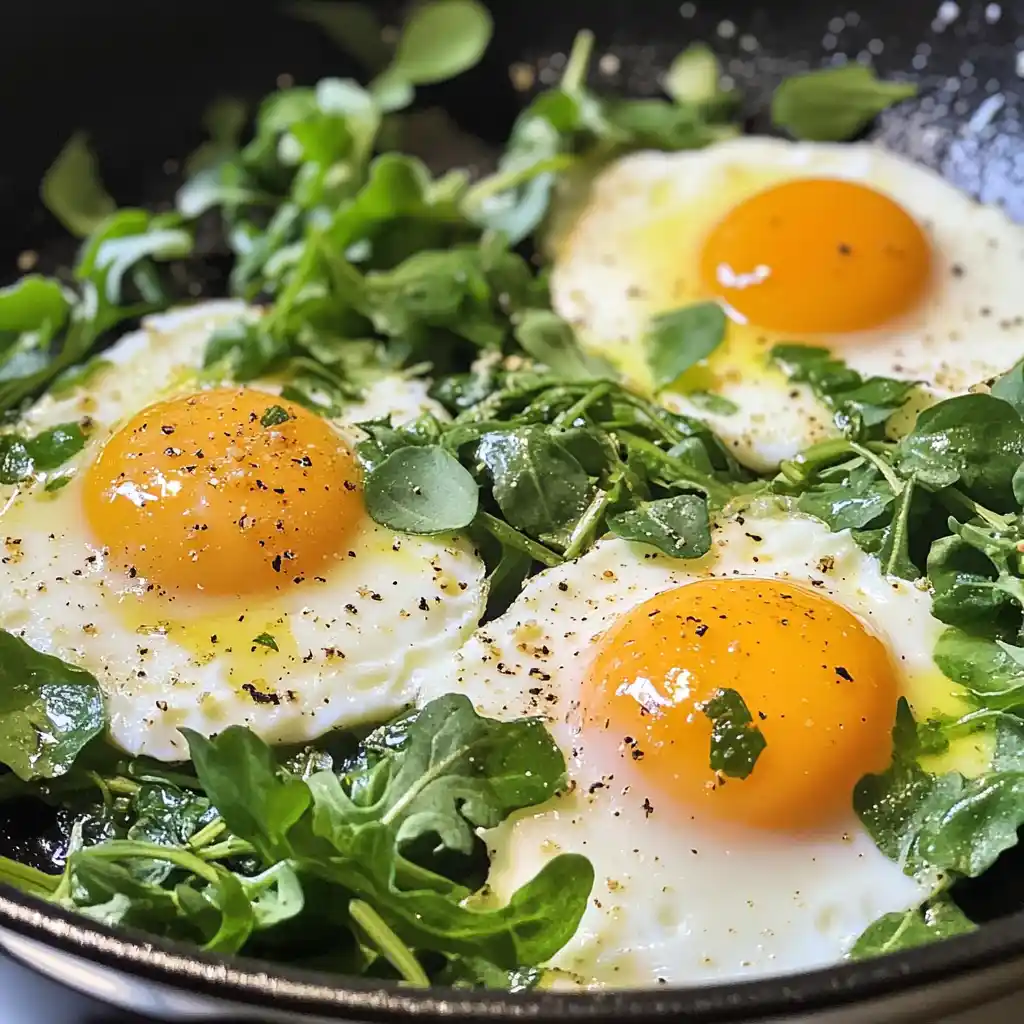
Ingredients
- 4 large eggs (the freshest you can find—check the packing date)
- 1 cup fresh watercress, washed and chopped (look for perky, vibrant green bunches)
- 1/4 cup grated Parmesan cheese (freshly grated from a block—not the green can)
- 2 tablespoons olive oil (extra-virgin is essential here)
- Salt and pepper to taste (be generous—eggs need good seasoning)
Instructions
- Heat the olive oil in a non-stick skillet over medium heat until it shimmers, about 1 minute. You need enough oil to coat the bottom of the pan generously.
- Carefully crack the eggs into the skillet—I crack each one into a small bowl first, then slide it in to avoid shells and control placement. Season immediately with salt and pepper while the whites are still raw.
- Cook the eggs to your desired doneness. For classic Italian-style, cook until the whites are set with crispy golden edges but the yolks are still beautifully runny, about 3-4 minutes. Don’t rush this.
- Sprinkle the freshly grated Parmesan cheese evenly over the eggs while they’re still in the pan. The heat will start melting it immediately.
- Add the fresh watercress directly on top of the Parmesan-covered eggs, spreading it evenly.
- Cover the skillet with a lid and let the watercress wilt for just 1-2 minutes. Check at 1 minute—you want it slightly wilted and silky but still bright green, not completely cooked down.
- Remove from heat immediately and slide onto plates. Serve hot with crusty bread for soaking up that gorgeous olive oil. Enjoy every bite!
Nutrition Information (Per Serving – 2 eggs):
- Calories: 285
- Carbohydrates: 2g
- Protein: 18g
- Fat: 23g
- Fiber: 0g
- Sodium: 380mg
- Vitamin A: 25% DV
- Vitamin C: 20% DV
- Calcium: 20% DV
- Vitamin K: 45% DV
This dish provides complete protein from eggs, vitamin K from watercress, and calcium from Parmesan—a nutritionally impressive simple meal.
Notes:
- Seriously, use good extra-virgin olive oil—it’s a primary flavor in this dish
- Freshly grated Parmesan makes an enormous difference over pre-grated powder
- Don’t over-wilt the watercress—1-2 minutes max to preserve its peppery bite
- Medium heat gives you set whites and runny yolks without rubbery edges
- Fresh eggs with firm yolks look and taste dramatically better than old eggs
Storage Tips:
- Best served immediately—eggs don’t reheat well at all
- Don’t make this ahead—the quality drops significantly once cooked
- Leftover watercress keeps refrigerated for 1-2 days in a damp paper towel
- Store Parmesan wrapped in parchment in the fridge for up to 2 weeks
Serving Suggestions:
- Classic Italian Breakfast: Serve with crusty sourdough for soaking up olive oil
- Light Lunch: Pair with a simple green salad and glass of sparkling water
- Brunch Spread: Serve alongside fresh fruit and good coffee
- Low-Carb Meal: Skip the bread and serve with sliced tomatoes
Mix It Up (Recipe Variations):
- Italian Poached Eggs: Poach eggs instead of frying for a lighter, more delicate version
- Baked Italian Eggs: Cook in individual ramekins with cream and extra Parmesan
- Spicy Italian Eggs: Add red pepper flakes to the olive oil before adding eggs
- Simple Parmesan Eggs: Skip the watercress for pure Italian egg simplicity
What Makes This Recipe Special:
These Italian eggs with fresh watercress showcase the Roman tradition of cooking eggs in generous olive oil until edges are gloriously crispy and golden—a technique that transforms a humble ingredient into something worth savoring. The use of extra-virgin olive oil as the cooking fat rather than butter creates a distinctly Mediterranean flavor profile impossible to achieve any other way, while the Parmesan and peppery watercress complete the Italian flavor picture. This proves that sometimes the most impressive cooking comes from using the right ingredients rather than complicated techniques—respecting simplicity is the true secret of Italian cooking.