
Ever wonder why restaurant fish always tastes perfectly cooked while homemade salmon ends up dry and boring? I used to be terrified of cooking salmon until I discovered this foolproof pan-fried mango salmon recipe. Now my weeknight dinners feel tropical and exciting, and my family thinks I’ve been secretly taking cooking classes (if only they knew I was just following a simple technique and adding fruit salsa to cover up my early mistakes).
Here’s the Thing About This Recipe
What makes this mango salmon recipe work is the way crispy-skinned salmon pairs with bright, fresh mango salsa that cuts through the richness of the fish. Here’s what I’ve learned the hard way: most people overcook salmon because they’re scared of undercooking it, but salmon is incredibly forgiving when you use medium-high heat and good timing. The sweet mango salsa with lime and jalapeño creates this tropical flavor explosion that makes plain salmon seem incredibly sad. It’s honestly that simple—hot pan, good fish, fresh salsa. No fancy culinary techniques or expensive ingredients needed.
What You’ll Need (And My Shopping Tips)
Good salmon fillets are worth buying from a fish counter instead of those pre-packaged ones sitting under plastic wrap. I learned this after buying salmon three times that smelled fishy and had gray patches. Look for bright pink or orange salmon with firm flesh—if it feels mushy or smells strongly, walk away. Ask the person at the fish counter what came in today, and honestly, they appreciate when you ask instead of just pointing at whatever. I always grab skin-on fillets because that crispy skin is the best part.
Ripe mango should give slightly when you press it and smell sweet and tropical at the stem end. According to The Spruce Eats’ guide to mangoes, color isn’t always the best indicator of ripeness—some varieties stay green even when ripe. Don’t cheap out on rock-hard mangoes thinking they’ll ripen—sometimes they just stay hard and flavorless or go straight to rotten.
Fresh cilantro is essential for that authentic salsa flavor—dried cilantro tastes like dust and sadness. The jalapeño adds a gentle kick without being overwhelming, but if you’re nervous about heat, start with half and work up from there. Fresh lime juice is non-negotiable here—bottled lime juice tastes like chemicals compared to real limes.
Red onion adds a sharp bite that balances the sweet mango. If you find raw onion too harsh, soak the chopped pieces in cold water for 5 minutes, then drain before using—it takes away some of the bite.
Let’s Make This Together
Start by making your mango salsa so the flavors have time to marry while you cook the salmon. In a bowl, combine the diced mango, finely chopped red onion, minced jalapeño, chopped cilantro, and lime juice. Season with salt and pepper, mix well, and set aside. Here’s where I used to mess up: I’d make the salsa days ahead and it would get watery and weird. Fresh is best—make it within an hour of serving.
Pat your salmon fillets completely dry with paper towels. This is crucial—wet fish steams instead of getting that gorgeous crispy skin. Season both sides generously with salt and pepper. Don’t be shy with the seasoning—salmon can handle it and needs it to taste its best.
Now for the fun part: heat 2 tablespoons of olive oil in a large pan over medium-high heat. You want the oil shimmering but not smoking. When the pan is properly hot, carefully place the salmon fillets skin-side down in the pan. Here’s my secret: don’t touch them. Resist every urge to poke, flip, or move them around. Let them sit undisturbed for 4-5 minutes until the skin is golden brown and crispy.
Here’s the technique that changed everything for me: use a fish spatula (or regular spatula) to gently peek under one edge. If the skin releases easily from the pan, it’s ready to flip. If it’s sticking, give it another minute. Carefully flip the fillets and cook for 3-4 minutes more until the salmon is just cooked through. It should be slightly translucent in the very center when you peek—it’ll finish cooking from residual heat.
Remove the salmon from the pan and immediately top each fillet with generous spoonfuls of that gorgeous mango salsa. The contrast of hot, crispy salmon with cool, fresh salsa is what makes this dish special. Serve immediately while the salmon is hot and the salsa is fresh.
This whole thing takes about 20 minutes, which means tropical vacation vibes on a Tuesday night. Check out my Blackened Tilapia with Mango Salsa for another fruity fish option that pairs perfectly with this cooking style.
When Things Go Sideways (And They Will)
Salmon skin stuck to the pan? You either didn’t dry the fish well enough or flipped it too early. In reality, I’ve learned to be patient—when the skin is ready, it releases easily. If it’s stuck and tearing, slide a thin spatula gently under and accept that this batch won’t have perfect skin. This is totally fixable for next time.
Fish overcooked and dry? You cooked it too long or at too high heat. Every stove has its own personality, so start checking at 3 minutes on the second side instead of waiting the full 4. Salmon goes from perfect to dry fast, so err on the side of slightly underdone—it’ll finish cooking from residual heat.
Mango salsa is watery? Your mango was too ripe or you made it too far ahead. Don’t panic—drain off the excess liquid before serving, or serve the salmon on a plate with the salsa on the side instead of on top. I always make salsa within an hour of serving now to prevent this.
Salmon fell apart when flipping? The pan wasn’t hot enough or you rushed the flip. Use two spatulas next time if you’re nervous—one to support, one to flip. This happens to everyone, and broken salmon tastes exactly the same as pretty salmon.
When I’m Feeling Creative
Spicy Mango Salmon: Double the jalapeño and add a pinch of cayenne to the salsa for serious heat. Around summer barbecues, this version is what I make when I want something with a kick.
Coconut-Crusted Mango Salmon: Press shredded coconut onto the salmon before pan-frying for a tropical crust that’s absolutely addictive. When I’m feeling fancy, this turns weeknight dinner into something special enough for guests.
Asian-Inspired Mango Salmon: Replace the cilantro with fresh basil and add a tablespoon of soy sauce to the salsa. This has been a total game-changer for anyone who isn’t a cilantro fan—the basil adds a different but equally delicious herbal note.
Pineapple-Mango Salmon: Use half mango, half diced pineapple in the salsa for even more tropical flavor. Fair warning: this makes it sweeter, so you might want to add extra lime juice to balance.
What Makes This Recipe Special
The combination of salmon with fruit salsa has roots in both Caribbean and Latin American cuisines, where fresh tropical fruits are paired with grilled or pan-fried fish. According to Wikipedia’s guide to salmon, salmon is rich in omega-3 fatty acids, protein, and vitamin D, making it one of the healthiest proteins you can eat. The pan-frying technique creates restaurant-quality crispy skin without needing a grill or expensive equipment. What sets this pan-fried mango salmon apart is how quickly it comes together—the fresh mango salsa takes minutes to make and transforms simple pan-fried fish into something that tastes vacation-worthy, proving that healthy weeknight dinners don’t have to be boring or time-consuming.
Questions I Always Get
Can I make this pan-fried mango salmon ahead of time?
The salmon is best cooked fresh and served immediately—reheated salmon gets dry and loses that crispy skin. But you can make the mango salsa up to 2 hours ahead and keep it covered in the fridge. Just bring it to room temperature before serving for the best flavor. Trust me on this—I tried meal-prepping this and the reheated salmon was disappointing compared to fresh.
What if I can’t find ripe mango for this recipe?
Peaches or nectarines work beautifully when mangoes aren’t in season or you can’t find ripe ones. Pineapple is another great substitute that adds tropical sweetness with a bit more acidity. Around here, we’ve discovered that even diced papaya works in a pinch, though the flavor is milder than mango.
How do I know when the salmon is done?
The salmon should be opaque on the outside with just a slightly translucent center—it’ll finish cooking from residual heat after you remove it from the pan. If you have a thermometer, aim for 125-130°F internal temperature. The flesh should flake easily with a fork but still be moist and tender.
Can I use frozen salmon for this mango salmon recipe?
You can, but thaw it completely in the fridge overnight and pat it bone-dry before cooking. Frozen salmon releases a lot of water when thawing, which can prevent that crispy skin from forming. Fresh salmon definitely gives better results, but good-quality frozen salmon works if that’s what’s available.
Is the jalapeño too spicy for kids?
Without the seeds, one jalapeño in the whole salsa gives just a gentle warmth, not overwhelming heat. If you’re worried, start with half a jalapeño or leave it out entirely—the salsa is still delicious without it, just less complex. My kids actually love this version and don’t find it too spicy at all.
What’s the best way to dice a mango without making a mess?
Cut off both “cheeks” on either side of the flat pit, score the flesh in a crosshatch pattern without cutting through the skin, then push the skin inside-out so the cubes pop up. Cut them off with a knife. It takes practice, but it’s way easier than trying to peel a slippery mango. Every mango is slightly different, so don’t stress if your cubes aren’t perfect.
Before You Head to the Kitchen
I couldn’t resist sharing this because healthy dinners shouldn’t be boring, and this pan-fried mango salmon proves you can make something that tastes tropical and exciting in less time than ordering takeout. The best weeknight dinners are when everyone’s asking for seconds and not realizing they just ate super-nutritious fish loaded with omega-3s. You’ve got this—it’s just fish, fruit, and confidence!
Print
Pan-Fried Mango Salmon
Description
This vibrant pan-fried mango salmon features perfectly crispy-skinned salmon topped with fresh mango salsa made with jalapeño, cilantro, and lime for a healthy dinner that’s ready in 20 minutes and tastes like tropical vacation.
Prep Time: 10 minutes | Cook Time: 10 minutes | Total Time: 20 minutes | Servings: 2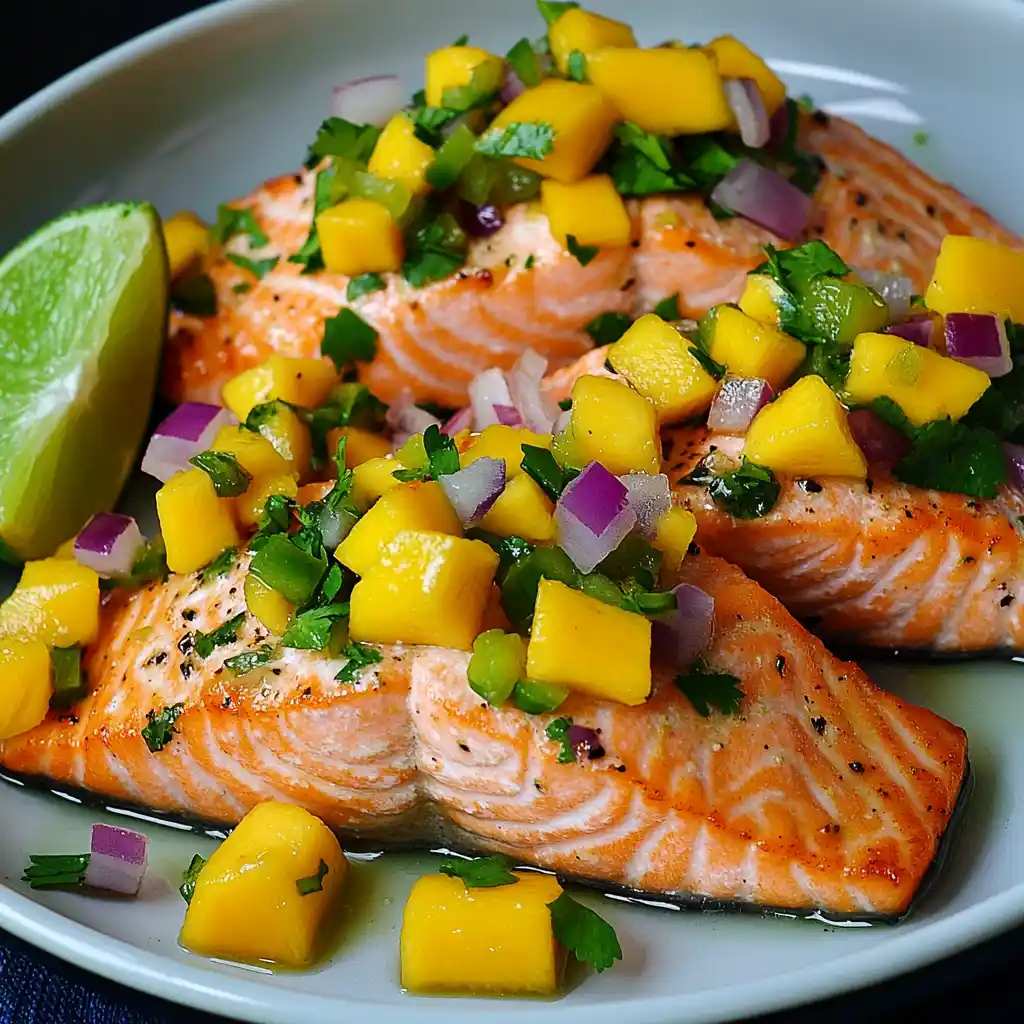
Ingredients
For the Salmon:
- 2 salmon fillets, 6 oz each (skin-on is best for crispy texture)
- 2 tablespoons olive oil
- Salt and pepper, to taste (be generous—salmon needs good seasoning)
For the Mango Salsa:
- 1 ripe mango, peeled and diced (about 1.5 cups—make sure it’s ripe but firm)
- 1/4 cup red onion, finely chopped (soak in cold water if you find it too sharp)
- 1 jalapeño, seeded and minced (start with half if you’re heat-sensitive)
- 2 tablespoons fresh cilantro, chopped (bright green leaves, no brown spots)
- 2 tablespoons fresh lime juice (from about 1 lime—use fresh, not bottled)
- Salt and pepper, to taste
Instructions
- Start by making the mango salsa: In a medium bowl, combine the diced mango, finely chopped red onion, minced jalapeño, chopped cilantro, and fresh lime juice. Season with salt and pepper, mix well, and set aside while you cook the salmon. The flavors will marry together beautifully.
- Pat the salmon fillets completely dry with paper towels on both sides. This is crucial for getting crispy skin—wet fish will steam instead of sear.
- Season both sides of the salmon generously with salt and pepper. Press the seasonings into the flesh so they stick and create flavor.
- Heat 2 tablespoons of olive oil in a large skillet over medium-high heat. Let the oil get hot until it’s shimmering but not smoking—this takes about 2 minutes.
- Carefully place the salmon fillets in the hot pan, skin-side down. Don’t move them! Let them cook undisturbed for 4-5 minutes until the skin is golden brown and crispy. You’ll see the salmon cooking up the sides—when it’s about 75% opaque, it’s time to flip.
- Using a fish spatula or regular spatula, carefully flip the salmon fillets. If they’re sticking, give them another 30 seconds—when the skin is ready, it releases easily from the pan.
- Cook on the flesh side for 3-4 minutes until the salmon is just cooked through. It should be slightly translucent in the very center—it’ll finish cooking from residual heat after you remove it from the pan.
- Remove the salmon from the pan and immediately transfer to serving plates. Top each fillet generously with the fresh mango salsa, letting it cascade down the sides.
- Serve immediately while the salmon is hot and the salsa is cool and fresh. The temperature contrast is what makes this dish special!
Nutrition Information (Per Serving):
- Calories: 425
- Carbohydrates: 22g
- Protein: 35g
- Fat: 22g
- Fiber: 3g
- Sodium: 280mg
- Omega-3 Fatty Acids: 2.5g
- Vitamin C: 45mg (50% DV)
- Vitamin D: 570 IU (71% DV)
This mango salmon recipe provides exceptional omega-3 fatty acids for heart and brain health, plus complete protein and vitamin D from salmon, with vitamin C from mango and lime—all while being naturally gluten-free and paleo-friendly.
Notes:
- Dry fish is the secret to crispy skin. Pat it completely dry with paper towels before seasoning—this one step makes a massive difference.
- Don’t flip too early. When the skin is ready, it releases easily from the pan. If it’s sticking and tearing, give it another minute.
- Every stove has its own personality. If your salmon is browning too fast, reduce heat to medium. If it’s not getting crispy, increase heat slightly.
- Fresh salsa is best within an hour of serving. Making it days ahead makes it watery and the flavors muddy. Fresh is always better.
- Room temperature fish cooks more evenly. If you remember, take the salmon out of the fridge 15 minutes before cooking.
Storage Tips:
Salmon is best enjoyed fresh and hot from the pan with the crispy skin intact. If you have leftovers, store the salmon and salsa separately in airtight containers in the fridge for up to 2 days. Reheat the salmon gently in a 300°F oven for 5-7 minutes—microwaving makes it dry and rubbery. The mango salsa stays fresh for 2 days refrigerated but drain any excess liquid before serving. Honestly, there are rarely leftovers because everyone goes back for seconds.
Serving Suggestions:
- Light Dinner: Serve over coconut rice or quinoa with steamed green beans for a complete balanced meal
- Taco Night: Flake the leftover salmon and use it in tacos with the mango salsa, cabbage slaw, and avocado
- Salad Topper: Serve the salmon over mixed greens with the salsa as a fresh, healthy lunch
- Meal Prep: Make the salsa ahead and cook salmon fresh each night for quick 20-minute dinners
Mix It Up (Recipe Variations):
Spicy Mango Salmon: Double the jalapeño and add a pinch of cayenne pepper to the salsa for serious heat that pairs beautifully with the sweet mango.
Coconut-Crusted Mango Salmon: Press shredded unsweetened coconut onto the salmon flesh before cooking for a tropical crust that adds texture and flavor.
Asian-Inspired Mango Salmon: Replace cilantro with Thai basil and add 1 tablespoon soy sauce to the salsa for an Asian fusion twist.
Pineapple-Mango Salmon: Use half mango and half diced fresh pineapple in the salsa for even more tropical sweetness with extra acidity.
What Makes This Recipe Special:
This pan-fried mango salmon recipe combines Caribbean and Latin American culinary traditions of pairing fresh tropical fruit with seafood, creating a dish that’s both nutritious and exciting. The pan-frying technique achieves restaurant-quality crispy skin at home without specialized equipment, while the fresh mango salsa provides bright acidity and sweetness that perfectly complements rich salmon. It’s proof that healthy eating doesn’t mean sacrificing flavor—sometimes the best meals are the simplest ones made with quality ingredients and proper technique.
