Description
This vibrant pan-fried mango salmon features perfectly crispy-skinned salmon topped with fresh mango salsa made with jalapeño, cilantro, and lime for a healthy dinner that’s ready in 20 minutes and tastes like tropical vacation.
Prep Time: 10 minutes | Cook Time: 10 minutes | Total Time: 20 minutes | Servings: 2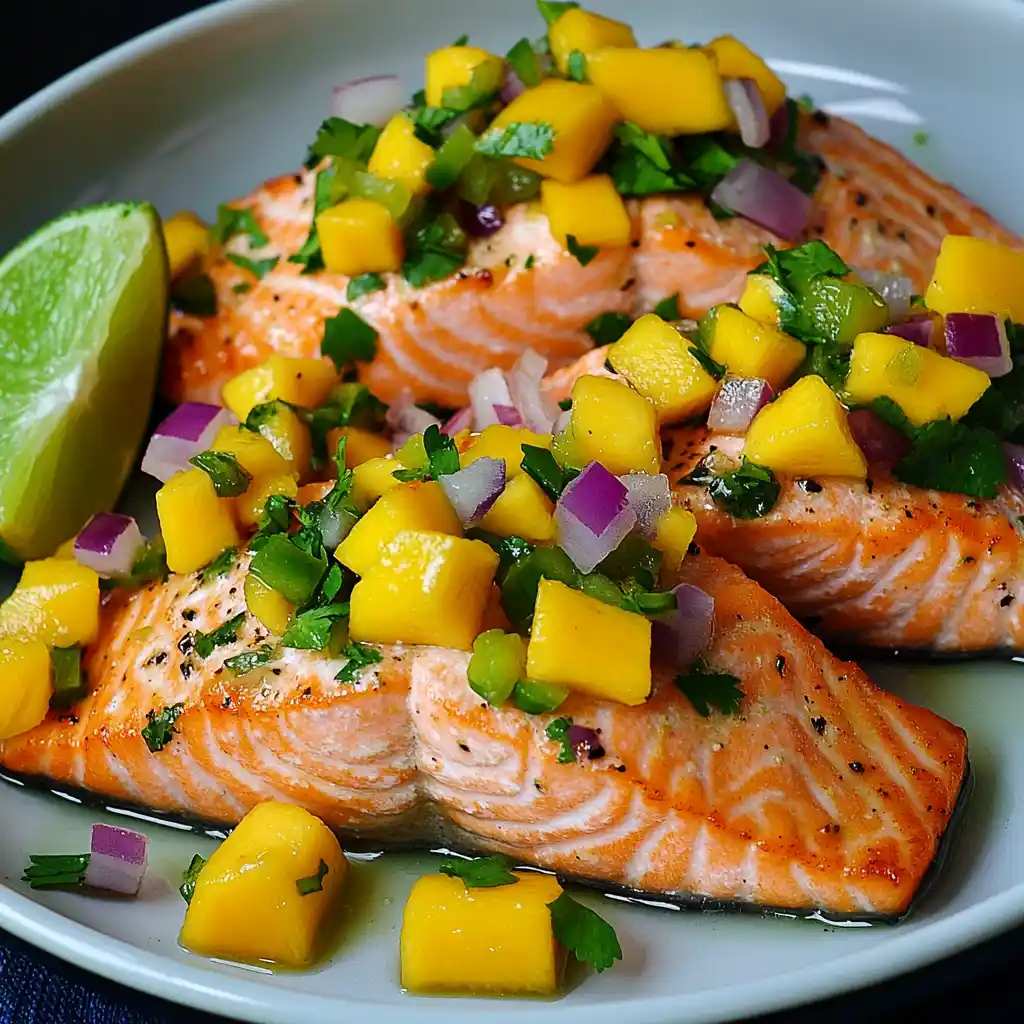
Ingredients
For the Salmon:
- 2 salmon fillets, 6 oz each (skin-on is best for crispy texture)
- 2 tablespoons olive oil
- Salt and pepper, to taste (be generous—salmon needs good seasoning)
For the Mango Salsa:
- 1 ripe mango, peeled and diced (about 1.5 cups—make sure it’s ripe but firm)
- 1/4 cup red onion, finely chopped (soak in cold water if you find it too sharp)
- 1 jalapeño, seeded and minced (start with half if you’re heat-sensitive)
- 2 tablespoons fresh cilantro, chopped (bright green leaves, no brown spots)
- 2 tablespoons fresh lime juice (from about 1 lime—use fresh, not bottled)
- Salt and pepper, to taste
Instructions
- Start by making the mango salsa: In a medium bowl, combine the diced mango, finely chopped red onion, minced jalapeño, chopped cilantro, and fresh lime juice. Season with salt and pepper, mix well, and set aside while you cook the salmon. The flavors will marry together beautifully.
- Pat the salmon fillets completely dry with paper towels on both sides. This is crucial for getting crispy skin—wet fish will steam instead of sear.
- Season both sides of the salmon generously with salt and pepper. Press the seasonings into the flesh so they stick and create flavor.
- Heat 2 tablespoons of olive oil in a large skillet over medium-high heat. Let the oil get hot until it’s shimmering but not smoking—this takes about 2 minutes.
- Carefully place the salmon fillets in the hot pan, skin-side down. Don’t move them! Let them cook undisturbed for 4-5 minutes until the skin is golden brown and crispy. You’ll see the salmon cooking up the sides—when it’s about 75% opaque, it’s time to flip.
- Using a fish spatula or regular spatula, carefully flip the salmon fillets. If they’re sticking, give them another 30 seconds—when the skin is ready, it releases easily from the pan.
- Cook on the flesh side for 3-4 minutes until the salmon is just cooked through. It should be slightly translucent in the very center—it’ll finish cooking from residual heat after you remove it from the pan.
- Remove the salmon from the pan and immediately transfer to serving plates. Top each fillet generously with the fresh mango salsa, letting it cascade down the sides.
- Serve immediately while the salmon is hot and the salsa is cool and fresh. The temperature contrast is what makes this dish special!
Nutrition Information (Per Serving):
- Calories: 425
- Carbohydrates: 22g
- Protein: 35g
- Fat: 22g
- Fiber: 3g
- Sodium: 280mg
- Omega-3 Fatty Acids: 2.5g
- Vitamin C: 45mg (50% DV)
- Vitamin D: 570 IU (71% DV)
This mango salmon recipe provides exceptional omega-3 fatty acids for heart and brain health, plus complete protein and vitamin D from salmon, with vitamin C from mango and lime—all while being naturally gluten-free and paleo-friendly.
Notes:
- Dry fish is the secret to crispy skin. Pat it completely dry with paper towels before seasoning—this one step makes a massive difference.
- Don’t flip too early. When the skin is ready, it releases easily from the pan. If it’s sticking and tearing, give it another minute.
- Every stove has its own personality. If your salmon is browning too fast, reduce heat to medium. If it’s not getting crispy, increase heat slightly.
- Fresh salsa is best within an hour of serving. Making it days ahead makes it watery and the flavors muddy. Fresh is always better.
- Room temperature fish cooks more evenly. If you remember, take the salmon out of the fridge 15 minutes before cooking.
Storage Tips:
Salmon is best enjoyed fresh and hot from the pan with the crispy skin intact. If you have leftovers, store the salmon and salsa separately in airtight containers in the fridge for up to 2 days. Reheat the salmon gently in a 300°F oven for 5-7 minutes—microwaving makes it dry and rubbery. The mango salsa stays fresh for 2 days refrigerated but drain any excess liquid before serving. Honestly, there are rarely leftovers because everyone goes back for seconds.
Serving Suggestions:
- Light Dinner: Serve over coconut rice or quinoa with steamed green beans for a complete balanced meal
- Taco Night: Flake the leftover salmon and use it in tacos with the mango salsa, cabbage slaw, and avocado
- Salad Topper: Serve the salmon over mixed greens with the salsa as a fresh, healthy lunch
- Meal Prep: Make the salsa ahead and cook salmon fresh each night for quick 20-minute dinners
Mix It Up (Recipe Variations):
Spicy Mango Salmon: Double the jalapeño and add a pinch of cayenne pepper to the salsa for serious heat that pairs beautifully with the sweet mango.
Coconut-Crusted Mango Salmon: Press shredded unsweetened coconut onto the salmon flesh before cooking for a tropical crust that adds texture and flavor.
Asian-Inspired Mango Salmon: Replace cilantro with Thai basil and add 1 tablespoon soy sauce to the salsa for an Asian fusion twist.
Pineapple-Mango Salmon: Use half mango and half diced fresh pineapple in the salsa for even more tropical sweetness with extra acidity.
What Makes This Recipe Special:
This pan-fried mango salmon recipe combines Caribbean and Latin American culinary traditions of pairing fresh tropical fruit with seafood, creating a dish that’s both nutritious and exciting. The pan-frying technique achieves restaurant-quality crispy skin at home without specialized equipment, while the fresh mango salsa provides bright acidity and sweetness that perfectly complements rich salmon. It’s proof that healthy eating doesn’t mean sacrificing flavor—sometimes the best meals are the simplest ones made with quality ingredients and proper technique.