
Ever wonder why fruit-based dressings at farm-to-table restaurants taste so much more interesting and sophisticated than anything you can buy at the store? I used to think creating elegant homemade dressings required some kind of culinary expertise until I discovered this foolproof pear herbed dressing. Now my family actually requests salad for dinner, and I’m pretty sure my friends think I’ve been secretly studying artisan food crafting (if only they knew I literally just blend ripe pears with olive oil and herbs for 60 seconds—the whole thing is easier than driving to the store and tastes like something from an upscale farm-to-table restaurant).
Here’s the Thing About This Dressing
What makes this pear herbed dressing work is using whole blended pears as the base instead of just pear juice—you’re getting a naturally thick, creamy texture without any added thickeners while the fruit’s natural sweetness perfectly balances the apple cider vinegar’s tang. I learned the hard way that using under-ripe pears gives you a gritty, starchy dressing that doesn’t emulsify properly. The Dijon mustard acts as a natural emulsifier that keeps the olive oil and fruit blended together, while the thyme and rosemary add savory herbal depth. It’s honestly that simple—ripe fruit, good olive oil, fresh herbs, and a blender.
What You’ll Need (And My Shopping Tips)
Good ripe pears are your absolute foundation here—look for pears that give slightly when pressed near the stem and smell sweetly floral. Don’t be me—I used to grab whatever pears were on sale regardless of ripeness, and ended up with gritty, flavorless dressing three times before I figured out that pear ripeness is the single most important factor. Look for Bartlett or Bosc pears at peak ripeness (happens more than I’d like to admit that I forget to check ripeness two days before I need them and end up with hard pears).
The olive oil matters enormously in a simple dressing like this. I always use good quality extra-virgin for the fruitiest flavor that complements the pears. For the apple cider vinegar, raw unfiltered variety with the mother adds complexity and subtle depth. The Dijon mustard should be smooth and sharp—I use a classic French Dijon that’s genuinely spicy. Good honey rounds out the sweetness naturally. The dried herbs should be relatively fresh because old thyme and rosemary taste like dust—if yours have been in the pantry since last year, replace them.
Let’s Make This Together
Start by peeling and chopping your ripe pears into chunks. Here’s where I used to mess up: I’d leave the core in thinking the blender would handle it, and ended up with gritty bits from the tough core tissue that never completely blended.
Now for the fun part—in your blender, combine the chopped pears, olive oil, apple cider vinegar, honey, Dijon mustard, salt, and black pepper. Here’s my secret: I add the pears first, then pour the liquids around them so the blender starts processing immediately without struggling. Blend until completely smooth and creamy—about 30-45 seconds on high speed.
Now add the dried thyme and rosemary and pulse just a few times to incorporate. Here’s the crucial detail: you don’t want to fully blend the herbs—a few pulses leaves tiny flecks of green that look beautiful and provide occasional herbal bursts rather than turning the whole dressing green. Just like my apple walnut vinaigrette, that restraint with the herbs is what makes this look artisan rather than processed.
Taste and adjust seasoning—you might want more salt, more vinegar for tartness, or more honey for sweetness depending on your pears. Transfer to a jar with a tight lid and refrigerate for at least 30 minutes before serving. I learned this resting step from a culinary book I love—the chilling time allows the herbs to bloom in the dressing and the flavors to meld into something more cohesive.
If This Happens, Don’t Panic
Dressing too thick and won’t pour properly? You probably used pears that were very ripe and starchy. In reality, I’ve learned to thin it with a tablespoon of water at a time until it reaches the right consistency. If it’s too thin and watery (and it will be if you used very juicy pears that released a lot of liquid), don’t panic—just blend in another half pear to thicken it back up.
Dressing tastes too tart? This is totally fixable with more honey and a tiny pinch more salt to balance the vinegar. I always taste before refrigerating now because different pear varieties have wildly different sweetness levels. If the olive oil flavor is overwhelming and makes it taste bitter, you probably used a very robust olive oil—happens to everyone. Just blend in another half pear to dilute and sweeten.
Ways to Mix It Up
When I’m feeling fancy, I’ll make Pear Tarragon Dressing by swapping the thyme and rosemary for fresh tarragon—perfect for a more French, anise-tinged flavor that pairs beautifully with bitter greens. Around fall, I’ll do a Pear Walnut Dressing by blending in a tablespoon of walnut oil for nutty richness.
For Spiced Pear Dressing, I sometimes add a pinch of cinnamon and nutmeg with the herbs for a warm, autumnal version. My favorite lazy variation is the Simple Pear Vinaigrette—skip the herbs entirely when I’m out and just blend pear with olive oil, vinegar, honey, and mustard for a pure fruit dressing.
What Makes This Recipe Special
This pear herbed dressing represents the farm-to-table approach to condiment making—using whole seasonal fruit as the base ingredient rather than just as a flavoring. What sets this apart from store-bought fruit dressings is using whole blended pears rather than juice or extract, creating natural body and genuine fruit flavor that bottle dressings achieve through artificial means. The combination of savory Dijon and herbal thyme with sweet pear creates a dressing that works on everything from simple green salads to roasted root vegetables to grilled proteins, proving that one exceptional homemade dressing can transform your entire approach to everyday cooking.
Things People Ask Me About This Recipe
Can I make this pear herbed dressing ahead of time?
Absolutely! It actually tastes better after sitting overnight as the flavors meld. Keep refrigerated for up to 5 days and shake or stir well before each use as natural separation will occur.
What if my pears aren’t quite ripe enough?
Let them ripen at room temperature for a day or two until fragrant and slightly soft. You can also add an extra teaspoon of honey to compensate for less-sweet pears.
Is this pear herbed dressing suitable for different dietary needs?
It’s naturally vegan (substitute maple syrup for honey), gluten-free, and dairy-free as written. It’s incredibly versatile for guests with different dietary restrictions.
What salads does this dressing work best with?
It’s exceptional on bitter greens like arugula and radicchio where the sweetness provides contrast, on spinach salads with nuts and cheese, and on roasted beet salads. The herbs make it versatile.
Is this pear herbed dressing beginner-friendly?
Totally! If you can operate a blender and taste for seasoning, you can make this. There’s genuinely no technique involved beyond blending.
Why does my dressing separate after refrigerating?
Natural separation is completely normal since there are no artificial emulsifiers. The Dijon mustard helps but some separation always occurs. Just shake the jar vigorously or stir before using.
Why I Had to Share This
I couldn’t resist sharing this pear herbed dressing because it’s genuinely changed how my family eats salad—from a reluctant obligation to something they look forward to. The best everyday cooking improvements are when one simple recipe transforms multiple meals, uses accessible seasonal ingredients, and makes you feel like a more creative cook—this dressing checks all those boxes.
Print
Pear Herbed Dressing
Description
A creamy, naturally sweet pear herbed dressing with Dijon and fresh herbs—ready in just 5 minutes plus chilling for an elegant homemade dressing that transforms every salad it touches.
Prep Time: 5 minutes | Chill Time: 30 minutes | Total Time: 35 minutes | Servings: 8 (about 2 tablespoons per serving)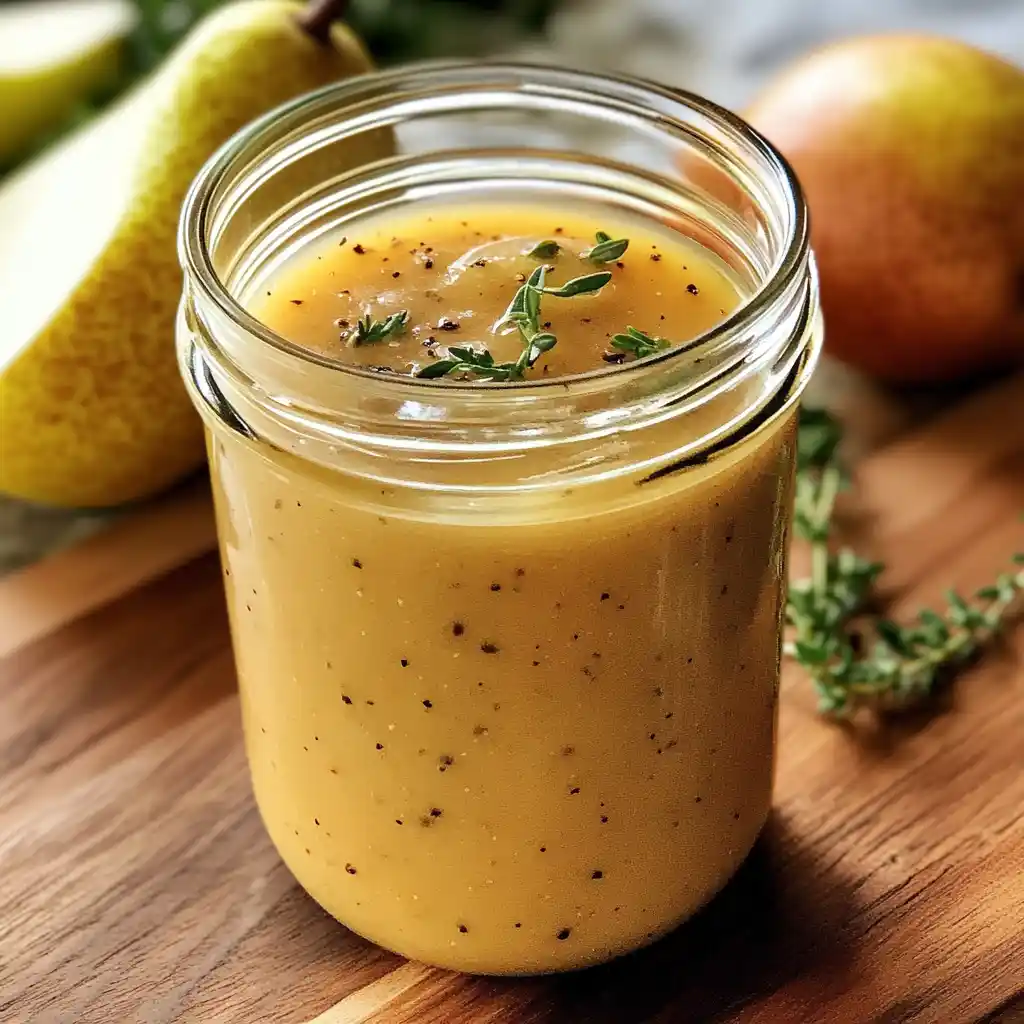
Ingredients
- 2 ripe pears, peeled and chopped (Bartlett or Bosc work best—smell for ripeness)
- 1/4 cup olive oil (extra-virgin for best fruity flavor)
- 2 tablespoons apple cider vinegar (raw unfiltered adds depth)
- 1 tablespoon honey (or maple syrup for vegan version)
- 1 teaspoon Dijon mustard (smooth and sharp French Dijon)
- 1/2 teaspoon salt
- 1/4 teaspoon black pepper
- 1/2 teaspoon dried thyme (make sure it’s relatively fresh)
- 1/2 teaspoon dried rosemary (fresh rosemary from the pantry, not years old)
Instructions
- Peel your pears, remove the cores completely, and chop into chunks. Don’t skip removing the core—those tough fibers never blend completely smooth.
- Add the chopped pears to your blender first, then pour the olive oil, apple cider vinegar, honey, and Dijon mustard around them. Add the salt and black pepper.
- Blend on high speed until completely smooth and creamy, about 30-45 seconds. The dressing should be thick and pourable with no chunks remaining.
- Add the dried thyme and dried rosemary to the blender. Pulse just 3-4 times to incorporate—you want herb flecks throughout, not a completely green dressing.
- Taste the dressing and adjust seasoning as needed. More honey if too tart, more vinegar if too sweet, more salt if it tastes flat.
- Transfer to a jar or container with a tight-fitting lid. Refrigerate for at least 30 minutes before serving to allow flavors to meld and herbs to bloom.
- Shake well before each use since natural separation is normal. Drizzle generously over salads, roasted vegetables, or grilled proteins and enjoy!
Nutrition Information (Per Serving):
- Calories: 85
- Carbohydrates: 8g
- Protein: 0g
- Fat: 7g
- Fiber: 1g
- Sodium: 155mg
- Vitamin C: 4% DV
- Vitamin E: 5% DV
This dressing provides healthy monounsaturated fats from olive oil and natural fruit sugars from pears—a genuinely clean alternative to processed store-bought dressings.
Notes:
- Seriously, use ripe pears or your dressing will be gritty and flavorless
- Remove pear cores completely—the tough fibers don’t blend smooth
- Pulse herbs rather than fully blending for beautiful flecks and occasional flavor bursts
- Taste before refrigerating and adjust while you can still tweak easily
- The dressing thickens in the fridge—thin with a splash of water if needed
Storage Tips:
- Keep refrigerated in a sealed jar for up to 5 days
- Natural separation is normal—shake vigorously before each use
- Don’t freeze—the texture becomes grainy when thawed
- The flavor improves after 24 hours as herbs bloom in the dressing
Serving Suggestions:
- Classic Salad: Drizzle over arugula with pears, walnuts, and shaved Parmesan
- Roasted Vegetables: Use as a dressing for warm roasted beets or butternut squash
- Grilled Protein: Drizzle over grilled chicken or pork for a fruity herb sauce
- Grain Bowl: Use as the dressing for a farro or wheat berry salad
Mix It Up (Recipe Variations):
- Pear Tarragon Dressing: Swap thyme and rosemary for fresh tarragon for a French flavor
- Pear Walnut Dressing: Blend in 1 tablespoon walnut oil for nutty autumnal richness
- Spiced Pear Dressing: Add cinnamon and nutmeg for a warm, fall-inspired version
- Simple Pear Vinaigrette: Skip herbs entirely for a pure fruit vinaigrette
What Makes This Recipe Special:
This pear herbed dressing showcases the farm-to-table philosophy of treating seasonal whole fruit as a primary ingredient rather than a supporting flavoring. By blending whole ripe pears into the dressing base, you achieve natural thickness and genuine fruit flavor that bottled dressings attempt to replicate through artificial means. The combination of tart Dijon mustard, tangy apple cider vinegar, and fragrant herbs creates a balanced complexity that makes this dressing work across a remarkable range of applications—from delicate salads to hearty roasted vegetables—proving that one thoughtfully made condiment can genuinely transform everyday cooking.
