Description
A creamy, naturally sweet pear herbed dressing with Dijon and fresh herbs—ready in just 5 minutes plus chilling for an elegant homemade dressing that transforms every salad it touches.
Prep Time: 5 minutes | Chill Time: 30 minutes | Total Time: 35 minutes | Servings: 8 (about 2 tablespoons per serving)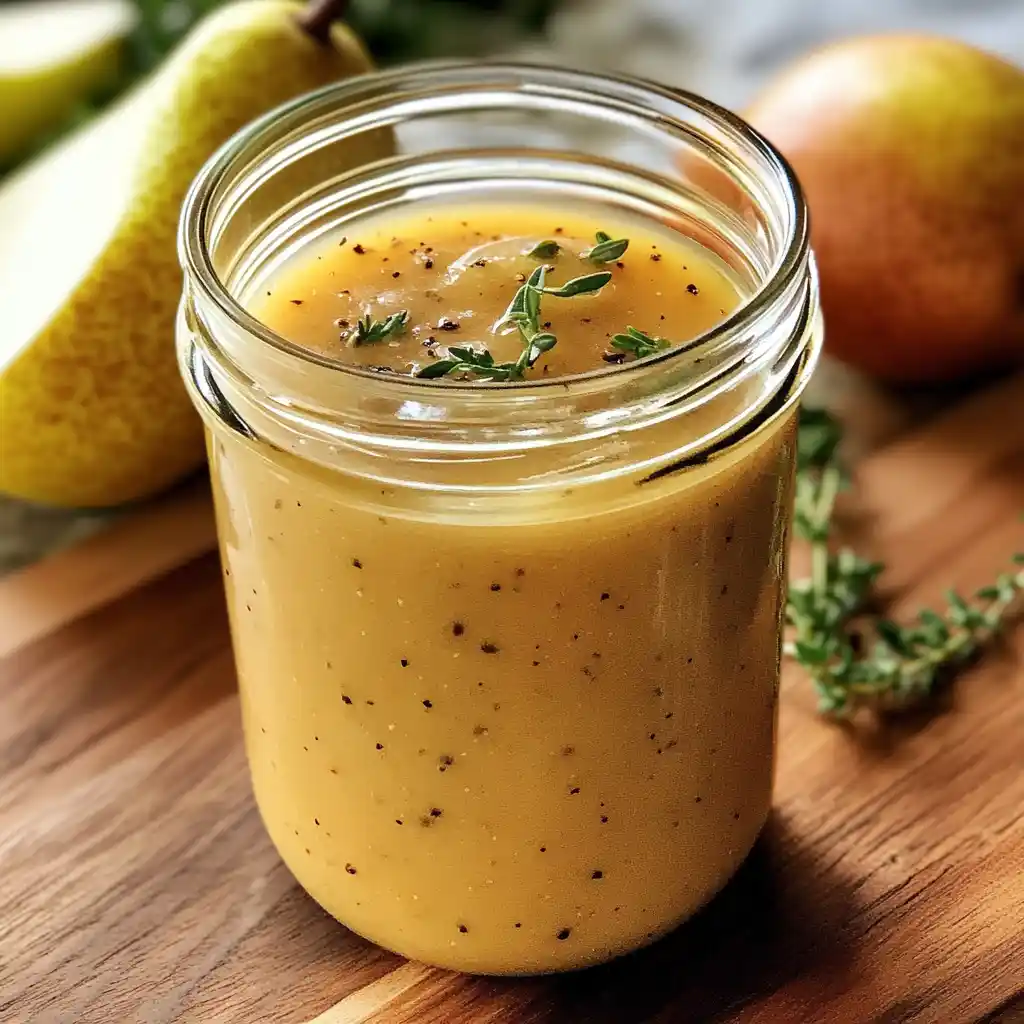
Ingredients
- 2 ripe pears, peeled and chopped (Bartlett or Bosc work best—smell for ripeness)
- 1/4 cup olive oil (extra-virgin for best fruity flavor)
- 2 tablespoons apple cider vinegar (raw unfiltered adds depth)
- 1 tablespoon honey (or maple syrup for vegan version)
- 1 teaspoon Dijon mustard (smooth and sharp French Dijon)
- 1/2 teaspoon salt
- 1/4 teaspoon black pepper
- 1/2 teaspoon dried thyme (make sure it’s relatively fresh)
- 1/2 teaspoon dried rosemary (fresh rosemary from the pantry, not years old)
Instructions
- Peel your pears, remove the cores completely, and chop into chunks. Don’t skip removing the core—those tough fibers never blend completely smooth.
- Add the chopped pears to your blender first, then pour the olive oil, apple cider vinegar, honey, and Dijon mustard around them. Add the salt and black pepper.
- Blend on high speed until completely smooth and creamy, about 30-45 seconds. The dressing should be thick and pourable with no chunks remaining.
- Add the dried thyme and dried rosemary to the blender. Pulse just 3-4 times to incorporate—you want herb flecks throughout, not a completely green dressing.
- Taste the dressing and adjust seasoning as needed. More honey if too tart, more vinegar if too sweet, more salt if it tastes flat.
- Transfer to a jar or container with a tight-fitting lid. Refrigerate for at least 30 minutes before serving to allow flavors to meld and herbs to bloom.
- Shake well before each use since natural separation is normal. Drizzle generously over salads, roasted vegetables, or grilled proteins and enjoy!
Nutrition Information (Per Serving):
- Calories: 85
- Carbohydrates: 8g
- Protein: 0g
- Fat: 7g
- Fiber: 1g
- Sodium: 155mg
- Vitamin C: 4% DV
- Vitamin E: 5% DV
This dressing provides healthy monounsaturated fats from olive oil and natural fruit sugars from pears—a genuinely clean alternative to processed store-bought dressings.
Notes:
- Seriously, use ripe pears or your dressing will be gritty and flavorless
- Remove pear cores completely—the tough fibers don’t blend smooth
- Pulse herbs rather than fully blending for beautiful flecks and occasional flavor bursts
- Taste before refrigerating and adjust while you can still tweak easily
- The dressing thickens in the fridge—thin with a splash of water if needed
Storage Tips:
- Keep refrigerated in a sealed jar for up to 5 days
- Natural separation is normal—shake vigorously before each use
- Don’t freeze—the texture becomes grainy when thawed
- The flavor improves after 24 hours as herbs bloom in the dressing
Serving Suggestions:
- Classic Salad: Drizzle over arugula with pears, walnuts, and shaved Parmesan
- Roasted Vegetables: Use as a dressing for warm roasted beets or butternut squash
- Grilled Protein: Drizzle over grilled chicken or pork for a fruity herb sauce
- Grain Bowl: Use as the dressing for a farro or wheat berry salad
Mix It Up (Recipe Variations):
- Pear Tarragon Dressing: Swap thyme and rosemary for fresh tarragon for a French flavor
- Pear Walnut Dressing: Blend in 1 tablespoon walnut oil for nutty autumnal richness
- Spiced Pear Dressing: Add cinnamon and nutmeg for a warm, fall-inspired version
- Simple Pear Vinaigrette: Skip herbs entirely for a pure fruit vinaigrette
What Makes This Recipe Special:
This pear herbed dressing showcases the farm-to-table philosophy of treating seasonal whole fruit as a primary ingredient rather than a supporting flavoring. By blending whole ripe pears into the dressing base, you achieve natural thickness and genuine fruit flavor that bottled dressings attempt to replicate through artificial means. The combination of tart Dijon mustard, tangy apple cider vinegar, and fragrant herbs creates a balanced complexity that makes this dressing work across a remarkable range of applications—from delicate salads to hearty roasted vegetables—proving that one thoughtfully made condiment can genuinely transform everyday cooking.