
Ever wonder why healthy meals always feel like punishment while restaurant dishes taste amazing? I used to think eating well meant boring chicken and bland grains until I discovered this foolproof pesto salmon and quinoa recipe. Now my weeknight dinners are colorful and delicious, and my family stops asking when we can order pizza (which honestly feels like the biggest victory in my quest to serve actual vegetables).
Here’s the Thing About This Recipe
What makes this pesto salmon recipe work is the way vibrant basil pesto keeps the fish incredibly moist while adding tons of flavor without any effort. Here’s what I’ve learned: most people overcook salmon until it’s dry and flaky, but when you bake it with pesto at the right temperature, you’re creating a protective coating that locks in moisture. The nutty quinoa soaks up all those delicious pesto drippings and becomes way more interesting than plain rice. It’s honestly that simple—good fish, quality pesto, and proper timing. No complicated techniques or fancy ingredients needed.
What You’ll Need (And My Shopping Tips)
Good salmon fillets are worth buying from a fish counter instead of those pre-packaged ones sitting under plastic wrap. I learned this after buying salmon three times that smelled fishy and had gray patches. Look for bright pink or orange salmon with firm flesh—if it feels mushy or smells strongly, walk away. The fillets should be about 6 ounces each and roughly the same thickness so they cook evenly. I always ask what came in fresh today, and honestly, the fish counter people appreciate when you ask.
Pesto sauce should be refrigerated, not shelf-stable in jars. According to Bon Appétit’s guide to store-bought pesto, fresh pesto from the refrigerated section tastes way better than jarred versions that sit on shelves for months. Don’t cheap out on neon-green pesto that tastes like nothing—good pesto should be vibrant, garlicky, and full of basil flavor. If you can find it, the kind from local Italian markets is usually incredible.
Quinoa can be white, red, or tri-color—they all work great here. Make sure to rinse it really well in a fine-mesh strainer before cooking. The olive oil should be good quality since you’re using it to finish the quinoa—cheap stuff can taste bitter. Fresh basil leaves for garnish aren’t optional in my book—they add a bright pop that makes the whole dish look restaurant-worthy.
Let’s Make This Together
Start by preheating your oven to 400°F and giving it a good 10 minutes to reach temperature. While it heats, line a baking sheet with parchment paper—this prevents sticking and makes cleanup incredibly easy. Place your 2 salmon fillets on the prepared baking sheet, leaving space between them so hot air can circulate.
Spread 2 tablespoons of pesto sauce over each salmon fillet, using the back of a spoon to create an even coating. Here’s where I used to mess up: I’d be stingy with the pesto, but you actually want a generous layer that covers the whole fillet. Season with salt and pepper, keeping in mind that pesto is already salty, so go light on the salt.
Slide the baking sheet into your preheated oven and bake for 12-15 minutes. The salmon is done when it flakes easily with a fork and reaches an internal temperature of 145°F. Don’t be me—I used to overcook salmon until it was dry and chalky because I was terrified of undercooking it. Salmon continues cooking slightly after you remove it from the oven, so pull it when it’s just barely done.
While the salmon bakes, rinse 1 cup of quinoa under cold water in a fine-mesh strainer for about 30 seconds. This removes the bitter coating that makes unrinsed quinoa taste soapy. In a medium saucepan, bring 2 cups of water to a rolling boil. Add the rinsed quinoa and give it a stir, then reduce the heat to low, cover with a tight-fitting lid, and simmer for exactly 15 minutes. Now for the fun part: don’t peek. Resist every urge to lift that lid because you’ll release steam and mess up the cooking.
After 15 minutes, remove from heat and let it sit covered for 5 minutes to absorb any remaining water. Fluff the quinoa with a fork—it should be tender with a slight pop when you bite it. Drizzle with 1 tablespoon of olive oil and season with salt and pepper to taste. I learned this trick from a chef friend—that finishing drizzle of oil makes quinoa taste rich and satisfying instead of dry.
Serve the pesto-crusted salmon over a generous bed of fluffy quinoa, and garnish with torn fresh basil leaves. The whole thing takes about 25 minutes from start to finish, which means healthy weeknight dinner doesn’t have to be complicated. Check out my Lemon Herb Baked Salmon for another quick salmon option that’s just as easy and delicious.
When Things Go Sideways (And They Will)
Salmon overcooked and dry? You baked it too long or at too high a temperature. In reality, I’ve learned that salmon cooks faster than you think—when in doubt, check early. If it’s already dry, serve it with extra pesto or a squeeze of lemon to add moisture back. This is totally fixable with added sauce.
Quinoa is mushy? You used too much water or cooked it too long. Every brand of quinoa is slightly different, so next time use a 2:1 ratio (water to quinoa) and start checking at 12 minutes. If it’s already mushy, spread it on a baking sheet to cool and dry out slightly before serving.
Pesto burned on top? Your oven was too hot or the rack was too close to the heating element. Don’t panic—scrape off any blackened bits and the salmon underneath is probably fine. Next time, position the rack in the center of the oven and watch it carefully after 10 minutes.
Quinoa tastes bitter? You forgot to rinse it before cooking. This goes from perfect to unpleasant if you skip that crucial rinse. Unfortunately, there’s no fix for bitter quinoa—you have to start over. I always rinse thoroughly now because I’ve learned this lesson the hard way.
When I’m Feeling Creative
Sun-Dried Tomato Pesto Salmon: Mix 2 tablespoons chopped sun-dried tomatoes into the pesto before spreading on the salmon. Around summer dinners, this version adds a sweet-tangy punch that’s absolutely delicious.
Lemon Pesto Salmon: Add the zest of 1 lemon to the pesto and squeeze fresh lemon juice over the finished dish. When I’m feeling fancy, the bright citrus cuts through the richness perfectly.
Pesto Salmon with Roasted Vegetables: Toss cherry tomatoes and zucchini chunks with olive oil and roast alongside the salmon for a complete one-pan meal. This has been a total game-changer for busy weeknights when I don’t want to cook multiple components.
Spicy Pesto Salmon: Stir 1/4 teaspoon red pepper flakes into the pesto before spreading on the fish. Fair warning: this adds a nice kick but isn’t overwhelmingly spicy—just enough to wake up your taste buds.
What Makes This Recipe Special
The combination of pesto and salmon honors Italian and Mediterranean culinary traditions where fresh herbs and quality fish are celebrated. According to Wikipedia’s guide to pesto, traditional Genovese pesto originated in Liguria, Italy, and has become beloved worldwide for its vibrant flavor. The technique of baking salmon with a pesto crust is particularly smart—the oil in the pesto bastes the fish as it cooks, creating a self-basting effect that keeps everything moist. What sets this pesto salmon and quinoa recipe apart is its simplicity and speed—you get a complete, nutritious meal in under 30 minutes without sacrificing flavor or satisfaction, proving that healthy eating doesn’t have to mean boring food or hours in the kitchen.
Questions I Always Get
Can I make this pesto salmon and quinoa ahead of time?
The quinoa can be cooked up to 3 days ahead and stored in the fridge, then reheated with a splash of water. But salmon is best cooked fresh—reheated salmon loses its texture and gets dry. You can prep everything ahead and cook the salmon right before serving. Trust me on this—I tried meal-prepping the whole thing and the reheated salmon was disappointing.
What if I can’t find good pesto for this recipe?
You can make your own by blending fresh basil, garlic, pine nuts, Parmesan, and olive oil in a food processor. It takes 5 minutes and tastes way better than cheap store-bought versions. Around here, we’ve discovered that even frozen pesto cubes work in a pinch—just thaw them first.
How do I know when the salmon is done?
The salmon should flake easily when you gently press it with a fork, and the internal temperature should reach 145°F. It’s okay if the very center is slightly translucent—it’ll finish cooking from residual heat. Every oven has its own personality, so start checking at 10 minutes if yours runs hot.
Can I use a different grain instead of quinoa?
Absolutely! Brown rice, farro, couscous, or even cauliflower rice all work beautifully. Every grain has its own cooking time and method, so follow package directions. I’ve used whatever’s in my pantry and it always turns out great—the pesto salmon is the star, so the grain is really just the supporting act.
Is this pesto salmon recipe kid-friendly?
Most kids love it because the pesto makes the salmon taste interesting without being scary-different. If your kids are picky about green things, you can use less pesto or let them scrape some off. My kids call this “green fish” and eat it without complaints, which is basically a miracle.
What’s the best way to reheat leftover salmon?
Gently reheat in a 275°F oven for about 10 minutes, or eat it cold in salads. Microwaving makes salmon rubbery and dry, so avoid that if possible. Honestly, leftover salmon flaked over a green salad with some quinoa is one of my favorite lunches.
Before You Head to the Kitchen
I couldn’t resist sharing this because healthy dinners shouldn’t be boring, and this pesto salmon and quinoa proves you can make something nutritious and delicious in less time than waiting for takeout. The best weeknight meals are when everyone’s happy and you’re not standing over the stove for an hour. You’ve got this—it’s just fish, grains, and confidence!
Print
Pesto Salmon and Quinoa
Description
This vibrant pesto salmon and quinoa combines tender baked salmon with herby pesto and fluffy quinoa for a complete, healthy dinner that’s ready in just 25 minutes and packed with protein and nutrients.
Prep Time: 10 minutes | Cook Time: 15 minutes | Total Time: 25 minutes | Servings: 2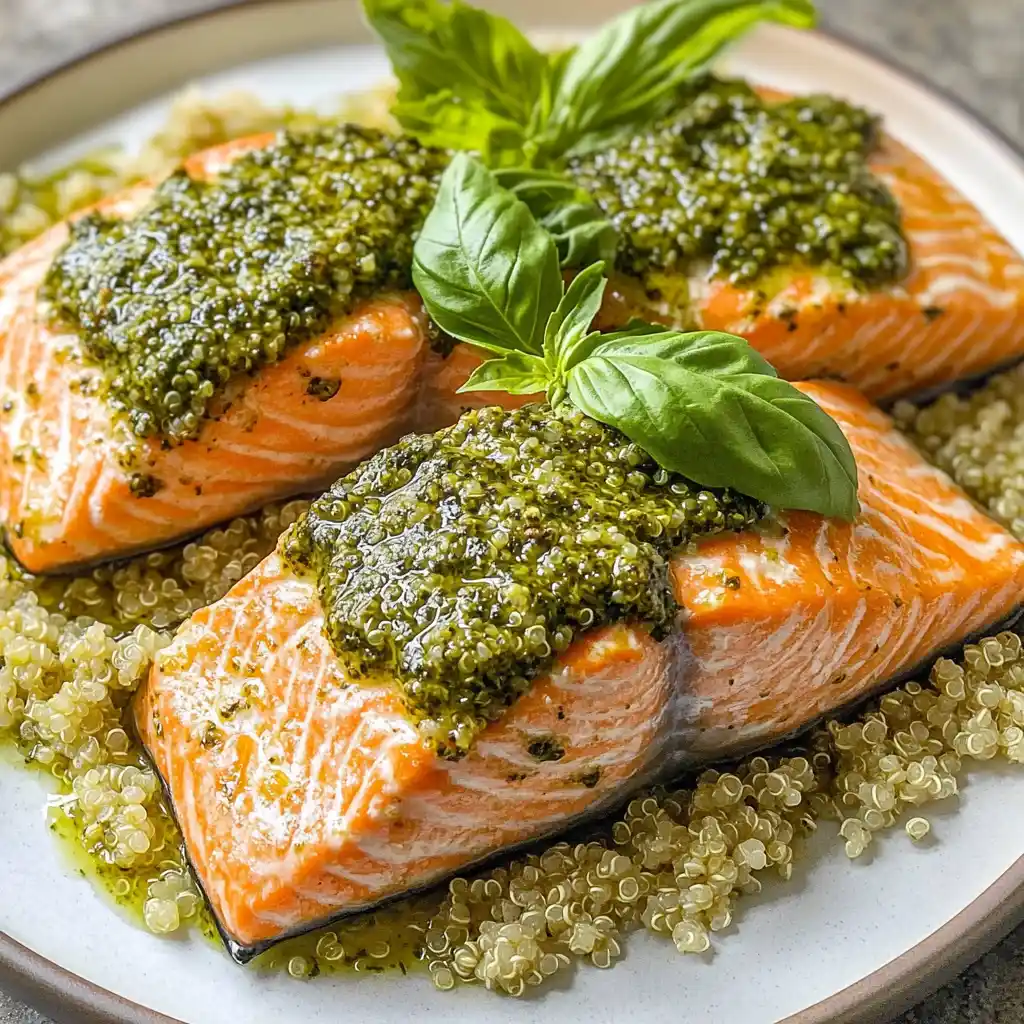
Ingredients
For the Salmon:
- 2 salmon fillets, about 6 oz each (skin-on or skinless both work)
- 4 tablespoons pesto sauce (2 tablespoons per fillet—use the good refrigerated stuff)
- Salt and pepper, to taste (go light on salt—pesto is already salty)
For the Quinoa:
- 1 cup quinoa (white, red, or tri-color all work great)
- 2 cups water
- 1 tablespoon olive oil (for finishing—use good quality)
- Salt and pepper, to taste
For Garnish:
- Fresh basil leaves (torn into pieces, not chopped)
Instructions
- Preheat your oven to 400°F and let it fully heat up for about 10 minutes. This ensures even cooking and prevents sticking.
- Line a baking sheet with parchment paper and place the 2 salmon fillets on it, leaving space between them for air circulation.
- Spread 2 tablespoons of pesto sauce over each salmon fillet using the back of a spoon. Create an even coating that covers the entire surface—don’t be stingy with the pesto.
- Season the pesto-topped salmon lightly with salt and pepper, keeping in mind that pesto is already well-seasoned.
- Bake the salmon in the preheated oven for 12-15 minutes. The salmon is done when it flakes easily with a fork and reaches an internal temperature of 145°F. Start checking at 12 minutes to avoid overcooking.
- While the salmon bakes, rinse 1 cup of quinoa thoroughly under cold water in a fine-mesh strainer for about 30 seconds. This removes the bitter coating that makes unrinsed quinoa taste soapy.
- In a medium saucepan, bring 2 cups of water to a rolling boil over high heat.
- Add the rinsed quinoa to the boiling water and give it a quick stir to prevent sticking.
- Reduce the heat to low, cover the pot with a tight-fitting lid, and simmer for exactly 15 minutes. Don’t lift the lid during this time—you’ll release steam and mess up the cooking process.
- After 15 minutes, remove the pot from heat and let it sit covered for 5 minutes to absorb any remaining water. Then fluff the quinoa gently with a fork.
- Drizzle the cooked quinoa with 1 tablespoon of olive oil and season with salt and pepper to taste. Toss gently to coat.
- Divide the quinoa between 2 plates or shallow bowls, creating a bed for the salmon. Place one salmon fillet on top of each quinoa portion.
- Garnish generously with torn fresh basil leaves for a pop of color and fresh herbal flavor.
- Serve immediately while everything is hot and the salmon is at its most tender and flavorful!
Nutrition Information (Per Serving):
- Calories: 485
- Carbohydrates: 42g
- Protein: 40g
- Fat: 18g
- Fiber: 5g
- Sodium: 320mg
- Omega-3 Fatty Acids: 2.2g
- Iron: 3.8mg (21% DV)
- Vitamin D: 570 IU (71% DV)
- Magnesium: 118mg (28% DV)
This pesto salmon and quinoa provides exceptional omega-3 fatty acids for heart and brain health, complete protein from both salmon and quinoa, plus iron and magnesium—all while being naturally gluten-free.
Notes:
- Don’t skip rinsing the quinoa. That bitter coating ruins the whole dish if you skip this crucial step.
- Every oven has its own personality. Start checking the salmon at 10 minutes if your oven runs hot—overcooked salmon is dry and disappointing.
- Good pesto makes or breaks this dish. Invest in quality refrigerated pesto rather than shelf-stable jarred versions that taste flat.
- The quinoa ratio is 2:1 water to quinoa. This is standard, but some brands vary slightly, so check the package.
- Room temperature fish cooks more evenly. If you remember, take the salmon out of the fridge 15 minutes before cooking.
Storage Tips:
Store leftover salmon and quinoa separately in airtight containers in the fridge for up to 3 days. The quinoa reheats beautifully—just add a splash of water and microwave or heat on the stovetop. Leftover salmon is best eaten cold in salads or gently reheated in a 275°F oven for 10 minutes. Don’t microwave the salmon—it gets rubbery and dry. Honestly, leftover pesto salmon flaked over mixed greens with quinoa makes an incredible lunch salad.
Serving Suggestions:
- Light Dinner: Serve with a simple arugula salad dressed with lemon vinaigrette
- Complete Meal: Add roasted asparagus or green beans alongside for more vegetables
- Grain Bowl Style: Top the quinoa with avocado slices, cherry tomatoes, and cucumber for a colorful bowl
- Meal Prep: Make extra quinoa and salmon to use in salads and bowls all week
Mix It Up (Recipe Variations):
Sun-Dried Tomato Pesto Salmon: Mix 2 tablespoons chopped sun-dried tomatoes into the pesto before spreading on salmon for a sweet-tangy Mediterranean twist.
Lemon Pesto Salmon: Add the zest of 1 lemon to the pesto and squeeze fresh lemon juice over the finished dish for bright, citrusy notes that cut through the richness.
Pesto Salmon with Roasted Vegetables: Toss cherry tomatoes and zucchini chunks with olive oil and roast on the same pan as the salmon for a complete one-pan meal.
Spicy Pesto Salmon: Stir 1/4 teaspoon red pepper flakes into the pesto before spreading on the fish for a gentle kick that wakes up your taste buds.
What Makes This Recipe Special:
This pesto salmon and quinoa recipe combines Italian and Mediterranean culinary wisdom with modern healthy eating principles. The pesto’s olive oil naturally bastes the salmon as it bakes, creating a self-basting effect that keeps the fish incredibly moist without any complicated techniques. Pairing it with protein-rich quinoa makes this a complete meal that satisfies without heaviness, proving that nutritious dinners can be both quick and genuinely delicious when you use quality ingredients and simple methods.
