Description
This vibrant pesto salmon and quinoa combines tender baked salmon with herby pesto and fluffy quinoa for a complete, healthy dinner that’s ready in just 25 minutes and packed with protein and nutrients.
Prep Time: 10 minutes | Cook Time: 15 minutes | Total Time: 25 minutes | Servings: 2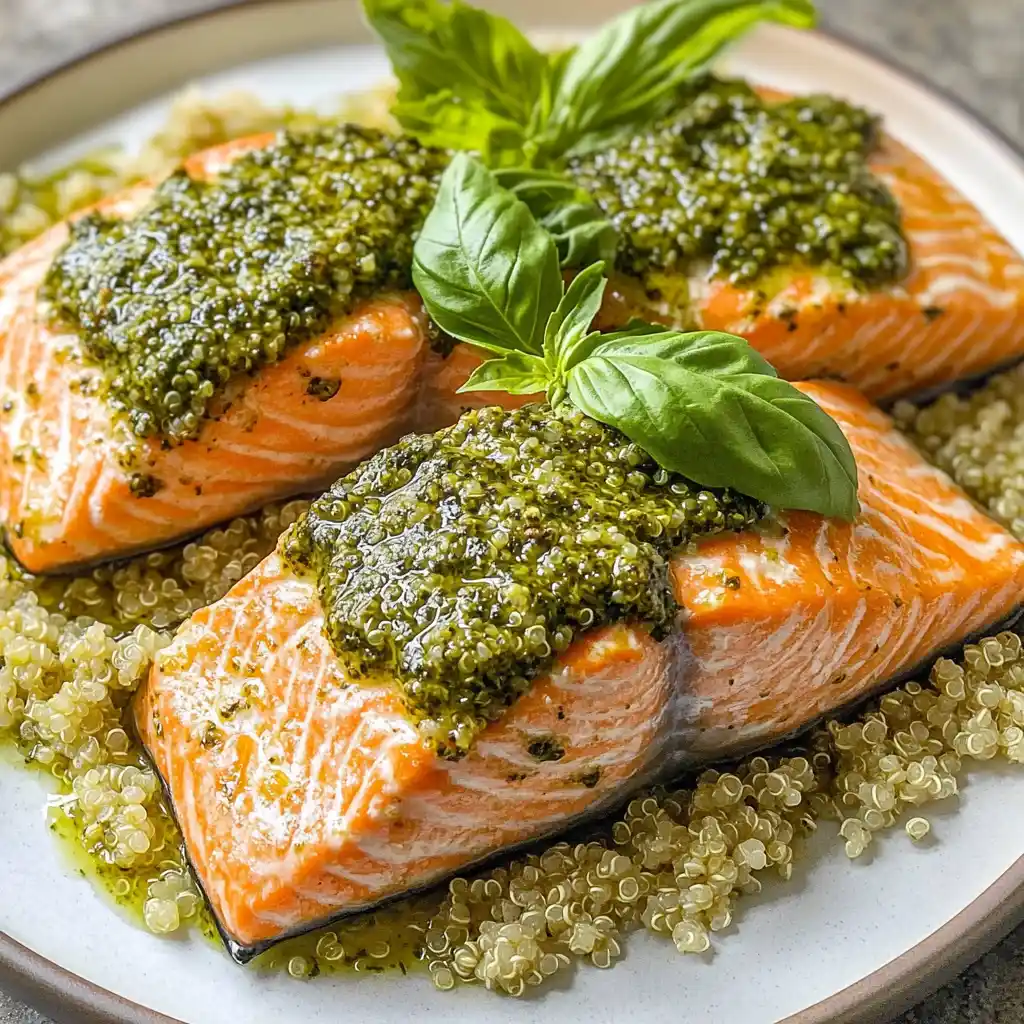
Ingredients
For the Salmon:
- 2 salmon fillets, about 6 oz each (skin-on or skinless both work)
- 4 tablespoons pesto sauce (2 tablespoons per fillet—use the good refrigerated stuff)
- Salt and pepper, to taste (go light on salt—pesto is already salty)
For the Quinoa:
- 1 cup quinoa (white, red, or tri-color all work great)
- 2 cups water
- 1 tablespoon olive oil (for finishing—use good quality)
- Salt and pepper, to taste
For Garnish:
- Fresh basil leaves (torn into pieces, not chopped)
Instructions
- Preheat your oven to 400°F and let it fully heat up for about 10 minutes. This ensures even cooking and prevents sticking.
- Line a baking sheet with parchment paper and place the 2 salmon fillets on it, leaving space between them for air circulation.
- Spread 2 tablespoons of pesto sauce over each salmon fillet using the back of a spoon. Create an even coating that covers the entire surface—don’t be stingy with the pesto.
- Season the pesto-topped salmon lightly with salt and pepper, keeping in mind that pesto is already well-seasoned.
- Bake the salmon in the preheated oven for 12-15 minutes. The salmon is done when it flakes easily with a fork and reaches an internal temperature of 145°F. Start checking at 12 minutes to avoid overcooking.
- While the salmon bakes, rinse 1 cup of quinoa thoroughly under cold water in a fine-mesh strainer for about 30 seconds. This removes the bitter coating that makes unrinsed quinoa taste soapy.
- In a medium saucepan, bring 2 cups of water to a rolling boil over high heat.
- Add the rinsed quinoa to the boiling water and give it a quick stir to prevent sticking.
- Reduce the heat to low, cover the pot with a tight-fitting lid, and simmer for exactly 15 minutes. Don’t lift the lid during this time—you’ll release steam and mess up the cooking process.
- After 15 minutes, remove the pot from heat and let it sit covered for 5 minutes to absorb any remaining water. Then fluff the quinoa gently with a fork.
- Drizzle the cooked quinoa with 1 tablespoon of olive oil and season with salt and pepper to taste. Toss gently to coat.
- Divide the quinoa between 2 plates or shallow bowls, creating a bed for the salmon. Place one salmon fillet on top of each quinoa portion.
- Garnish generously with torn fresh basil leaves for a pop of color and fresh herbal flavor.
- Serve immediately while everything is hot and the salmon is at its most tender and flavorful!
Nutrition Information (Per Serving):
- Calories: 485
- Carbohydrates: 42g
- Protein: 40g
- Fat: 18g
- Fiber: 5g
- Sodium: 320mg
- Omega-3 Fatty Acids: 2.2g
- Iron: 3.8mg (21% DV)
- Vitamin D: 570 IU (71% DV)
- Magnesium: 118mg (28% DV)
This pesto salmon and quinoa provides exceptional omega-3 fatty acids for heart and brain health, complete protein from both salmon and quinoa, plus iron and magnesium—all while being naturally gluten-free.
Notes:
- Don’t skip rinsing the quinoa. That bitter coating ruins the whole dish if you skip this crucial step.
- Every oven has its own personality. Start checking the salmon at 10 minutes if your oven runs hot—overcooked salmon is dry and disappointing.
- Good pesto makes or breaks this dish. Invest in quality refrigerated pesto rather than shelf-stable jarred versions that taste flat.
- The quinoa ratio is 2:1 water to quinoa. This is standard, but some brands vary slightly, so check the package.
- Room temperature fish cooks more evenly. If you remember, take the salmon out of the fridge 15 minutes before cooking.
Storage Tips:
Store leftover salmon and quinoa separately in airtight containers in the fridge for up to 3 days. The quinoa reheats beautifully—just add a splash of water and microwave or heat on the stovetop. Leftover salmon is best eaten cold in salads or gently reheated in a 275°F oven for 10 minutes. Don’t microwave the salmon—it gets rubbery and dry. Honestly, leftover pesto salmon flaked over mixed greens with quinoa makes an incredible lunch salad.
Serving Suggestions:
- Light Dinner: Serve with a simple arugula salad dressed with lemon vinaigrette
- Complete Meal: Add roasted asparagus or green beans alongside for more vegetables
- Grain Bowl Style: Top the quinoa with avocado slices, cherry tomatoes, and cucumber for a colorful bowl
- Meal Prep: Make extra quinoa and salmon to use in salads and bowls all week
Mix It Up (Recipe Variations):
Sun-Dried Tomato Pesto Salmon: Mix 2 tablespoons chopped sun-dried tomatoes into the pesto before spreading on salmon for a sweet-tangy Mediterranean twist.
Lemon Pesto Salmon: Add the zest of 1 lemon to the pesto and squeeze fresh lemon juice over the finished dish for bright, citrusy notes that cut through the richness.
Pesto Salmon with Roasted Vegetables: Toss cherry tomatoes and zucchini chunks with olive oil and roast on the same pan as the salmon for a complete one-pan meal.
Spicy Pesto Salmon: Stir 1/4 teaspoon red pepper flakes into the pesto before spreading on the fish for a gentle kick that wakes up your taste buds.
What Makes This Recipe Special:
This pesto salmon and quinoa recipe combines Italian and Mediterranean culinary wisdom with modern healthy eating principles. The pesto’s olive oil naturally bastes the salmon as it bakes, creating a self-basting effect that keeps the fish incredibly moist without any complicated techniques. Pairing it with protein-rich quinoa makes this a complete meal that satisfies without heaviness, proving that nutritious dinners can be both quick and genuinely delicious when you use quality ingredients and simple methods.