
Ever wonder why some plant-based dishes taste bland and disappointing while others have depth and richness that rivals any meat-based meal? I used to think making flavorful slow-cooked seitan with asparagus required fancy vegan cooking expertise until I discovered this foolproof recipe. Now my family devours this savory, tender dish on busy weeknights, and I’m pretty sure my omnivore friends forget they’re eating plant-based protein (if only they knew how many times I ended up with rubbery, overcooked seitan before learning the gentle slow-cooker approach).
Here’s the Thing About This Recipe
What makes this slow-cooked seitan with asparagus work is the low-and-slow method that transforms chewy seitan into tender, flavorful bites that soak up all those savory seasonings. I learned the hard way that you can’t rush seitan—high heat makes it tough and rubbery, but gentle slow cooking breaks down the wheat gluten proteins into something incredibly satisfying. This plant-based comfort dish brings together meaty seitan with fresh spring asparagus in a way that feels substantial and complete. It’s honestly that simple: quality seitan, fresh vegetables, savory seasonings, and the patience to let the slow cooker work its magic.
What You’ll Need (And My Shopping Tips)
Good seitan is worth seeking out at health food stores or Asian markets—look for brands with a firm, meaty texture, not the spongy, weird stuff that tastes like flavored rubber (I learned this after buying the cheapest package three times and wondering why my dish tasted like punishment). You’ll need 16 ounces, which sounds like a lot but shrinks slightly as it cooks and absorbs the broth.
For the vegetables, grab fresh asparagus with tight tips and firm stalks (not the wilted, sad bundles in the discount bin), a medium onion, and fresh garlic. Don’t cheap out on jarred garlic for this one; fresh makes a real difference when you’re building flavor over hours (happens more than I’d like to admit when I’m being lazy).
For seasoning and liquid, you’ll need soy sauce (I use low-sodium to control the salt), olive oil, dried thyme, paprika, salt, pepper, and vegetable broth. The combination of soy sauce and broth creates that deep umami flavor that makes this taste way more complex than the ingredient list suggests.
Fresh asparagus is seasonal (peak season is March through June), so this dish celebrates spring beautifully. If you’re curious about the nutritional benefits of seitan and why it’s such a popular meat substitute, Wikipedia has great information about this high-protein wheat gluten product that’s been used in Asian cuisine for centuries.
Let’s Make This Together
Start by slicing your seitan into bite-sized pieces—I usually go for roughly 1/2-inch thick slices or chunks, depending on what shape your seitan comes in. Here’s where I used to mess up: I’d leave them too thick and they wouldn’t absorb the flavors well enough.
Trim your asparagus by snapping off the woody ends (they’ll naturally break where the tender part begins—it’s like magic) and cut the spears into 2-3 inch pieces. The tips cook faster than the stalks, so keeping pieces similar in size helps everything cook evenly.
In your slow cooker, layer the sliced seitan, trimmed asparagus pieces, thinly sliced onion, and minced garlic. I don’t stress too much about perfect layering—just get everything in there in a relatively even distribution.
Now for the flavor magic—in a small bowl, whisk together the soy sauce, olive oil, dried thyme, paprika, salt (start with about 1/2 teaspoon since soy sauce is already salty), and pepper (about 1/2 teaspoon). Pour this mixture over all the ingredients in the slow cooker, using a spoon to make sure it’s distributed somewhat evenly.
Pour the vegetable broth over everything in the slow cooker. Here’s my secret: I use the liquid to help distribute the seasonings by giving everything a gentle stir after adding the broth. Don’t worry about being too precise—the slow cooking will meld everything together beautifully.
Cover and cook on low for 4-5 hours. Trust me on this one—low heat is essential for tender seitan. High heat will make it rubbery and unpleasant, no matter how long you cook it. I learned this trick from my vegan cooking mentor who taught me that seitan needs gentle, patient cooking to become tender.
After 4 hours, check to see if the seitan is tender and has absorbed the flavors. If the asparagus still has some bite (which I prefer), you’re done. If you like it softer, let it go another 30 minutes to an hour. I learned this timing from trial and error—everyone’s slow cooker runs slightly differently.
Once done, serve hot over steamed rice, quinoa, or even mashed potatoes for soaking up all that savory broth. If you’re looking for another plant-based slow cooker recipe, try this Slow-Cooker Chickpea Curry that uses similar hands-off techniques.
The beauty of this dish is that you can literally dump everything in the slow cooker in the morning, go about your day, and come home to dinner that smells absolutely incredible (I learned this meal-prep trick from my neighbor who works long hours and still wants home-cooked meals).
When Things Go Sideways (And They Will)
Seitan turned out rubbery and tough? You probably cooked it on high heat or didn’t give it enough time. In reality, I’ve learned that seitan absolutely requires low-and-slow cooking—there’s no rushing it. This is totally fixable for next time by sticking to low heat only.
Asparagus turned to mush? You probably cooked it too long or used thin asparagus spears that couldn’t handle 4-5 hours. If this happens (and it will), next time add the asparagus during the last 2 hours of cooking, or use thicker spears that hold up better.
Dish tastes bland despite the seasonings? You need more salt, probably, and maybe a splash more soy sauce. Seitan can absorb a lot of flavor, so don’t be shy with seasoning. I always taste and adjust at the end now, sometimes adding an extra tablespoon of soy sauce to punch it up.
Too much liquid left at the end? Remove the lid and let it cook on high for the last 30 minutes to reduce the liquid, or serve it as-is like a stew. Some people (like me) love extra sauce for soaking up with rice.
Ways to Mix It Up
Asian-Inspired Seitan: When I’m feeling fancy, I’ll add 1 tablespoon of fresh grated ginger, a splash of rice vinegar, and a teaspoon of sesame oil to the seasoning mixture for an incredible umami boost.
Mushroom Seitan with Asparagus: Add 8 ounces of sliced mushrooms along with the other vegetables for extra earthiness and texture. Around fall and winter, this becomes my go-to variation.
Lemon Herb Slow-Cooked Seitan: Add the zest of one lemon and use fresh rosemary instead of thyme for a brighter, more Mediterranean flavor profile.
Spicy Seitan and Asparagus: Add 1/2 teaspoon red pepper flakes and a splash of hot sauce to the seasoning mixture for heat lovers.
What Makes This Recipe Special
This slow-cooked seitan with asparagus represents modern plant-based cooking at its best—taking a traditional Asian protein (seitan has been used in Buddhist vegetarian cuisine for over 1,000 years) and adapting it to Western slow-cooker convenience. What makes this recipe special is the recognition that seitan, despite being a meat substitute, requires completely different cooking techniques than actual meat. While you might sear a steak quickly over high heat, seitan needs gentle, prolonged cooking to develop tenderness and absorb flavors. The slow-cooker method is perfect because it maintains consistent low heat for hours, allowing the wheat gluten proteins to relax and become tender while soaking up the savory broth and seasonings. Traditional seitan preparation in Chinese and Japanese cuisine often involves simmering in flavored broths, so this slow-cooker adaptation honors that methodology while making it completely hands-off for busy modern cooks. The history of seitan shows it originated with Buddhist monks in China who needed high-protein foods that aligned with vegetarian principles—proving that plant-based eating isn’t a modern trend but a centuries-old tradition.
Things People Ask Me About This Recipe
Can I cook this slow-cooked seitan with asparagus on high instead of low?
You can reduce the time to 2-3 hours on high, but I honestly don’t recommend it. High heat makes seitan tougher and more rubbery. The low-and-slow method really is worth the wait for tender, flavorful results.
What if I can’t find seitan at my grocery store?
Check health food stores, Asian markets (look for “wheat gluten” or “mock duck”), or order online. You can also make your own from vital wheat gluten flour, but that’s a whole separate process. In a pinch, extra-firm tofu works with this recipe, though the texture will be completely different.
Can I use frozen asparagus instead of fresh?
You can, but frozen asparagus will be mushier after 4-5 hours of slow cooking. If using frozen, add it during the last hour of cooking to prevent it from turning to mush. Fresh really is better for this recipe.
Is this recipe gluten-free?
No, seitan is pure wheat gluten, so it’s absolutely not gluten-free. For a gluten-free version, substitute extra-firm tofu or tempeh, though the texture and cooking time will be different.
Can I make this slow-cooked seitan with asparagus ahead of time?
Absolutely! This actually tastes even better the next day after the flavors have melded. Make it up to 3 days ahead, store in the fridge, and reheat gently on the stovetop or in the microwave.
How do I store and reheat leftovers?
Store in an airtight container in the fridge for up to 4 days. Reheat on the stovetop over medium-low heat with a splash of vegetable broth, or microwave in 1-minute intervals, stirring between. The seitan will continue absorbing liquid as it sits, so it’ll be less saucy but more flavorful than when freshly made.
Before You Head to the Kitchen
I couldn’t resist sharing this slow-cooked seitan with asparagus because it’s the recipe that finally made me confident with plant-based protein cooking. The best slow-cooker nights are when you come home after a long day and dinner is already done, the house smells incredible, and someone inevitably says “wait, this is vegan?” You don’t need fancy vegan cooking skills or expensive ingredients—just good seitan, fresh asparagus, a slow cooker, and the willingness to let time work its magic.
Print
Slow-Cooked Seitan with Asparagus
Description
This comforting slow-cooked seitan with asparagus transforms chewy wheat gluten into tender, savory bites infused with umami-rich seasonings and fresh spring vegetables—proving plant-based comfort food can be completely hands-off and deeply satisfying.
Prep Time: 10 minutes | Cook Time: 4-5 hours | Total Time: 4 hours 10 minutes – 5 hours 10 minutes | Servings: 4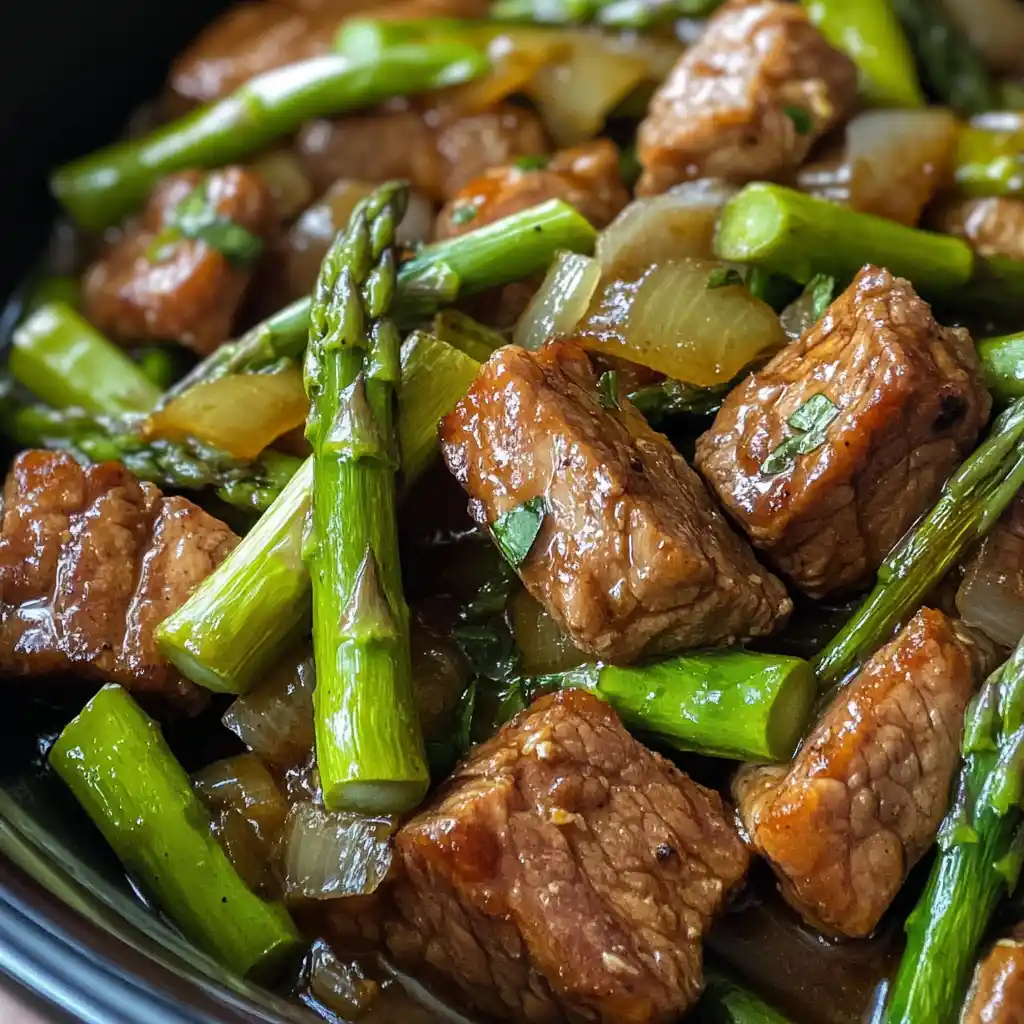
Ingredients
For the Slow-Cooked Dish:
- 16 oz seitan, sliced into 1/2-inch pieces (look for firm, meaty texture at health food stores)
- 1 lb asparagus, trimmed and cut into 2-3 inch pieces (use thicker spears for better texture)
- 1 medium onion, thinly sliced (yellow or white works fine)
- 3 cloves garlic, minced (fresh only—it makes a difference over hours of cooking)
- 2 tbsp soy sauce (I use low-sodium to control the salt myself)
- 1 tbsp olive oil
- 1 tsp dried thyme
- 1/2 tsp paprika (adds subtle color and sweetness)
- Salt and pepper, to taste (start with 1/2 tsp each)
- 2 cups vegetable broth (low-sodium preferred)
For Serving:
- Steamed rice, quinoa, or mashed potatoes
Instructions
- Slice your seitan into bite-sized pieces, roughly 1/2-inch thick—smaller pieces absorb flavors better than giant chunks.
- Trim your asparagus by snapping off the woody ends where they naturally break, then cut the spears into 2-3 inch pieces for even cooking.
- In your slow cooker, layer the sliced seitan, trimmed asparagus pieces, thinly sliced onion, and minced garlic in a relatively even distribution. Don’t stress about perfect layering—it’ll all cook together beautifully.
- In a small bowl, whisk together the soy sauce, olive oil, dried thyme, paprika, salt (start with 1/2 teaspoon since soy sauce is salty), and pepper (about 1/2 teaspoon). Pour this seasoning mixture over all the ingredients in the slow cooker.
- Pour the vegetable broth over everything in the slow cooker. Give it a gentle stir to help distribute the seasonings—you don’t need to be too precise since it’ll meld together as it cooks.
- Cover and cook on LOW for 4-5 hours. Don’t be tempted to cook on high—seitan needs gentle, patient cooking to become tender. Check at 4 hours to see if the seitan is tender and has absorbed the flavors.
- Once the seitan is tender and the asparagus is cooked to your liking (I prefer it with a slight bite at 4 hours), it’s ready to serve.
- Serve hot over steamed rice, quinoa, or mashed potatoes to soak up all that savory broth. Garnish with fresh herbs if you’re feeling fancy.
Nutrition Information (Per Serving):
- Calories: 240
- Carbohydrates: 14g
- Protein: 32g
- Fat: 6g
- Fiber: 4g
- Sodium: 680mg
- Iron: 25% DV
- Folate: 30% DV
- Vitamin K: 45% DV
Seitan is incredibly high in protein (about 75% protein by weight), making this a protein-packed plant-based meal. Asparagus adds vitamins K, folate, and antioxidants.
Notes:
- Cook on LOW only—high heat makes seitan tough and rubbery, no matter how long you cook it.
- Use thicker asparagus spears if possible; thin ones can turn to mush after 4-5 hours.
- Every slow cooker runs differently, so check at 4 hours and adjust cooking time as needed.
- If you prefer very soft asparagus, let it cook the full 5 hours. If you like it with bite, check at 4 hours.
- The seitan will absorb liquid as it cooks, so don’t worry if it seems like a lot of broth at the beginning.
Storage Tips:
Store cooled leftovers in an airtight container in the fridge for up to 4 days. The seitan will continue absorbing the liquid as it sits, so it’ll be less saucy but more intensely flavored than when freshly made. Reheat gently on the stovetop over medium-low heat with a splash of vegetable broth to loosen it up, or microwave in 1-minute intervals, stirring between. Don’t freeze this—the asparagus texture gets weird when thawed, and the seitan can become spongy.
Serving Suggestions:
- Classic Comfort: Over fluffy white rice or brown rice with the broth spooned over everything
- Grain Bowl Style: Over quinoa with a side of sautéed greens and roasted vegetables
- Low-Carb Option: Over cauliflower rice or zucchini noodles for a lighter version
- Bread Dipper’s Dream: With crusty bread for soaking up every drop of that savory broth
Mix It Up (Recipe Variations):
Asian-Inspired Slow-Cooked Seitan: Add 1 tablespoon fresh grated ginger, 1 teaspoon sesame oil, and a splash of rice vinegar to the seasoning mixture for incredible umami depth.
Mushroom Seitan with Asparagus: Add 8 oz sliced mushrooms (cremini or shiitake) along with the other vegetables for extra earthiness and meaty texture.
Lemon Herb Seitan: Add the zest of one lemon and use fresh rosemary instead of thyme for a brighter, Mediterranean-inspired flavor profile.
Spicy Slow-Cooked Seitan: Add 1/2 teaspoon red pepper flakes and a tablespoon of sriracha or hot sauce to the seasoning mixture for heat lovers.
What Makes This Recipe Special:
This slow-cooked seitan with asparagus honors traditional Asian seitan preparation methods while adapting them to modern slow-cooker convenience. The low-and-slow approach transforms wheat gluten proteins into tender, flavorful bites that rival any meat-based slow-cooker dish. Unlike tofu or tempeh, seitan’s meaty texture and protein content make it uniquely satisfying for plant-based eaters looking for substantial, hearty meals.
