
Description
This comforting slow-cooked seitan with asparagus transforms chewy wheat gluten into tender, savory bites infused with umami-rich seasonings and fresh spring vegetables—proving plant-based comfort food can be completely hands-off and deeply satisfying.
Prep Time: 10 minutes | Cook Time: 4-5 hours | Total Time: 4 hours 10 minutes – 5 hours 10 minutes | Servings: 4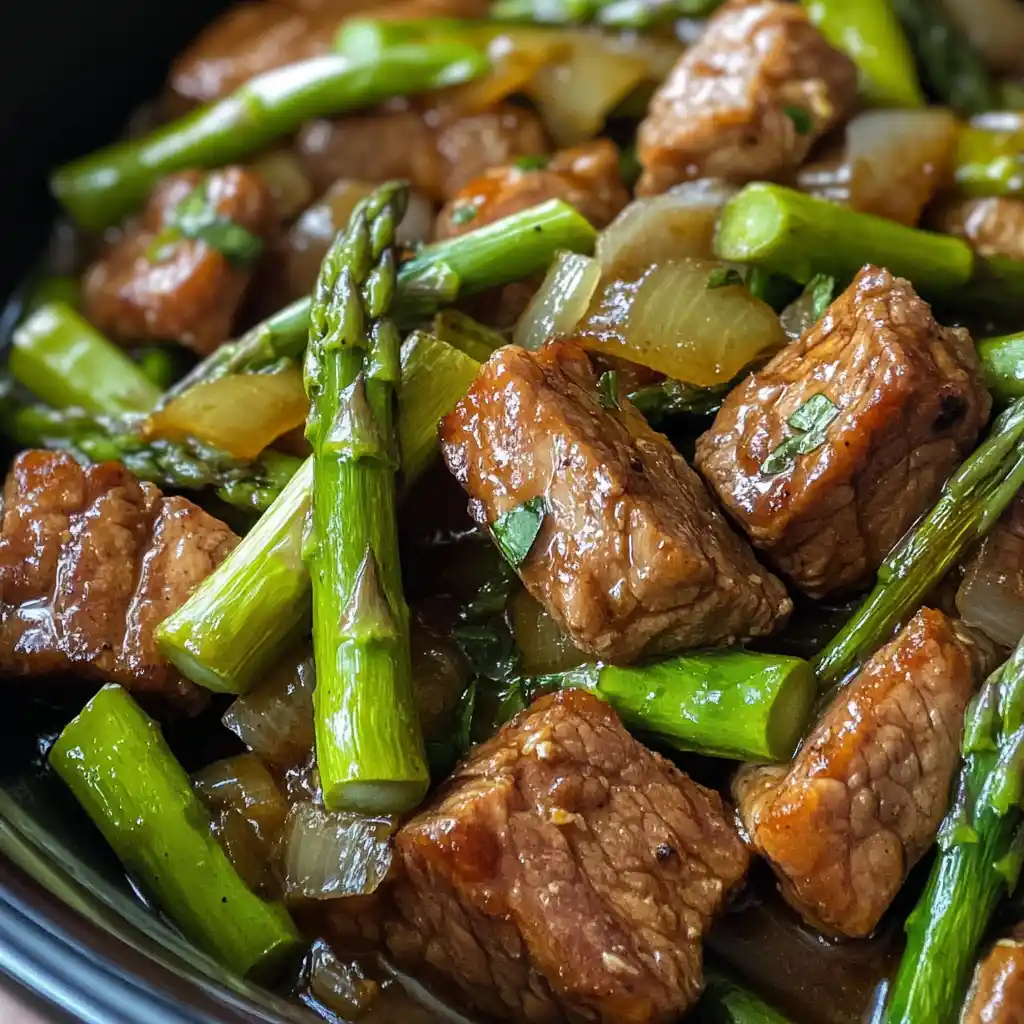
Ingredients
For the Slow-Cooked Dish:
- 16 oz seitan, sliced into 1/2-inch pieces (look for firm, meaty texture at health food stores)
- 1 lb asparagus, trimmed and cut into 2-3 inch pieces (use thicker spears for better texture)
- 1 medium onion, thinly sliced (yellow or white works fine)
- 3 cloves garlic, minced (fresh only—it makes a difference over hours of cooking)
- 2 tbsp soy sauce (I use low-sodium to control the salt myself)
- 1 tbsp olive oil
- 1 tsp dried thyme
- 1/2 tsp paprika (adds subtle color and sweetness)
- Salt and pepper, to taste (start with 1/2 tsp each)
- 2 cups vegetable broth (low-sodium preferred)
For Serving:
- Steamed rice, quinoa, or mashed potatoes
Instructions
- Slice your seitan into bite-sized pieces, roughly 1/2-inch thick—smaller pieces absorb flavors better than giant chunks.
- Trim your asparagus by snapping off the woody ends where they naturally break, then cut the spears into 2-3 inch pieces for even cooking.
- In your slow cooker, layer the sliced seitan, trimmed asparagus pieces, thinly sliced onion, and minced garlic in a relatively even distribution. Don’t stress about perfect layering—it’ll all cook together beautifully.
- In a small bowl, whisk together the soy sauce, olive oil, dried thyme, paprika, salt (start with 1/2 teaspoon since soy sauce is salty), and pepper (about 1/2 teaspoon). Pour this seasoning mixture over all the ingredients in the slow cooker.
- Pour the vegetable broth over everything in the slow cooker. Give it a gentle stir to help distribute the seasonings—you don’t need to be too precise since it’ll meld together as it cooks.
- Cover and cook on LOW for 4-5 hours. Don’t be tempted to cook on high—seitan needs gentle, patient cooking to become tender. Check at 4 hours to see if the seitan is tender and has absorbed the flavors.
- Once the seitan is tender and the asparagus is cooked to your liking (I prefer it with a slight bite at 4 hours), it’s ready to serve.
- Serve hot over steamed rice, quinoa, or mashed potatoes to soak up all that savory broth. Garnish with fresh herbs if you’re feeling fancy.
Nutrition Information (Per Serving):
- Calories: 240
- Carbohydrates: 14g
- Protein: 32g
- Fat: 6g
- Fiber: 4g
- Sodium: 680mg
- Iron: 25% DV
- Folate: 30% DV
- Vitamin K: 45% DV
Seitan is incredibly high in protein (about 75% protein by weight), making this a protein-packed plant-based meal. Asparagus adds vitamins K, folate, and antioxidants.
Notes:
- Cook on LOW only—high heat makes seitan tough and rubbery, no matter how long you cook it.
- Use thicker asparagus spears if possible; thin ones can turn to mush after 4-5 hours.
- Every slow cooker runs differently, so check at 4 hours and adjust cooking time as needed.
- If you prefer very soft asparagus, let it cook the full 5 hours. If you like it with bite, check at 4 hours.
- The seitan will absorb liquid as it cooks, so don’t worry if it seems like a lot of broth at the beginning.
Storage Tips:
Store cooled leftovers in an airtight container in the fridge for up to 4 days. The seitan will continue absorbing the liquid as it sits, so it’ll be less saucy but more intensely flavored than when freshly made. Reheat gently on the stovetop over medium-low heat with a splash of vegetable broth to loosen it up, or microwave in 1-minute intervals, stirring between. Don’t freeze this—the asparagus texture gets weird when thawed, and the seitan can become spongy.
Serving Suggestions:
- Classic Comfort: Over fluffy white rice or brown rice with the broth spooned over everything
- Grain Bowl Style: Over quinoa with a side of sautéed greens and roasted vegetables
- Low-Carb Option: Over cauliflower rice or zucchini noodles for a lighter version
- Bread Dipper’s Dream: With crusty bread for soaking up every drop of that savory broth
Mix It Up (Recipe Variations):
Asian-Inspired Slow-Cooked Seitan: Add 1 tablespoon fresh grated ginger, 1 teaspoon sesame oil, and a splash of rice vinegar to the seasoning mixture for incredible umami depth.
Mushroom Seitan with Asparagus: Add 8 oz sliced mushrooms (cremini or shiitake) along with the other vegetables for extra earthiness and meaty texture.
Lemon Herb Seitan: Add the zest of one lemon and use fresh rosemary instead of thyme for a brighter, Mediterranean-inspired flavor profile.
Spicy Slow-Cooked Seitan: Add 1/2 teaspoon red pepper flakes and a tablespoon of sriracha or hot sauce to the seasoning mixture for heat lovers.
What Makes This Recipe Special:
This slow-cooked seitan with asparagus honors traditional Asian seitan preparation methods while adapting them to modern slow-cooker convenience. The low-and-slow approach transforms wheat gluten proteins into tender, flavorful bites that rival any meat-based slow-cooker dish. Unlike tofu or tempeh, seitan’s meaty texture and protein content make it uniquely satisfying for plant-based eaters looking for substantial, hearty meals.