
Have you ever made something that genuinely transported you — where the smell coming from the pot made you close your eyes and feel like you were somewhere completely different? That’s what lamb and apricot tagine does to my kitchen. The moment the cinnamon and cumin hit the hot pan with the lamb, the whole house transforms. My family wanders in from other rooms before the first hour is up, just to check how much longer it’s going to be. The combination of warm spices, tender lamb, and sweet dried apricots creating a sauce that’s simultaneously savory and fragrant is something I genuinely look forward to making — not just eating.
Here’s the Thing About This Recipe
What makes this lamb and apricot tagine work where other braised lamb dishes can feel heavy or one-note is the contrast at the heart of the dish: savory, spiced lamb against sweet, slightly tart dried apricots, all tied together by that warm cinnamon and cumin broth. The apricots don’t make this a “sweet” dish — they make it complex. They soften and partially dissolve into the sauce over the long braise, contributing natural sugar that rounds out the cayenne’s heat and the lamb’s richness. Around here, we’ve figured out that browning the lamb in good, hot batches before anything else goes in creates the flavor foundation the whole dish depends on. It’s honestly that simple.
What You’ll Need (And My Shopping Tips)
Boneless lamb shoulder is the right cut for this lamb and apricot tagine — it has the fat and connective tissue that breaks down beautifully over a 1.5 to 2 hour braise, creating tender, pull-apart meat and a naturally rich sauce. Lamb shoulder has been the preferred cut for tagine and slow-braised North African dishes for centuries precisely because its texture transforms so completely during long cooking. Don’t substitute leg of lamb — it’s too lean, dries out during a long braise, and misses the silky result that makes tagine so special.
For the dried apricots, standard whole dried apricots rather than the brighter orange sulfured variety are both fine — the darker, more wrinkled Turkish-style apricots have a deeper, slightly more complex flavor, but either works well. I cut larger apricots in half before adding them so they dissolve more evenly into the sauce rather than sitting in large pieces.
The spice combination here is the heart of Moroccan-inspired tagine cooking — cumin, coriander, cinnamon, ginger, and cayenne create the warm, complex profile called ras el hanout in its more elaborate traditional form. Make sure all five spices are fresh and aromatic. Smell each one before using — cinnamon that smells faintly of wood rather than warm and sweet, or cumin that’s barely detectable, will produce a tagine that tastes muted rather than fragrant and layered.
Tomato paste is adding concentrated umami body here rather than tomato flavor — it deepens the broth and helps the sauce develop a richer color. Cook it briefly with the spices for 1 to 2 minutes before adding the liquid.
Let’s Make This Together
Heat a splash of oil in a large, heavy-bottomed pot or Dutch oven over medium-high heat. Pat the lamb cubes dry and brown in batches without crowding — 2 to 3 minutes per side until deeply seared. Here’s where patience pays off: the fond (those browned bits on the bottom of the pot) is the foundation of the sauce’s flavor. Crowded lamb steams and turns gray; properly browned lamb creates the caramelized base that carries the whole dish.
Remove the lamb, reduce heat to medium, and add the diced onion. Cook for 4 to 5 minutes until soft, scraping up all the browned bits. Add the garlic and cook 1 minute. Add all the spices — cumin, coriander, cinnamon, ginger, cayenne, salt, and pepper — and stir for 1 to 2 minutes until the spices are toasted and fragrant. Add the tomato paste and cook for another minute.
Return the lamb to the pot. Add the dried apricots and chicken broth. Bring to a simmer, then cover and reduce heat to low. Simmer for 1.5 to 2 hours, stirring occasionally, until the lamb is fork-tender and the apricots have softened and begun to meld into the sauce.
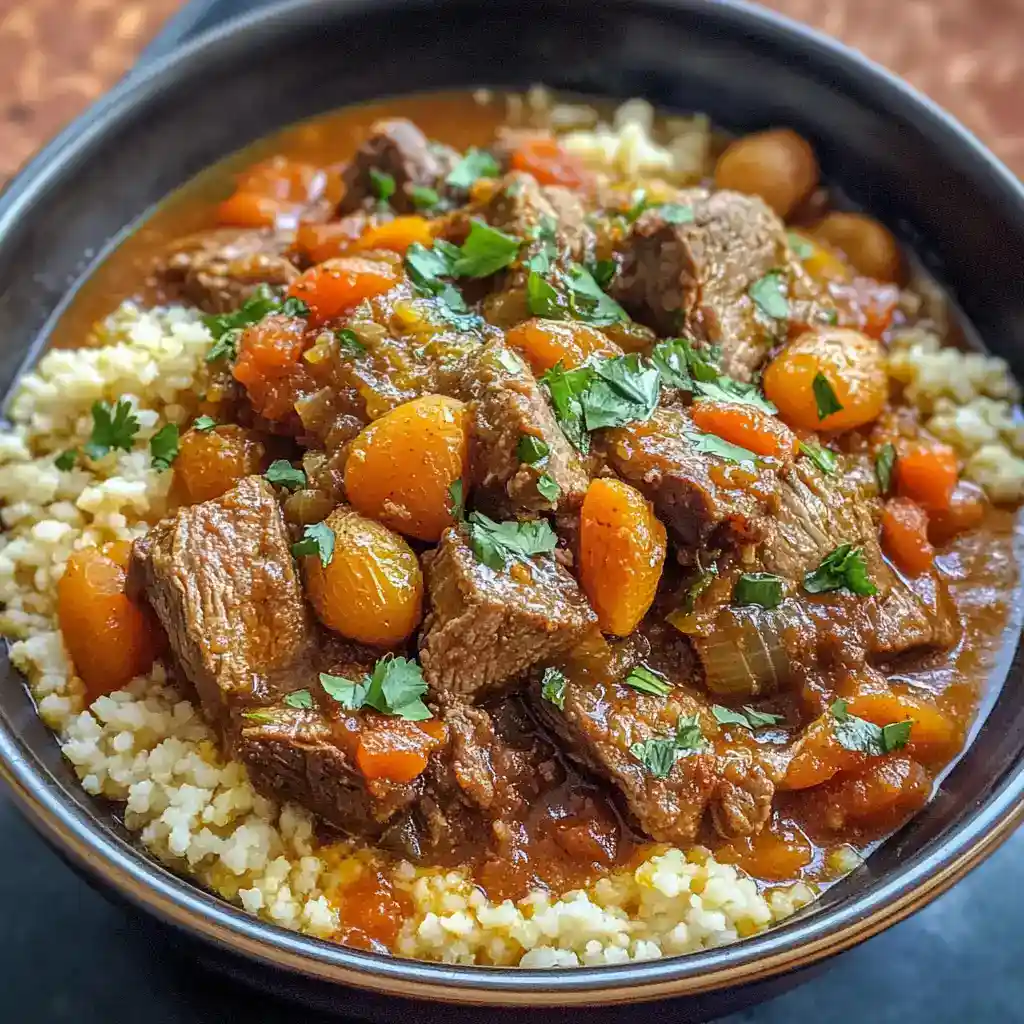
Taste and adjust seasoning. Serve over couscous with fresh cilantro scattered generously over the top.
For another deeply satisfying slow-braised lamb dish with bold spicing, check out this Lamb Rogan Josh from Station Recipes — an Indian-inspired counterpart that explores the same tender lamb braise technique with a completely different spice profile.
If This Happens, Don’t Panic
Lamb is still tough after 2 hours? The cut was too lean or the heat was too high. True tagine tenderness requires a very gentle simmer — small, occasional bubbles rather than a rolling boil. Drop the heat to the absolute lowest setting and give it another 30 to 45 minutes. Fork-tender lamb should pull apart with almost no resistance.
Sauce is too thin? Remove the lid for the final 20 minutes to allow reduction. The dissolved apricots and tomato paste should naturally thicken the sauce as it concentrates — if it’s still thin after 20 minutes uncovered, mash a few of the apricot pieces against the side of the pot and stir them in.
Apricots have completely dissolved? They were added too early or simmered too vigorously. If you prefer visible apricot pieces, add half the apricots in the last 30 minutes of cooking. The dissolved apricots still contribute all their flavor and sweetness to the sauce even if they’re not visually distinct.
Tagine tastes too sweet? A small squeeze of lemon juice will balance the sweetness of the apricots immediately. You can also reduce the apricot quantity to 3/4 cup next time if you prefer a less pronounced fruit presence.
Ways to Mix It Up
Lamb Tagine with Preserved Lemon: Add 1 to 2 tablespoons of chopped preserved lemon rind with the apricots. The preserved lemon adds a salty, intensely citrusy note that’s traditional in Moroccan tagine and creates a more complex, restaurant-quality result.
Lamb Tagine with Almonds: Toast 1/4 cup of slivered almonds in a dry pan and scatter over the finished tagine at serving alongside the cilantro. The crunch and mild nuttiness contrasts beautifully with the soft, braised meat and sauce.
Lamb Tagine with Chickpeas: Add one drained 15 oz can of chickpeas in the last 30 minutes of cooking. The chickpeas absorb the spiced broth and turn this into a hearty, protein-rich one-pot meal that needs nothing but couscous to be complete.
Beef Apricot Tagine: Replace the lamb shoulder with the same quantity of beef chuck, cubed. The technique and timing are identical, and the beef absorbs the North African spice profile beautifully for a slightly different but equally satisfying result.
What Makes This Recipe Special
Tagine is both the name of the dish and the distinctive conical clay pot in which it’s traditionally cooked — the cone-shaped lid creates a convection cycle that returns condensed steam back to the base, basting the meat continuously during the long braise. The sweet-savory combination of meat and dried fruit is deeply rooted in Moroccan and North African cooking, particularly in the cities of Marrakech, Fez, and Casablanca, where influences from Moorish Spain, sub-Saharan Africa, and Middle Eastern spice routes blended over centuries into one of the world’s most distinctive regional cuisines. Learn more about the history and traditions of lamb and mutton cooking across North African and Middle Eastern food cultures. This lamb and apricot tagine honors that tradition in a Dutch oven — no clay pot required, all the depth and fragrance preserved.
Questions I Always Get
Do I need an actual tagine pot to make this recipe?
No — a heavy-bottomed pot or Dutch oven with a tight-fitting lid works perfectly. The tagine pot’s cone shape creates a specific steam circulation, but a regular pot with a well-sealed lid achieves the same braising effect and produces an excellent result.
Can I make lamb and apricot tagine in a slow cooker?
Yes — brown the lamb and bloom the spices on the stovetop first, then transfer everything to the slow cooker and cook on low for 6 to 8 hours. The long, gentle slow cooker heat is actually very close to traditional tagine cooking. The sauce may be thinner — leave the lid slightly ajar for the last hour to reduce.
What can I serve with lamb and apricot tagine besides couscous?
Rice pilaf, flatbread, or roasted root vegetables all work well. Couscous is traditional and the most complementary — its light, fluffy texture soaks up the fragrant sauce beautifully. Crusty bread for scooping is also excellent.
Is lamb and apricot tagine beginner-friendly?
The technique is very straightforward — brown, bloom spices, add liquid, braise. The main skill is patience. The long simmer does most of the work, and the dish is quite forgiving. As long as you brown the lamb properly at the start and keep the heat low during the braise, it will be excellent.
Can I freeze lamb and apricot tagine?
Yes — it freezes beautifully for up to 3 months and actually improves after freezing and reheating, as the flavors have more time to meld. Thaw overnight in the fridge and reheat gently on the stovetop over low heat with a small splash of broth if needed.
How far ahead can I make this tagine?
This is one of the best make-ahead dishes — make it one or even two days ahead and refrigerate. The flavor develops significantly as it sits. Reheat covered on the stovetop over low heat. The lamb becomes even more tender overnight in the sauce.
One Last Thing
This lamb and apricot tagine is the recipe I make when I want to cook something that feels like a genuine occasion — a dish that shows effort and care through its complexity of flavor even though the technique is entirely approachable. Start it early in the afternoon and let the whole house fill with that incredible spiced fragrance. Set out the couscous and cilantro and watch people’s faces when they take the first bite and taste that combination of warm spices, tender lamb, and sweet apricot all at once. You’ve got this.
Print
Lamb and Apricot Tagine
Description
Fragrant, slow-braised lamb and apricot tagine with warming North African spices, dried apricots, and a rich, savory-sweet sauce — served over couscous with fresh cilantro.
Prep Time: 15 minutes | Cook Time: 2 hours | Total Time: 2 hours 15 minutes | Servings: 4
Ingredients
- 1.5 lb boneless lamb shoulder, cubed into 1.5-inch pieces
- 1 onion, diced
- 2 cloves garlic, minced
- 1 tsp ground cumin
- 1 tsp ground coriander
- 1 tsp ground cinnamon
- 1/2 tsp ground ginger
- 1/4 tsp cayenne pepper
- 1 cup dried apricots (halved if large)
- 2 cups chicken broth
- 2 tbsp tomato paste
- Salt and pepper, to taste
- Fresh cilantro, chopped, for garnish
- Cooked couscous, for serving
Instructions
- Heat oil in a large pot or Dutch oven over medium-high heat. Pat lamb dry and brown in batches without crowding, 2 to 3 minutes per side. Remove and set aside.
- Reduce heat to medium. Add onion to the same pot and cook 4 to 5 minutes, scraping up browned bits. Add garlic and cook 1 minute.
- Add cumin, coriander, cinnamon, ginger, cayenne, salt, and pepper. Stir for 1 to 2 minutes until fragrant. Add tomato paste and cook 1 minute more.
- Return lamb to pot. Add dried apricots and chicken broth. Bring to a simmer.
- Cover and reduce heat to low. Simmer for 1.5 to 2 hours until lamb is fork-tender and apricots have softened into the sauce.
- Taste and adjust seasoning. Serve over couscous, garnished generously with fresh cilantro.
Nutrition Information (Per Serving, without couscous)
- Calories: 420
- Carbohydrates: 28g
- Protein: 36g
- Fat: 18g
- Fiber: 4g
- Sodium: 480mg
- Iron: 4.6mg (26% DV)
- Vitamin A: 1,800 IU (36% DV)
Note: Nutrition estimates are based on 4 servings without couscous. Values will vary based on the lamb cut used.
Notes
- Brown lamb in batches without crowding — the fond created is the foundation of the sauce’s flavor.
- Toast the spices for 1 to 2 minutes in the oil before adding liquid — this blooms them and creates depth.
- Keep the simmer very gentle — a rolling boil will make the lamb tough and cause the apricots to dissolve unevenly.
- This dish improves significantly made a day ahead — plan ahead when possible.
Storage Tips
- Refrigerator: Store in an airtight container for up to 4 days. Flavor improves significantly overnight.
- Reheating: Warm gently on the stovetop over low heat. Add a splash of broth if needed.
- Freezer: Freeze in portions for up to 3 months. Tagine reheats beautifully from frozen.
- Store separately from the couscous for best reheating results.
Serving Suggestions
- Over fluffy couscous with fresh cilantro and a wedge of lemon alongside
- With toasted slivered almonds scattered over the top for texture
- Alongside warm flatbread for scooping up the sauce
- With harissa on the side for those who want more heat
Mix It Up (Recipe Variations)
Preserved Lemon: Add chopped preserved lemon rind with the apricots for a traditional Moroccan depth.
Almond: Scatter toasted slivered almonds over the finished tagine at serving.
Chickpea: Add a drained can of chickpeas in the last 30 minutes for extra heartiness.
Beef: Replace lamb shoulder with the same quantity of beef chuck for an equally satisfying variation.
What Makes This Recipe Special
The sweet-savory balance in this lamb and apricot tagine is achieved through the slow dissolution of the dried apricots into the braising liquid over the 1.5 to 2 hour simmer. As the apricots soften, they release their natural fructose and pectin into the broth — fructose provides sweetness that contrasts with the savory lamb and warm spices, while pectin acts as a natural thickener that gives the sauce its glossy, slightly syrupy consistency. This is why the sauce of a well-made tagine has a different texture from a standard braise — the fruit contributes not just flavor but structure, creating a sauce that clings to the couscous rather than pooling beneath it.
